
I work as a mobile veterinary assistant who visits farms and small homes across the outskirts of Faisalabad, and I deal with flea and tick problems on cats almost every week. One of the most common questions I hear from cat owners is whether Revolution actually kills ticks or just helps a little. I’ve used it under vet supervision in dozens of cases, especially in cats that spend time outdoors and pick up parasites quickly. The answer is not as straightforward as most people expect, and it depends on what kind of tick problem we are talking about.
How Revolution Works on Cats
In my daily field work, I usually explain Revolution as a broad parasite control medication rather than a single-purpose tick killer. It contains selamectin, which is applied to the skin and absorbed into the bloodstream, targeting several parasites at once. I have seen it work very well for fleas and certain mites in cats that were heavily infested after roaming outside for days. However, when it comes to ticks, the effect is more limited and sometimes inconsistent depending on the species involved.
Many cat owners assume it functions like a fast-acting tick spray, but that is not really how it behaves in practice. In some cases, I treated last summer, cats had light tick exposure, and the product helped reduce attachment, but it did not always eliminate every tick already present. That difference matters when people expect immediate results after a single application. I always remind owners that parasitic control is usually a layered process, not a one-step fix.
What I See in Real Cases
Last spring, I worked with a small rescue group that had about a dozen stray cats coming in with mixed parasite issues. We used multiple treatments, including Revolution under veterinary guidance, and the results varied depending on how long the ticks had already been attached. In fresh infestations, I noticed fewer new ticks sticking after treatment, but existing ones often needed manual removal. In heavier infestations, it simply wasn’t enough on its own.
For owners looking for reliable local guidance or access to veterinary-approved parasite treatments, I often point them toward basic consultation services where proper diagnosis is done before choosing a medication like Revolution. Veterinary clinic staff usually help determine whether ticks are the main issue or whether fleas and mites are also involved, which can completely change the treatment plan. I’ve seen cases where misidentifying the parasite led to repeated treatments that didn’t solve the real problem. A proper check saves the cat time and stress.
In field situations, I also notice how the environment plays a huge role in tick control success. Cats that return to grassy, humid areas tend to get re-infested quickly, even after treatment. I’ve had owners call me confused because the medication “didn’t work,” when in reality the cat was being exposed again within days. That cycle is one of the biggest challenges in rural parasite management.
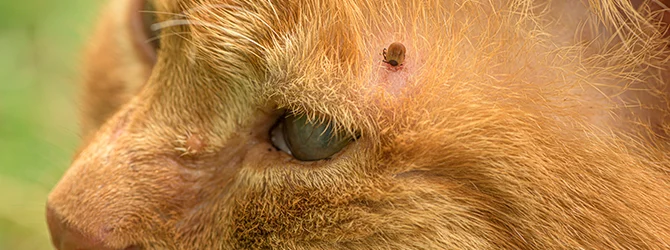
Ticks vs Other Parasites
One thing I explain often is that ticks behave differently from fleas or ear mites, which Revolution handles more reliably. Ticks attach firmly and feed slowly, making them harder to remove once they are on the skin. I’ve removed ticks by hand after treatments that were otherwise effective against fleas. That alone shows the difference in how these parasites respond.
In several cases involving young cats, I noticed that Revolution reduced the overall parasite load but did not fully stop tick attachment in high-risk environments. It works better as a preventive layer rather than a guaranteed tick remover. Some veterinarians I work with prefer combining it with environmental control methods when tick pressure is high. This includes cleaning bedding, limiting outdoor exposure, and checking the coat daily.
I once treated a cat living near irrigation fields, and even with consistent dosing, ticks kept appearing because the environment was heavily infested. We had to adjust the approach entirely, focusing more on habitat control than relying on medication alone. That case taught me that no single product can handle every parasite situation equally well. Real-world conditions always influence outcomes.
What I Tell Cat Owners
After years of working around animals in dusty and rural conditions, I usually keep my advice simple and honest. Revolution can help reduce tick issues in cats, but it is not a complete solution for eliminating ticks in every situation. Some cats respond better than others, and some environments overwhelm even regular treatment schedules. Expecting perfect results often leads to disappointment.
I also remind owners that safety matters just as much as effectiveness. Using multiple parasite treatments without guidance can stress a cat’s system, especially younger or weaker animals. I’ve seen people try to stack products in hopes of faster results, but that usually creates more confusion than improvement. A steady, guided approach always works better in the long run.
From what I’ve observed, the best results come when Revolution is part of a broader care routine rather than the only solution. Regular inspection, clean living spaces, and early intervention when ticks appear make a noticeable difference. I still use it in many cases, but I always set realistic expectations before starting treatment. That honesty helps prevent misunderstandings later on.
At the end of the day, tick control in cats is more about consistency than any single product. Revolution plays a role, but it works best when combined with awareness and environmental control. That balance is what I rely on most when helping cat owners manage recurring infestations in real conditions.