
I work as a small-animal nutrition assistant in a busy veterinary clinic in Faisalabad, and I’ve spent years helping cat owners figure out what actually belongs in a feline diet. Duck meat comes up more often than people think, especially when a cat develops sensitivities to chicken or standard commercial proteins. I’ve tested it in feeding plans, closely watched reactions, and seen both good outcomes and avoidable mistakes. My view on duck for cats comes from real feeding trials, not theory.
How does a duck behave in a cat’s diet?
When I first started recommending alternative proteins, duck felt like a “safe experiment” for many cats. It is a novel protein for many indoor cats, which means their immune systems are less likely to react poorly to it compared to common proteins like chicken or beef. I’ve seen several cats with itchy skin calm down within two to three weeks after switching to duck-based meals under controlled portions.
But I also learned early that a duck is not automatically gentle for every cat. One young tabby I worked with last spring had digestive upset after switching too quickly, even though the owner believed duck was universally mild. The issue was not the meat itself, but the sudden dietary shift and the fat content being too high for that cat’s metabolism.
In controlled feeding plans, I usually treat duck as a rotational protein rather than a permanent replacement unless there is a clear medical reason. It carries more fat than chicken, and that changes how it behaves in a cat’s digestive system over time. Cats with a history of pancreatitis, for example, often need stricter control even if they tolerate duck initially.
When I recommend duck, and where owners usually go wrong
In clinic conversations, I often explain that duck is useful in elimination diets when we are trying to isolate food allergies. I have worked with several pet owners who switched to duck after repeated issues with commercial chicken-based foods, and in many cases, the results were noticeable within a few weeks. One family I remember kept a feeding log for their indoor Persian cat and saw fewer vomiting episodes after carefully switching proteins.
In my routine work, I sometimes direct owners toward a local veterinary resource that helps them compare protein options safely before making changes. I’ve noticed that when people rely on random online feeding advice rather than structured guidance, they tend to switch between proteins too quickly, which confuses digestion and allergy tracking. That confusion is often mistaken for “duck didn’t work,” when in reality the transition itself was poorly handled.
One mistake I see repeatedly is overfeeding duck treats alongside a full diet that is already calorie-dense. Duck is richer than chicken, so adding it on top of regular food can quietly push a cat into weight gain within a few months. I once had a client whose indoor cat gained noticeable weight without any obvious diet change, and it turned out duck treats were being given daily without portion control.
Another issue is seasoning or preparation. Cats should only have plain cooked duck, yet I still meet owners who assume small bits from family meals are fine. Even mild seasoning or onion residue can create unnecessary risk, and I’ve had to explain this more times than I can count in routine consultations.
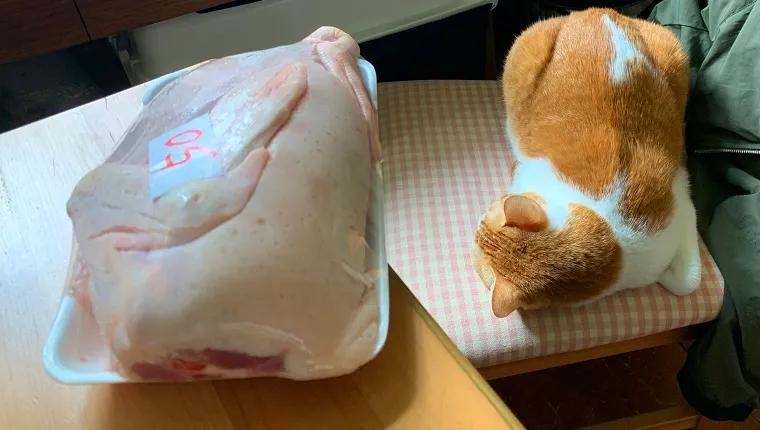
Raw duck, cooked duck, and what actually matters
Raw feeding trends have made ducks more popular, and I’ve had to assess this carefully with owners who are curious but not fully informed. I don’t dismiss raw feeding outright, but I’ve seen enough cases of bacterial contamination in clinic settings to remain cautious, especially in multi-cat households. The risk increases when storage or hygiene practices are inconsistent, which is more common than people expect.
Cooked duck is what I most often recommend because it allows control over fat rendering and removes unnecessary microbial risk. A properly boiled or baked duck portion, cooled and shredded, is much easier to integrate into a structured diet plan. I’ve noticed that cats tolerate cooked duck more consistently, especially those with a history of sensitive stomachs.
Raw duck diets can work in controlled environments, but they require strict sourcing and preparation discipline that most casual pet owners do not maintain consistently. I’ve seen cases where a cat appeared to improve initially, only to develop gastrointestinal issues weeks later due to inconsistent handling practices at home.
One short rule I repeat often is simple. Keep it plain. It sounds basic, but it prevents most mistakes.
Long-term feeding outcomes I’ve observed
Over the years, I’ve tracked how cats respond to duck-based diets beyond the initial adjustment period. Some cats maintain excellent coat condition and stable energy levels when duck is part of a balanced rotation with other proteins. I’ve seen especially good results in cats that previously struggled with years of repetitive chicken-only diets.
However, I’ve also seen cases where duck becomes too frequent in the rotation, leading to excessive fat intake over time. One household I worked with had three indoor cats, and all three showed gradual weight gain over the year after duck became the default protein. The issue wasn’t allergy or intolerance, but a calorie imbalance that went unnoticed until routine checkups.
Another pattern I’ve observed is that duck works best when paired with consistent feeding schedules. Cats that graze randomly throughout the day tend to show less predictable responses than those on a structured meal schedule. This isn’t unique to duck, but its richer profile makes inconsistencies more visible.
I’ve also noticed a behavioral side effect in some cats: improved palatability of duck leads to a narrowing of food preference. A cat that starts favoring duck may refuse other proteins, which creates challenges if dietary adjustments are needed later for medical reasons.
There was a quiet moment in the clinic last winter when a client brought in a senior cat that had been thriving on a carefully balanced duck rotation for over a year. The cat’s coat was steady, weight was stable, and digestion was consistent, which reminded me that the protein itself is neither the problem nor the solution on its own. The structure around it matters more than anything else.
Duck can fit into a cat’s diet without issues when it is introduced thoughtfully, portioned correctly, and monitored over time. I’ve seen it help sensitive cats regain comfort, but I’ve also seen it create avoidable problems when treated as a casual swap instead of a dietary decision. The difference always comes down to how deliberately it is used, not whether it is inherently good or bad.