
Bernese Mountain Dogs are known for their calm nature and striking appearance, but their history is just as fascinating. Many owners wonder about their original purpose and whether they belong to herding breeds. Developed in Switzerland for farm work, their exact role is often misunderstood. Knowing their background helps explain their behavior today.
The Origin and Traditional Roles of Bernese Mountain Dogs
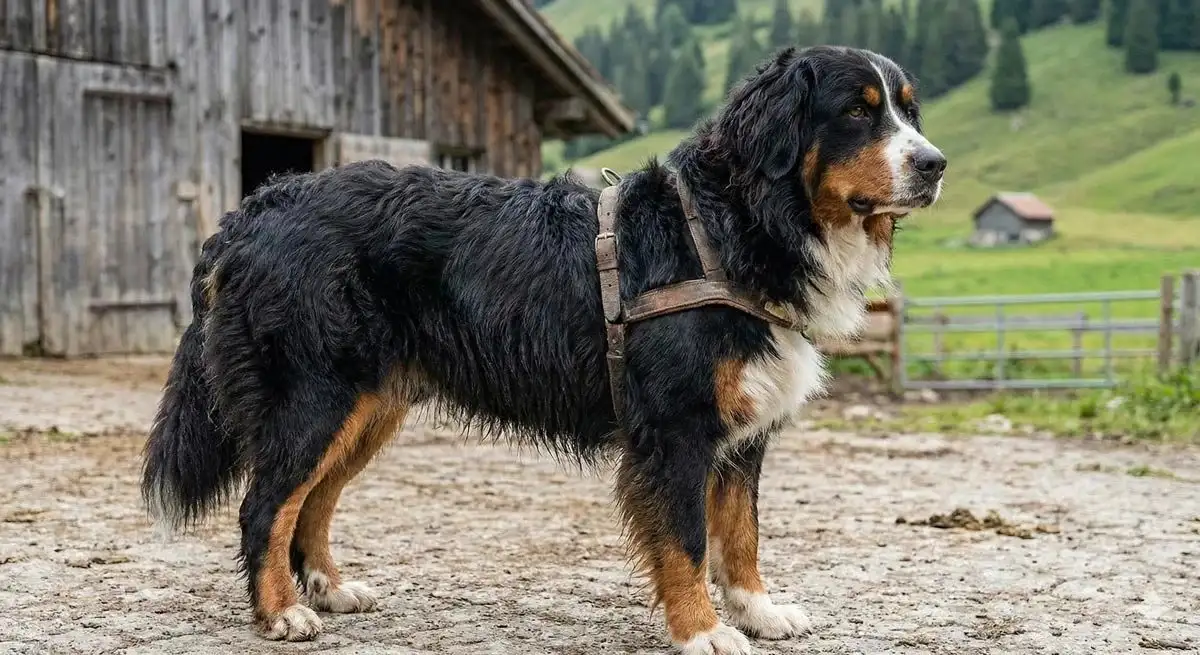
Bernese Mountain Dogs come from the Swiss Alps, where farmers relied on strong and dependable dogs. These dogs were used for multiple tasks, not just one specific job. They pulled carts loaded with milk or goods and guarded farm property. Their strength allowed them to carry loads weighing over 100 kilograms in some cases.
Unlike pure herding breeds like Border Collies, Bernese Mountain Dogs were general farm helpers. They assisted with moving livestock but did not specialize in controlling large herds. Farmers valued their versatility and calm work style.
Their thick coat protected them from the cold, making them well-suited to mountain regions. Over time, they became popular family companions due to their gentle nature. Still, their working roots remain an important part of who they are.
With this background, it’s natural to ask whether Bernese Mountain Dogs have herding instincts today.
Bernese Mountain Dogs do have some natural herding instincts, but they are not classified as true herding dogs. They may show interest in moving animals or even people, especially in playful situations. These instincts come from their farm background, where they helped guide livestock in small areas.
Many dog enthusiasts explore resources such as the Bernese Mountain Dog breed to better understand its working traits and capabilities. These guides explain how their behavior connects to their history. While they can assist with herding under certain conditions, they lack the speed and precision of dedicated herding breeds. Their style is slower and more relaxed.
Some Bernese dogs may try to “herd” children by gently nudging or following them closely. This behavior is usually harmless and playful. Training helps manage these instincts if they become too strong.
Differences Between Bernese Dogs and True Herding Breeds
True herding dogs are bred for speed, control, and quick decision-making. Breeds like Australian Shepherds and Border Collies can react quickly and manage large groups of animals. Bernese Mountain Dogs, on the other hand, move at a slower pace and rely more on strength than agility.
Their body structure reflects this difference. A Bernese dog can weigh between 35 and 55 kilograms, making it much heavier than most herding breeds. This size makes them excellent for pulling carts but less suited for fast movement across fields. Size matters.
Herding breeds guide animals through eye contact and rapid movements, actively influencing livestock’s direction. Bernese Mountain Dogs approach livestock by calmly walking alongside them rather than taking direct control. This highlights the contrast in their working methods and the evolution of their roles over time.
Modern Roles and Behavior in Homes
Today, Bernese Mountain Dogs are more commonly found as family pets rather than working farm dogs. Their friendly, calm personalities make them great companions, especially for families with children. They enjoy spending time with people and are known for being loyal.
Even though they no longer work on farms as often, their instincts can still appear. Some may show protective behavior or try to guide movement within the household. These traits are usually mild and easy to manage with proper training.
Exercise is still important. A Bernese dog needs at least 30 to 60 minutes of activity each day to stay healthy and happy, even if it is not performing traditional work tasks. Regular walks and playtime help burn energy and prevent boredom.
Training and Managing Natural Instincts
Training a Bernese Mountain Dog requires patience and consistency. They respond well to positive reinforcement and gentle guidance. Harsh training methods are ineffective and may erode their trust. Kindness works better.
Early socialization is important. Introduce your dog to different people, animals, and environments within the first 3 to 6 months of life. This helps reduce unwanted behaviors later on. A well-socialized dog is easier to manage.
If your dog shows mild herding behavior, redirect it with games or commands. Teaching basic commands like “stay” and “come” can help control their actions in daily situations. These simple steps make a big difference over time.
Given all this, what herding behaviors can owners realistically expect from Bernese Mountain Dogs?
Most Bernese Mountain Dogs will not behave like traditional herding dogs, but small signs of this instinct may appear. These signs are subtle and usually do not cause problems. Owners should not expect them to manage livestock like specialized breeds.
Here are a few behaviors you might notice:
– Following family members from room to room
– Gently nudging people during play
– Watching movement closely in busy areas
– Showing interest in other animals outdoors
– Staying close to their owner for guidance
These actions reflect their working background without being intense or difficult to handle. Understanding these behaviors helps you respond calmly and effectively. Awareness matters.
Bernese Mountain Dogs carry a rich history as hardworking farm companions with a mix of skills rather than a single focus. While they share some traits with herding breeds, their true strength lies in their versatility and gentle nature. Knowing their background helps you appreciate their behavior and build a stronger bond with your dog.