
I work as a canine nutrition consultant, helping dog owners address digestive issues, poor stool quality, and recurring anal gland concerns. Over the years, I have discussed Glandex with hundreds of clients and followed many dogs through several months of use. The question I hear most often is simple: Does Glandex really work for dogs? My answer is that it can help many dogs, but it is not a cure-all for every case.
Why Dog Owners Turn to Glandex in the First Place
Most people start looking at Glandex after noticing scooting, excessive licking, or a foul odor coming from their dog’s rear end. In my experience, those signs often point toward anal gland issues, although other medical conditions can sometimes create similar symptoms. A surprising number of dogs I see have stools that are slightly too soft to naturally empty the glands during bowel movements.
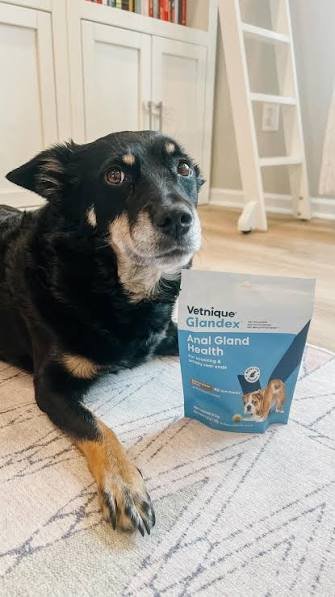
Glandex is designed to support firmer stool formation by adding fiber to the diet. The theory is straightforward. Firmer stools place more natural pressure on the anal glands during elimination, which may help them empty more effectively.
I have worked with dogs ranging from 12-pound companion breeds to larger dogs weighing more than 80 pounds. Results vary considerably. Some owners report noticeable improvement within a few weeks, while others see little change even after consistently following the recommended serving amounts.
What Results I Have Actually Seen
A few years ago, I began tracking common patterns among clients who used Glandex as part of a broader management plan. The dogs that benefited most usually had mild to moderate gland problems rather than severe recurring infections. In those cases, owners often reported less scooting and fewer emergency visits for manual gland expression.
Many pet owners research products on the Glandex official website before deciding whether the supplement meets their dog’s needs. I think that approach makes sense because it helps owners understand the product’s intended purpose. Reading the ingredient list carefully is often more useful than focusing solely on marketing claims.
One case that stands out involved a small mixed-breed dog whose owner was scheduling gland expressions roughly every month. After introducing Glandex and making a few dietary adjustments, the interval gradually stretched to several months. That was a positive outcome, though I would not credit the supplement alone, since the dog’s overall nutrition plan changed at the same time.
I have also seen dogs that showed almost no improvement. Those situations usually involved underlying allergies, chronic digestive problems, obesity, or anatomical factors that a fiber supplement could not fully address. That matters. Anal gland problems often have multiple contributing causes.
Why Some Dogs Respond Better Than Others
Not every dog develops anal gland issues for the same reason. One dog may struggle with frequent loose stools, while another may have environmental allergies that cause inflammation in the area. Treating both dogs with the exact same supplement does not guarantee identical results.
Diet plays a major role. I often find that dogs eating inconsistent diets, receiving numerous table scraps, or switching foods every few weeks tend to have more digestive fluctuations. Stable digestion increases the likelihood that any fiber-based supplement will help.
Body condition can matter too. Excess weight can sometimes alter the distribution of pressure around the anal gland area. I have watched several overweight dogs improve after losing weight, even before any supplement adjustments were made.
Age occasionally influences outcomes. Older dogs can have several overlapping health concerns, and younger dogs may recover more quickly once digestive balance improves. There is no magic number, but I have noticed that dogs under 7 years old sometimes respond faster to dietary changes than senior pets with long-standing issues.
Limitations Owners Should Understand
One misconception I hear frequently is that Glandex can replace veterinary care. I do not agree with that idea. If a dog has infected glands, abscesses, bleeding, severe pain, or persistent symptoms, professional evaluation is essential.
The supplement also requires consistency. Some owners expect dramatic results after three or four days. In reality, digestive and stool-quality changes often take a few weeks to stabilize, particularly if the dog has long-standing chronic issues.
Another limitation is that supplements work best when the underlying diagnosis is correct. A dog scooting across the carpet is not automatically suffering from anal gland problems. Parasites, skin irritation, allergies, and other conditions can create similar behavior.
I encourage owners to keep simple notes for at least 30 days. Tracking stool quality, scooting frequency, and gland expression appointments provides a clearer picture than relying on memory alone. Small improvements are easy to overlook without records.
My Honest Assessment After Years of Seeing It Used
Based on what I have observed, Glandex is a reasonable option for dogs whose anal gland problems are connected to stool quality and digestive support. It has helped many dogs reduce symptoms and, in some cases, decrease how often they need manual gland expression. The product is not a miracle solution, and I have never seen it fix every case.
The strongest results usually appear when owners combine the supplement with good nutrition, weight management, and veterinary guidance when needed. That combination tends to produce better outcomes than relying on a single product. Dogs are individuals.
If one of my clients asked whether Glandex is worth trying, I would generally say yes, provided their veterinarian agrees and there are no underlying medical concerns being ignored. I would also set realistic expectations from the start. A helpful supplement can make a meaningful difference, but it cannot solve problems that stem from causes it was never designed to address.
After watching many dogs use it over the years, I view Glandex as a useful tool rather than a guaranteed fix. For some dogs, the improvement is obvious. For others, it becomes only one small piece of a much larger puzzle.