
I have worked as a veterinary technician at a small-animal clinic for almost a decade, and I have watched hundreds of dogs go home after neuter surgery. Owners usually ask the same question while standing at the front desk, holding a leash and discharge papers.
They want to know if their dog really needs pain medication after what seems like a routine procedure. I always tell them the same thing. Even straightforward surgeries still hurt, and most dogs recover better when the pain is properly controlled.
Why Dogs Feel Pain After Neutering
Some people hear the word “routine” and assume the surgery is minor enough that discomfort barely matters. I understand why they think that way because neutering is common, and most dogs bounce back fairly fast. Still, I have seen tough-working breeds limp quietly after surgery because they were uncomfortable and trying not to show it. Dogs are good at masking pain.
A neuter surgery involves anesthesia, an incision, tissue handling, and internal healing. That is still surgery, even if the incision only measures a couple of inches on a medium-sized dog. Pain levels vary from dog to dog, and age plays a role, too. A six-month-old Labrador often recovers faster than a seven-year-old bulldog carrying extra weight.
Some dogs cry or tremble the first night home. Others become restless and refuse to settle down. I have also seen the opposite reaction, where a dog barely moves, avoids stairs, and skips dinner. Quiet dogs worry me more sometimes. They hide discomfort well.
Pain medication helps reduce inflammation and stress on the body while healing starts. Most veterinarians prescribe something for at least a few days because untreated pain can slow recovery and make dogs more likely to lick or chew at the incision site. That creates another problem fast. I once saw a young husky pull out his own stitches within twelve hours because he was uncomfortable and left unsupervised for too long.
What Recovery Usually Looks Like at Home
The first twenty-four hours are often the strangest for owners because dogs can seem sleepy one minute and hyper the next. Anesthesia wears off unevenly. I tell clients to expect mild grogginess, reduced appetite, and awkward walking for the first evening. Most dogs improve noticeably by day two if they stay calm and receive their medication on schedule.
One resource I sometimes point nervous owners toward is the ASPCA’s dog care advice, which explains common recovery behaviors in plain language without making people panic over every small symptom. That tends to help first-time dog owners settle down a little. Reading reliable material beats scrolling through random forum comments at midnight.
There are a few signs I watch closely during recovery. Heavy panting, refusing water for a full day, swelling larger than a walnut, or repeated vomiting deserve a call to the vet. Small bruising can happen, though. I have seen pale purple discoloration around the incision plenty of times, especially in larger breeds.
Activity restriction matters more than many people expect. This part is hard. A young boxer or shepherd might feel energetic after two days and suddenly launch off the couch as if nothing had happened. Then the incision swells because the internal tissues weren’t ready for that much movement yet.
I usually tell people to think in terms of ten quiet days instead of waiting for obvious signs of pain. Healing happens underneath the skin, too. A dog running around the yard on day three may look happy, but the body is still repairing tissue under the surface.
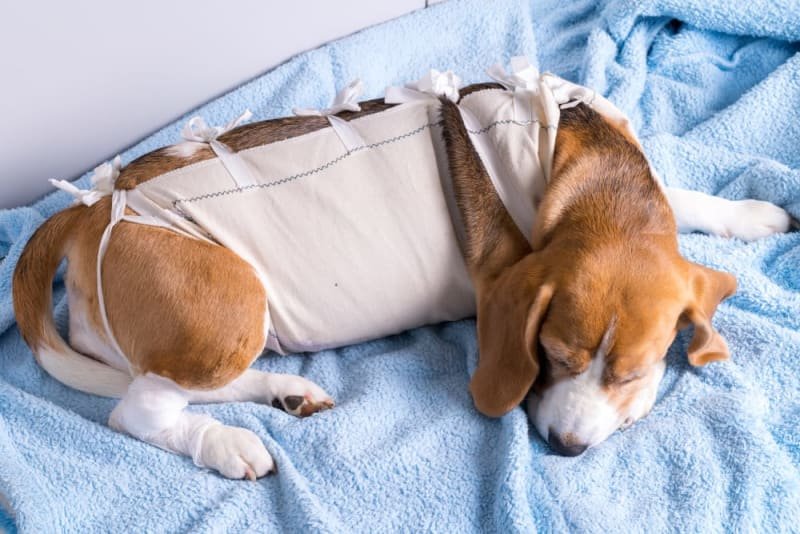
How Veterinarians Choose Pain Medication
Most clinics send dogs home with an anti-inflammatory medication similar in purpose to what humans use after dental work or minor surgery. The difference is that veterinary medications are dosed specifically for dogs and tested for use in dogs. Human painkillers can be dangerous. Very dangerous.
I still remember a customer from last spring who gave her terrier ibuprofen because she thought it was basically the same thing the clinic had prescribed years earlier for another dog. That dog ended up hospitalized with stomach bleeding. Cases like that stick with you.
Veterinarians consider a dog’s age, breed, medical history, and size before choosing medication. A healthy one-year-old mixed breed usually has different needs than a senior dog with liver disease. Some dogs get several days of pills while others receive a long-lasting injection during surgery that continues working after they go home.
Certain dogs need extra support. Large breeds, anxious dogs, and dogs with preexisting joint pain tend to struggle more during recovery. Tiny dogs can surprise people, too. I have seen little Chihuahuas act absolutely miserable over even mild discomfort, becoming tense and fearful after procedures.
Most pain medications prescribed after neutering are very safe when owners follow directions closely. Skipping doses often causes problems because pain becomes harder to control once it ramps up again. I explain it to clients like this all the time. Staying ahead of pain works better than chasing it after the dog already feels miserable.
When a Dog Might Recover With Minimal Medication
Not every dog needs a full week of medication. Some younger dogs recover so smoothly that owners wonder if the surgery bothered them at all. I have watched a healthy cattle dog try to sprint through the parking lot less than twenty-four hours after surgery. His owner definitely did not appreciate that burst of energy.
There are situations where vets may recommend shorter treatment periods. A dog with a very small incision, low inflammation, and a calm temperament may only need medication for a couple of days. That decision should still come from the veterinarian who performed the surgery, not from guesswork at home.
Behavior tells you a lot. Dogs in pain may lick the incision constantly, hesitate before lying down, or avoid being touched near the belly. Some stop wagging their tails as much. Others become clingy and follow their owner around the house all night.
I pay attention to appetite too. A dog skipping one meal after surgery is fairly common. By the second day, I expect interest in food to improve. Food motivation matters. Even picky eaters usually perk up once discomfort begins to fade.
The Mistakes I See Owners Make Most Often
The biggest mistake is assuming quiet equals comfortable. Many dogs shut down when they are hurt. Owners sometimes think their dog is resting peacefully when the dog is actually avoiding movement because standing up hurts.
Another issue is stopping medication too early because the dog “looks fine.” Dogs can hide pain better than humans, especially around their owners. I have seen dogs reopen incisions after acting energetically for two straight days. Healing tissue is weaker than people think.
Skipping the cone causes trouble constantly. I know dogs hate wearing them. Owners hate them too because they bump into furniture and wake everyone up at night. Still, I would rather deal with an annoyed dog wearing a cone than an emergency visit for torn stitches and infection.
People also underestimate how rough play affects recovery. A dog wrestling with another household pet on day four can undo progress quickly. One golden retriever I remember came back with swelling the size of a lemon after roughhousing in the backyard with a younger dog while the owner answered a phone call inside.
Most dogs handle neuter recovery very well with a little patience, restricted activity, and proper medication. The dogs that struggle most are usually the ones whose pain control or aftercare slipped somewhere along the way. I always tell owners to call their clinic if something feels off, because small concerns are easier to handle early than after they’ve grown into a bigger problem.