
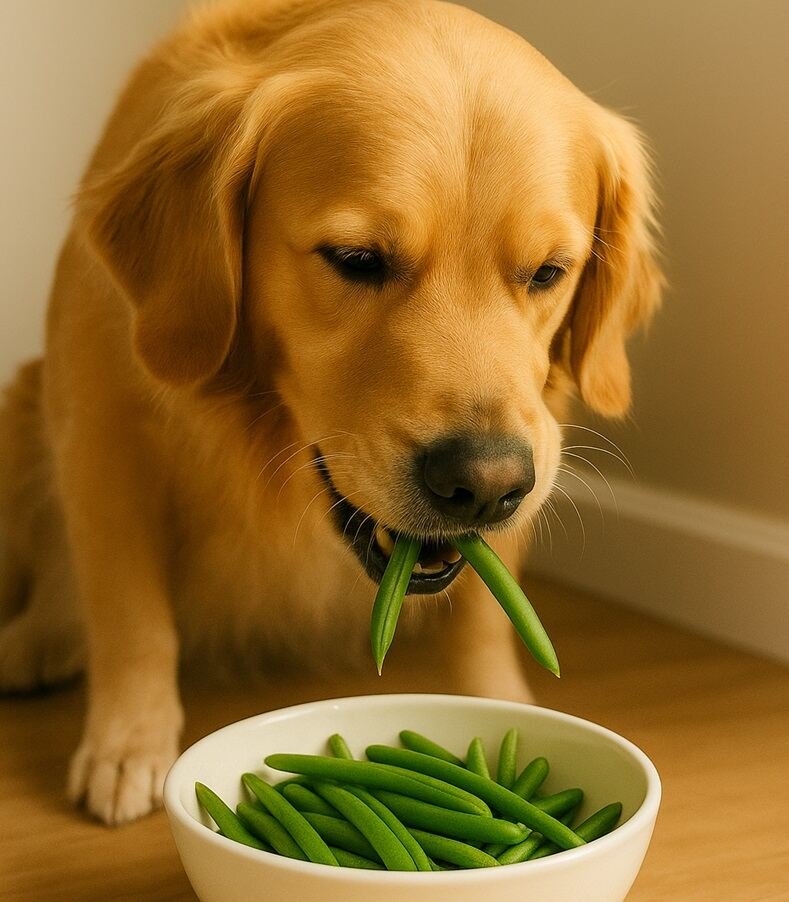
I run a small dog boarding setup out of my home, and feeding questions come up almost every week. One of the more common ones sounds simple, but deserves a real answer: Can dogs eat raw string beans? I have tested this with my own dogs and a handful of regular boarders over the past few years. The short version is yes, but the details matter more than people think.
What I’ve Seen Feeding Raw String Beans
I began offering raw string beans as a low-calorie snack for a boarder who needed to lose weight. After washing and trimming, he ate a few without any problem.
Not every dog reacts the same way. A younger Labrador I boarded last winter tried to swallow them whole, so I switched to cutting them into smaller pieces about 2 inches long. That small change made feeding safer and easier. Raw beans are firm, so chewing behavior matters.
Over time, I noticed that dogs who are already used to crunchy vegetables adapt quickly. Dogs that eat soft food often hesitate at first, then either accept it or spit it out. That tells me texture plays a bigger role than taste. Some dogs just don’t care for them.
Are Raw String Beans Actually Safe for Dogs
In general, raw string beans are safe for dogs when plain, fresh, and given in moderate amounts. I avoid canned versions because they often contain added salt, and frozen beans can be too hard straight out of the freezer. Fresh beans rinsed under tap water are my default choice. I have never seen a digestive issue from a small serving.
Once, a new client asked me to document everything their dog ate, so I kept notes and even shared resources like can dogs eat raw string beans to help them track feeding habits more carefully. That dog handled raw beans well, but only when I kept portions small and consistent. Large servings once caused loose stools, which was enough for me to adjust.
There is one thing I always tell owners: raw does not mean unlimited. A handful is fine, but a full bowl can upset a dog’s stomach and increase the risk of choking, especially in small breeds under 10 kilograms. Too much fiber can cause digestive upset. Always supervise when feeding raw string beans.
How I Prepare Them for Different Dogs
I keep it simple: wash, trim, and cut the beans. For smaller dogs, I slice beans into thumb-length pieces; for larger dogs, I cut them into longer segments, but I avoid whole beans if they tend to gulp food.
Light steaming helped a senior spaniel who struggled with chewing raw beans. A quick two-minute steam made beans easier for her to eat.
Here is what I stick to in my routine:
Small portions only, always washed and cut to size to reduce choking risk. Never add seasoning, oil, or extras. I test with two or three pieces first and always watch for any reaction over the next day.
Benefits I’ve Noticed Over Time
Raw string beans have one clear advantage. They are low in calories. That makes them useful for dogs who gain weight easily or beg between meals. I have used them as a filler treat during training sessions, especially for dogs that need frequent rewards.
Some dogs enjoy the crunch of string beans more than standard treats, as seen with a boarder who now prefers them to biscuits.
There are some mild nutritional benefits, including fiber and a small amount of vitamins. I do not rely on them as a primary source of nutrition, though. They work best as a supplement, not a replacement for balanced dog food.
When I Avoid Giving Raw Beans
I avoid raw beans for dogs with sensitive digestion, as they can cause discomfort. Cooked beans or none at all is safer in these cases.
Puppies under six months do not get raw beans to reduce the risk of choking or digestive issues.
If a dog shows any sign of discomfort, such as gas, loose stool, choking, or refusal to eat, I stop immediately and do not offer more. Food experiments should stay small and controlled to ensure safety. Never force a dog to keep eating if there are any problems.
After a few years of trying this with different dogs, I treat raw string beans as a useful option, not a default snack. They work well in the right context and with the right preparation. If I am unsure about a dog, I start small and watch closely. That approach has kept things simple and safe in my setup.