
For years, I’ve worked as a mobile pet groomer out of a converted van, parked outside Florida homes. Occasionally, clients ask about adding color to their cat’s coat, usually out of curiosity inspired by social media or festival trends. I approach this cautiously—cats aren’t dogs, and their grooming tolerance differs. My experience has taught me that animal beauty work must always respect their comfort, or it quickly becomes an issue.
Understanding Why People Even Consider Coloring Cats
Most requests I get come from clients who want something playful, like a pastel tint for a holiday photo or a themed event. A customer last spring asked me if her white Persian could be turned “lavender for Easter pictures,” and she had already seen similar results online. I had to explain that what looks simple in a short video often involves controlled environments, calm animals, and very specific products designed for pets. The idea sounds harmless, but execution can go wrong quickly if someone improvises at home.
In professional grooming, I always emphasize that coat coloring for cats isn’t a quick fix—it’s a sensitive, unpredictable process that can quickly stress them. My advice: make coloring strictly optional, use only gentle and reversible methods, and prioritize the cat’s comfort. If a cat shows any sign of distress, stop immediately. Clients often reconsider their decision when they hear this, and those who remain interested can then discuss safe processes and products. Clients who still want to explore it, I usually guide them toward experienced stylists who specialize in creative grooming rather than general pet services, since the approach matters a lot.
One place I’ve referred people to in conversations is pet grooming color services, especially when they want to understand what professional-grade handling looks like compared to home experiments. Even then, I make it clear that not every cat is a candidate, no matter how safe the dye claims to be.
Safety Concerns I Never Ignore in My Mobile Grooming Work
Working out of a mobile grooming van means I see animals in familiar home environments, which makes their behavior more honest and sometimes more reactive. Cats, especially, respond strongly to unfamiliar smells and textures, so anything applied to their coat has to be considered from a stress perspective first. I’ve had cats back away from even unscented grooming foams, which tells me how sensitive their senses really are. That sensitivity is exactly why coloring is never a casual decision in my routine.
There’s also the issue of skin health—feline skin is thinner and more reactive than many realize. I’ve had to stop sessions halfway through when a cat started over-grooming after a scented product was introduced too quickly. This experience reminds me how even mild substances can trigger behavioral changes, so when coloring comes up, I focus far more on the cat’s response in the following hours or days than on appearance.
I usually advise against anything that isn’t explicitly labeled as pet-safe and vet-reviewed, and even then, I recommend patch testing in a controlled setting under supervision. Some clients assume “natural dye” means harmless, but natural ingredients can still irritate animals depending on exposure and concentration. I’ve learned to slow the conversation down and focus on what the cat is likely to tolerate rather than what the owner imagines. That gap between intention and reality is where most grooming mistakes happen.
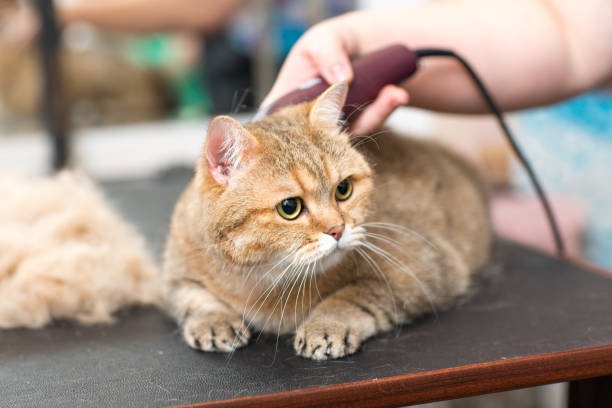
How Professional Creative Grooming Actually Works
When I do encounter safe, structured creative grooming work, it happens under very controlled conditions with calm animals and proper preparation. The cat is usually gently acclimated to handling before anything else is discussed, sometimes over multiple visits if they are anxious. I never rush that step because trust is the foundation of everything else that follows. Without it, even simple brushing becomes a struggle.
The products used in professional settings are specifically designed for animal coats and are applied in very small, monitored amounts, often focusing on patterns rather than full-body coverage. The process is slow, and I’ve spent over an hour just evaluating whether a cat would tolerate even partial application. That patience is not optional; it’s part of the job. If the cat shows discomfort at any stage, the process stops immediately.
Even in well-managed cases, I still keep expectations modest because the goal is temporary visual enhancement rather than transformation. I’ve had clients who were surprised that the result looked subtle, but that subtlety is intentional and safer for the animal. Anything more intense usually means pushing the boundaries of comfort, which I avoid entirely. The best outcomes are those in which the cat remains completely unfazed afterward.
What I Tell Owners Before They Decide
After years on the road grooming pets in different homes, I’ve learned that most people don’t actually want a dramatic change; they want a memorable photo or a seasonal moment. Once I explain the stress factors and safety limits, many clients shift their focus to simpler ideas, such as themed accessories or environment-based photography, rather than altering the cat’s coat. That usually leads to a better experience for both the owner and the animal. It also avoids unnecessary risk.
For instance, I remember a client who was set on a bright blue tint for a rescue cat she had recently adopted. However, after seeing the cat react nervously to basic handling, she decided against it. Later, she told me that seeing the cat relaxed and playful during brushing was more satisfying than any color effect could have been. Moments like that reinforce why restraint often matters more than creativity in this field: not every idea needs to be executed to be appreciated.
My final, non-negotiable advice is straightforward: If the cat isn’t completely comfortable, stop. Never proceed past the cat’s limit, no matter how interesting the idea. This rule consistently keeps cats calm and healthy. Always put the animal’s well-being first.