
I work as a mobile pet nutrition consultant, visiting homes and small clinics, mostly helping cat owners with digestive issues or picky eating habits. One question I hear more often than expected is whether canned pumpkin is safe for cats and how it should actually be used. I started paying attention after seeing how frequently mild digestive problems occur in indoor cats. Over time, I’ve tested small dietary adjustments, like adding pumpkin, in real home settings rather than just reading about them.
Why I Started Using Pumpkin With Cats
My first real experience with canned pumpkin and cats came during a visit to a household where a middle-aged tabby had recurring constipation that wasn’t responding well to simple diet changes. The owner had already tried switching kibble brands twice, but the issue kept returning every few weeks. I suggested a very small amount of plain canned pumpkin mixed into food, mostly as a fiber support rather than a treatment. The results were gradual, not instant, and that mattered in understanding how it actually works.
There is a lot of confusion among pet owners, especially when they hear “pumpkin” and assume it behaves like a medicine. I usually explain that it is closer to a dietary aid than a corrective solution. One resource I sometimes reference during consultations is “Can Cats Have Canned Pumpkin,” which helps owners understand how simple ingredients can fit into everyday pet feeding routines. The key is always moderation, because too much fiber can create the same discomfort you are trying to fix. Cats are sensitive, and their digestive balance changes quickly with even small additions.
I’ve also noticed that cats don’t react to pumpkin in the same way dogs do. Dogs often accept it more easily in larger portions, while cats tend to require a very minimal amount mixed carefully into wet food. A small spoon is enough. No more than that.
How I Use Canned Pumpkin in Practice
When I introduce canned pumpkin to a cat’s diet, I always start with plain, unsweetened versions with no added spices or sugars. The texture matters more than people expect, because some cats immediately reject a thick or grainy consistency. I usually recommend mixing it into wet food so it blends in rather than sitting as a separate lump. Most cats accept it better when it is fully integrated into their meal.
The reason I stay cautious is simple experience. I’ve seen cases where owners overused it, thinking more fiber means faster relief, but that often leads to loose stools instead of balance. During one home visit last spring, a young cat developed mild diarrhea after the owner added pumpkin to every meal rather than once daily. Small adjustments work better than frequent changes. Cats do not respond well to sudden dietary shifts, even if the ingredient is safe.
It also helps to understand that canned pumpkin is not a replacement for veterinary care. It can support digestion, but it does not address underlying conditions such as infections or chronic gastrointestinal disorders. I’ve had clients who expected immediate fixes, and that expectation usually leads to frustration rather than improvement. Patience matters more than quantity here.
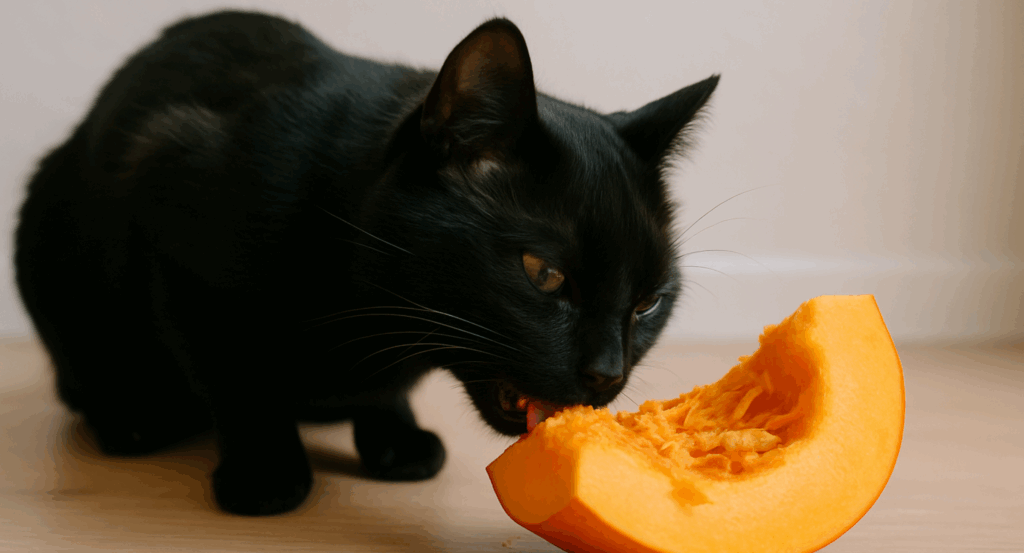
When Pumpkin Helps and When It Does Not
Canned pumpkin tends to help most in mild constipation cases or when a cat’s stool becomes slightly irregular due to diet changes or reduced activity. Indoor cats that don’t move much often benefit from a small fiber boost. I’ve seen improvement in stool consistency within a few days when the portion is controlled and consistent. However, it is not useful for every digestive issue.
It does not address vomiting caused by infections or hairballs that are already too large to pass naturally. In those cases, relying on pumpkin alone delays proper treatment. Cats showing repeated vomiting, blood in stool, or complete loss of appetite need a different level of care. I always tell owners to watch behavior closely rather than rely on a single ingredient to solve everything.
One cat I worked with had alternating constipation and loose stool, which made pumpkin less predictable as a solution. In that situation, I focused more on hydration and a consistent diet than on adding extra fiber. Balance matters more than single ingredients. Pumpkin is helpful, but only in the right context.
Common Mistakes I See
The most common mistake I see is overfeeding. Owners often assume that if a small amount helps, a larger amount will work faster, but feline digestion doesn’t follow that logic. Another issue is using pumpkin pie filling instead of plain canned pumpkin, which contains sugars and spices that are not suitable for cats. That difference alone can create new digestive problems.
Some owners also mix pumpkin into dry food without adjusting water intake, which reduces its effectiveness. Hydration plays a major role in how fiber works in a cat’s system. Without enough water, even beneficial fiber can become uncomfortable. I’ve had to correct this pattern many times during follow-up visits.
I also notice that people sometimes stop too quickly if they don’t see immediate results. Fiber support usually takes a few days to show consistent changes. Consistency matters more than intensity here. A steady approach always works better than frequent adjustments, which can confuse the digestive system.
In a few cases, cats simply refuse it, no matter how it is prepared. That is also normal. Not every dietary addition works for every cat, and forcing it only creates stress during feeding time. In those situations, I make other gentle dietary adjustments rather than pushing pumpkin as a requirement.
After seeing it used in so many different homes, I’ve learned that canned pumpkin is best treated as a small supportive tool rather than a solution on its own. It has a place in feline care, but only when used carefully and with attention to the cat’s overall routine.