
I’ve spent years working as a veterinary technician and later doing in-home cat care visits for families who loved their pets but struggled with allergies. I’ve walked into homes where people were determined not to give up their cats, even when their eyes were constantly red, and their breathing was uncomfortable. I understand that mix of affection and frustration very well because I’ve seen it repeat in dozens of households.
Living with cats while allergic is not impossible, but it does require changes that most people do not expect at first.
Understanding What Actually Triggers Cat Allergies
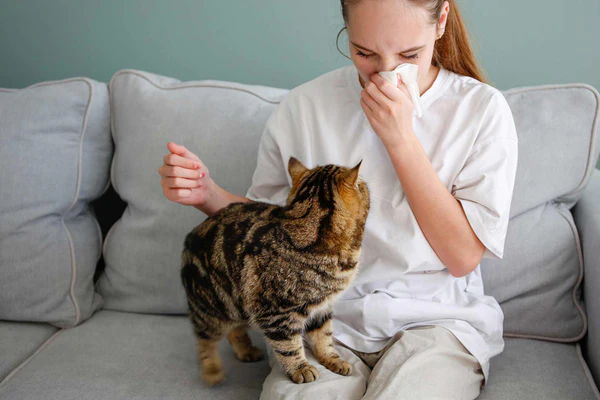
In my experience, most people think they are allergic to cat fur, but that is not really the main issue. The real trigger is a protein found in cat saliva and skin flakes that spreads everywhere when the cat grooms itself. I have seen clients surprised when short-haired cats still caused strong reactions because the problem was never the hair itself. It sticks to fabric, air, and even walls in ways people underestimate.
One customer last spring kept telling me her new kitten must be “hypoallergenic enough” because it shed so little. Her symptoms still worsened within a week, especially at night when she stayed in a closed bedroom with the cat. We slowly realized the issue was exposure buildup in a small, poorly ventilated space, not shedding alone. That realization changed how she arranged her entire home setup.
Over time, I’ve learned that managing allergies is less about removing the cat and more about controlling exposure patterns. It requires understanding where allergens accumulate most, such as bedding, carpets, and soft furniture. I always tell people that awareness is the first practical step, not panic or drastic decisions. Small adjustments can reduce symptoms more than people expect.
Adjusting Your Home and Finding Medical Support
When I first started helping families with allergy issues, I noticed that home structure mattered just as much as medication. Airflow, cleaning habits, and even where the cat sleeps can change how severe symptoms feel day to day. I often suggest simple environmental controls before anything more complex. These changes are not expensive, but they require consistency.
One family I worked with struggled for months until they separated sleeping areas completely and started using air filtration in the main living room. They also consulted a specialist at a local allergy clinic, which helped them understand the timing of antihistamines and the management of long-term exposure. After combining medical advice with household changes, their symptoms became noticeably easier to manage within a few weeks. Not perfect, but stable enough for daily life.
From what I’ve seen, medical support makes a real difference when combined with environmental control. I am not a doctor, but I have watched families rely too heavily on either medication or cleaning alone, and neither approach works well in isolation. A balanced plan tends to reduce flare-ups without forcing people to rehome their pets. That balance is what most households are really searching for.
Daily Habits That Make Living With Cats Easier
Daily routines matter more than most people expect. I usually advise cat owners to keep grooming frequent and controlled, even if the cat resists at first. Brushing reduces the amount of loose dander that floats through the home. It also keeps the cat’s coat healthier, which indirectly reduces allergen spread.
Cleaning habits need to be predictable rather than intense. I have seen people deep-clean once a week and still suffer symptoms because allergens accumulate daily. Wiping surfaces, washing pillow covers, and vacuuming high-use areas every few days tends to be more effective. Consistency beats occasional effort every time.
Another thing I learned during home visits is that cat-free zones are not optional for allergy management. Bedrooms are usually the most important space to protect because people spend long hours there without interruption. I once worked with a couple who refused to keep the cat out of their bed, and their symptoms never improved until they changed that one habit. It was a simple rule, but hard to accept emotionally.
Living Comfortably Without Giving Up Your Cat
After years of working with both cats and allergic owners, I’ve noticed something important: most people do not actually want separation; they want control. They want their home to feel comfortable again without losing the bond they have with their pet. That goal is realistic in many cases if expectations stay grounded. It just takes steady adjustments, not quick fixes.
There are still limits, and I always tell people that honestly. Some severe allergies do not respond well even with strong management, and those situations require more serious decisions. But for many households, symptoms can be reduced to a manageable level with consistent effort. I’ve seen families go from daily discomfort to occasional mild reactions over time.
It helps to think of it as an ongoing maintenance process rather than a problem to solve once and forget. I still check in with a few former clients who now live comfortably with their cats, and most of them say the same thing: they learned to treat allergen control like brushing teeth, not a one-time fix. That mindset shift makes living with cats much more realistic for allergic owners.
In the end, it is a balance between care for yourself and care for your cat, and that balance looks different in every home. I have seen it work in small apartments and larger houses alike when people stay consistent with their routines. It is not about perfection; it is about steady control of what can be managed day by day.