
I run a small cat boarding setup out of my home, and nights are when I notice the biggest difference between how cats and humans experience the world. I can barely move around without a light, but the cats I care for move with total confidence. Watching them navigate a dim hallway or jump onto a shelf at 2 a.m. made me curious early on about how their vision actually works.
It Is Not Total Darkness for Them
The first thing I realized after caring for dozens of cats is that they do not see in complete darkness. There is almost always some light, even if it is just a faint glow from a window or a hallway bulb. Cats use that tiny bit of light far better than we do, and that gives the impression that they can see in pitch black.
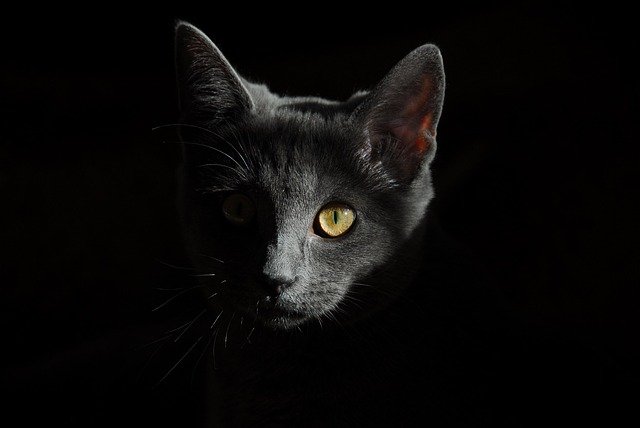
I tested this once during a power outage that lasted close to 6 hours. I could not see anything across the room, but a young black cat I was boarding still walked around without bumping into furniture. That told me they are working with light levels we would normally ignore.
The difference is dramatic. A cat can see in light about one-sixth as bright as what a human needs. That small advantage becomes huge in real situations.
The Structure of Their Eyes Makes the Difference
After seeing these behaviors repeatedly, I started reading more about how their eyes are built. The key part is the number of rod cells in their retinas, which help detect light and motion. Cats have far more of these cells than we do, and that is why they perform so well in low light.
When owners ask me for something simple to read about it, I sometimes point them toward how cats see in the dark because it breaks down how rod cells and eye structure affect night vision in a way that matches what I have observed in real cats.
There is also a reflective layer behind the retina called the tapetum. I notice it every evening when light hits a cat’s eyes, and they glow back at me. That glow is not just for show; it reflects light back through the retina, giving the cells another chance to process it.
This reflection boosts sensitivity. It is like giving the eye a second pass at the same light. That is one reason cats can move so smoothly in dim conditions while I am still reaching for a switch.
Pupil Size Plays a Bigger Role Than People Expect
One thing I pay attention to during boarding is how quickly a cat’s eyes adjust. Their pupils can expand to cover most of the visible eye, allowing more light to enter. I have seen this happen in seconds when a room goes from bright to dim.
The change is obvious. In full light, the pupil looks like a narrow slit. In low light, it becomes almost round and very large. This flexibility is a major reason they can adapt so quickly compared to us.
I once had a cat that loved to sit near a window at dusk. Within a minute of the sun dropping, her pupils would expand, and she would start tracking movements outside that I could not even detect. It was a clear example of how their eyes prepare for night activity.
The numbers are impressive. Their pupils can open to about three times the width of a human pupil under similar conditions. That alone increases the amount of light they can use.
They Rely on More Than Just Vision
Even though their eyes are excellent, I have learned that cats do not rely on sight alone in the dark. Whiskers play a big role. I have watched cats move through tight spaces without touching anything, using their whiskers to sense distance and airflow.
Hearing is another factor. A quiet room at night is full of small sounds that we ignore, but cats pick up on them instantly. I have seen a cat turn its head toward a faint scratch behind a wall that I could not hear at all.
There is also memory. Cats remember layouts well. After just one day, most cats I board can move around the space even with very little light. They map the environment in their minds and combine that with their senses.
It all works together. Vision helps, but it is not the only tool they use.
What Their Night Vision Cannot Do
People often assume cats see perfectly in the dark, but that is not quite true. They need at least some light to work with. In a completely sealed room with zero light, they would struggle just like we would.
Color is another limitation. Cats do not see the same range of colors we do, especially in low light. Their world at night is more about shapes and movement than detailed color.
I have noticed this during feeding time. In dim light, a cat will find its bowl easily but may not notice color differences in toys or other objects. Movement catches their attention far more than visual detail.
Sharpness is different, too. Cats sacrifice some clarity for better night vision. That trade-off works well for hunting and moving safely, but it means they do not see crisp details the way humans do during the day.
Watching cats at night changed how I think about vision. They are not seeing magic. They are using a set of tools that work better in low light than ours ever will.
When I turn off the lights now, I still pause for a second before moving. The cats do not. They keep going, quiet and steady, as if nothing changed at all.