
I’m a mobile cat groomer working across small towns around Punjab, and I spend a lot of time sitting on floors, beds, and couches with cats that barely know me. One thing I’ve noticed again and again is how many cats choose to sleep on their owner’s legs, especially during quiet evenings or after grooming sessions. At first, I thought it was random behavior, but after years of handling hundreds of cats in home settings, I began to see clear patterns behind it.
Warmth, Weight, and Simple Comfort
Most cats I handle are driven by basic physical comfort more than anything complicated. A warm set of human legs under a blanket makes for an easy heat source, especially on cooler nights in homes without strong central heating. I remember a customer last winter in a village outside Faisalabad whose cat would jump onto her legs every evening the moment she sat down after dinner.
Cats lose body heat faster than people realize, and they naturally seek warm surfaces that stay steady for long stretches. Legs are especially appealing because they don’t move much once someone settles into bed or a sofa. I’ve seen cats ignore plush beds worth several thousand rupees just to curl up on someone’s shins because the temperature felt more reliable.
There’s also the pressure factor that many owners don’t notice at first. A cat resting across its legs gets a gentle, even weight that mimics the feeling of being held or supported. I always tell clients that this combination of warmth and mild pressure is often enough to explain half the behavior on its own.
Trust and Territory Signals
In many homes I visit, cats that sleep on their owners’ legs are not just seeking comfort but also signaling trust. I once worked with a shy rescue cat in a two-room apartment where it avoided every piece of furniture except the owner’s lap and legs during rest time. Over a few weeks, that same cat began sleeping across the owner’s legs every evening, almost like a routine checkpoint for safety.
When cats choose a human’s legs, they are essentially marking that person as part of their safe territory. I saw this clearly during a grooming session for a family with three indoor cats, each with a different preferred human spot, and one consistently picked the father’s legs over any cushion or blanket in the house. The behavior changed only when guests were present, showing how situational trust really is.
For owners who want a deeper understanding of feline behavior patterns or want to rule out stress-related habits, I sometimes recommend a professional behavior check through cat behavior consultation. It helps separate normal bonding habits from anxiety-driven routines that can look similar on the surface. I’ve seen cases where a simple adjustment in the environment changed where the cat chose to sleep within a week.
Not every case needs intervention, though. In my experience, most leg-sleeping behavior indicates that the cat sees the human as a stable part of its environment. That stability matters more than people expect, especially for indoor cats that don’t roam far or interact with many other animals.
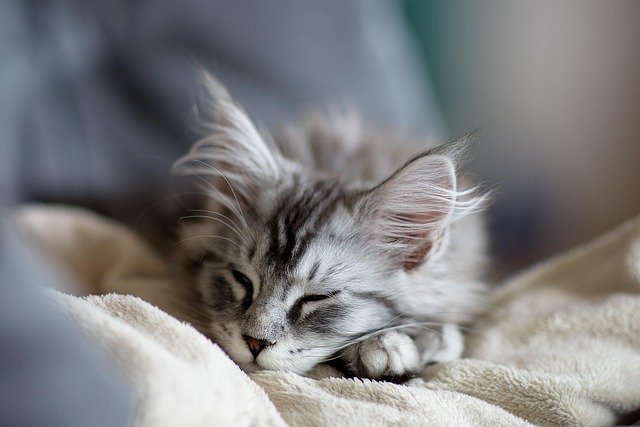
Routine, Habit, and Emotional Anchoring
Cats are surprisingly routine-driven once they settle into a home. I’ve visited clients who told me their cat only sleeps on their legs after 10 p.m., as if an internal clock were running in the background. One household I remember in Gujranwala had a cat that would wait for the television to turn off before jumping onto the bed.
Over time, these repeated moments become emotional anchors. The cat starts associating a specific human posture, such as lying still with legs stretched out, with safety and predictability. I’ve seen this pattern hold even after furniture changes or bedding replacements, which suggests the behavior is more tied to routine than to the objects themselves.
There’s also a learned component that builds quietly. If a cat once settled on legs and got warmth, comfort, and no disturbance, it is very likely to repeat that choice without much thought. I’ve had clients say their cat “just started doing it one day and never stopped,” which fits exactly with how habit loops form in animals.
Sometimes I notice younger cats copying older ones in multi-cat homes, especially when it comes to choosing resting spots. A younger cat that initially sleeps near the feet may gradually move onto the legs after watching another cat or even observing the owner’s reaction. It doesn’t happen instantly, but over the course of weeks, it becomes part of their normal behavior.
When It’s Normal and When It Changes
Most of the time, a cat sleeping on your legs is harmless and even a good sign of comfort. I tell owners not to worry unless the behavior changes suddenly or is accompanied by other signs, such as restlessness, aggression, or avoidance during the day. In one case, a cat that had always slept on its owner’s legs abruptly stopped after a house renovation, and that shift turned out to be related to stress from noise and unfamiliar smells.
I’ve also seen the opposite pattern, where a cat suddenly becomes more clingy and starts sleeping on its legs after a period of absence, like when the owner travels for a few days. That kind of behavior usually fades back to normal once the routine stabilizes again. Cats react more strongly to changes in daily rhythm than most people expect.
Physical discomfort can occasionally play a role, but it’s less common than people assume. If a cat is seeking warmth or pressure more than usual, I pay attention to whether it also shows signs like limping or reluctance to jump. Those cases are rare in my experience, but they’re worth checking if the behavior appears out of nowhere.
Most of the time, though, I see something simpler. A cat finds a warm, safe, familiar surface that happens to be a human’s legs and decides that’s where it sleeps. It’s a small choice repeated often enough to become a habit, and once it sticks, it usually stays that way for years.