
I work as a veterinary technician in a busy small-animal clinic, and in the evenings, I also visit homes to help people understand their cats’ behavior. One of the most common questions I hear is why a cat insists on lying directly on a person’s chest. I have seen this behavior in dozens of homes, and I also experience it myself with a cat that claims my chest every night, the moment I sit down. It is one of those habits that feels simple on the surface but has layers of comfort, instinct, and communication behind it.
The comfort and warmth your cat is really seeking.
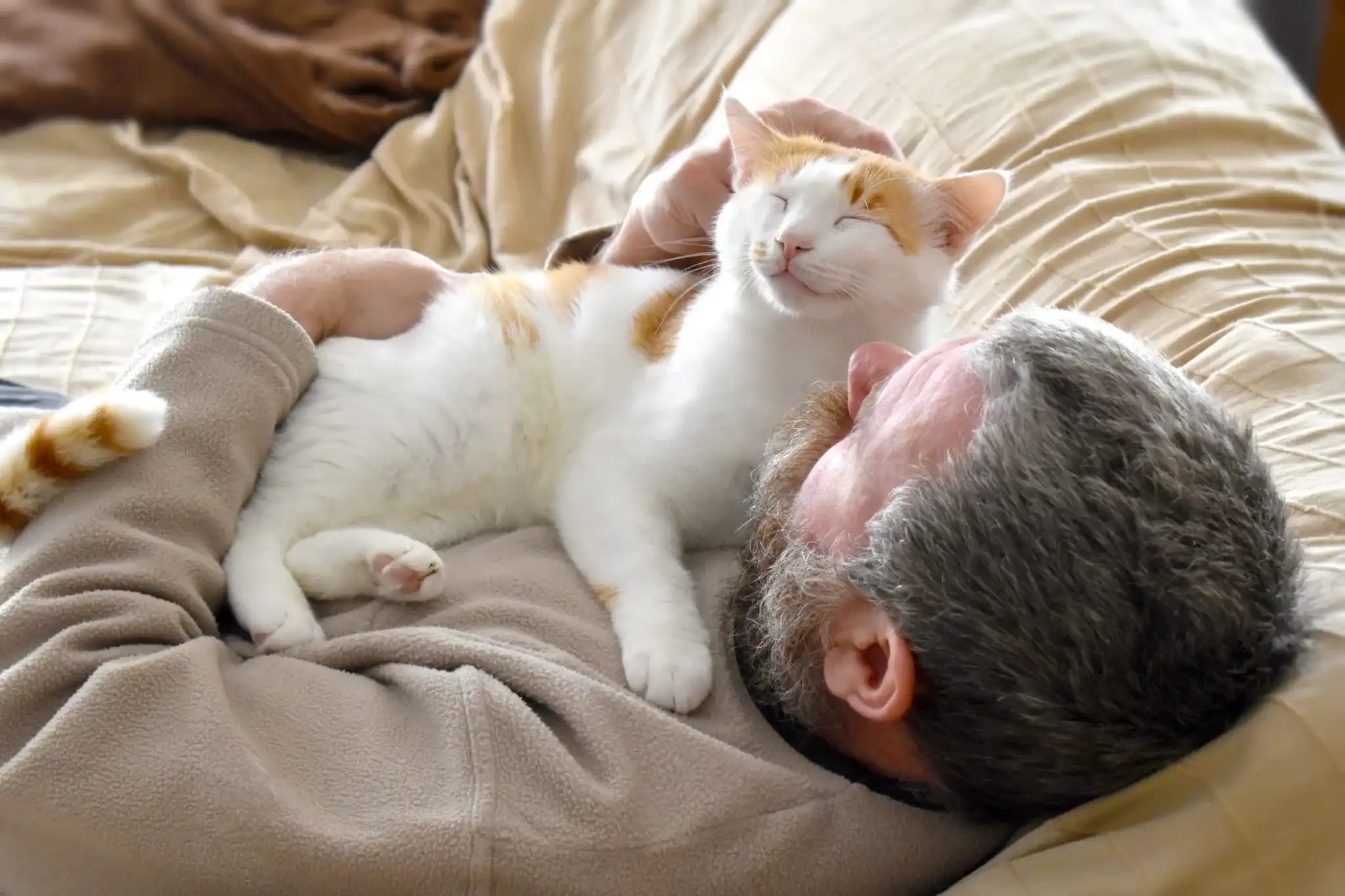
From what I have observed in clinics and homes, a cat’s decision to lie on your chest often starts with basic comfort. Your chest provides a stable surface, gentle rise and fall from breathing, and steady warmth that reminds them of resting with littermates. I once worked with a rescue cat that refused every bed in the house but always climbed onto its owner’s chest within minutes of them lying down. That pattern repeated daily without fail.
The heartbeat is another subtle factor that many cat owners underestimate. Cats are sensitive to rhythmic sounds and vibrations, and your heartbeat creates a calming pattern they associate with safety. I have seen this especially in younger cats that were bottle-fed or separated from their mother early, where human chest contact becomes a substitute for early-life comfort cues.
There is also the simple fact that your chest does not move much once you settle. Cats prefer predictable spaces where they do not feel disrupted, and your upper body becomes a reliable resting platform. It is not unusual for me to tell owners that their cat is not choosing them randomly but selecting the most stable “soft surface” in the room.
Bonding behavior and emotional attachment signals
When I explain this behavior in consultations, I often compare it to how cats form social bonds in multi-cat environments. Sitting close, especially on a high-contact area like the chest, is a form of trust and social bonding. One client I visited last spring had two cats, and only one would consistently sleep on their chest, while the other stayed nearby but never made physical contact.
In many cases, chest sleeping is a sign that the cat sees you as part of its social group. I often remind owners that cats do not show affection the same way dogs do, so their version of closeness can feel more subtle but still very meaningful. In fact, this is where much of the confusion comes from: people expect obvious signs, while cats communicate through positioning and proximity.
During my work, I sometimes suggest that owners observe the conditions under which their cat chooses this spot. Interestingly, some owners notice it happens more after returning from several hours away or during quieter evening routines. For people looking to understand broader feline behavior patterns, I often point them toward ASPCA cat behavior advice, since it helps frame these actions in a wider behavioral context beyond just one habit.
Territory, scent marking, and feeling secure
Cats are territorial animals, and your chest is one of the most scent-rich areas on your body. When a cat lies there, it is not only resting but also leaving its scent, which reinforces a sense of shared space. I have seen this especially in multi-pet households where cats compete for human attention in subtle ways.
Some cats also choose the chest because it allows them to monitor their environment while still being close. From that position, they can observe the room, hear movements, and respond quickly if something changes. I often describe it as a “safe lookout point,” even though it looks like simple cuddling from the outside.
Not every cat is purely affectionate when doing this. I have worked with a few cases where chest lying was more about control of proximity rather than pure bonding. Those cats would shift positions immediately if the owner tried to move, which shows how sensitive they are to maintaining their chosen spot.
When chest sleeping becomes attention-seeking or stress-related.
There are times when this behavior is less about comfort and more about attention seeking. In my experience, cats quickly learn that lying on your chest guarantees interaction, even if you are just resting. One household I visited had a cat that only did this during phone use or when the owner was watching television, clearly timing its presence for maximum attention.
Stress can also play a role, especially in cats that have experienced recent changes in their environment. I remember a case where a family moved homes, and their cat suddenly began sleeping on the owner’s chest every night after previously preferring the sofa. That shift lasted for several weeks until the cat gradually adjusted to the new surroundings and began exploring other resting spots again.
There are a few situations in which I advise owners to monitor behavior more closely, especially if it involves clinginess or sudden changes in appetite or activity. In most cases, it is harmless, but combined symptoms can sometimes point toward anxiety or discomfort that needs attention. I always encourage people to look at patterns rather than isolated behaviors when trying to understand their cat.
What I notice most from years of working with cats
After years of working in veterinary settings and visiting homes, I have learned that cats are far more intentional about their physical closeness than people assume. Chest sleeping is rarely random, and it usually reflects a mix of trust, routine, and environmental comfort. I have even noticed that cats will shift this behavior slightly depending on who in the household they feel most secure with.
There are days when I sit with owners and simply observe their cats’ habits for a while before offering explanations. More often than not, the answer is already visible in how the cat moves, pauses, and chooses resting points. It is a small behavior, but it tells a surprisingly detailed story about how the cat experiences the home and the person it chooses to lie on.
When I leave these consultations, I usually remind people that this behavior is one of the clearer signs of trust a cat can offer. It may feel heavy on your chest after a while, but in a cat’s world, it is often the closest thing to saying, “This is where I feel safe.”