
I’ve spent years working in basement cleanup and pet-odor remediation, especially in older homes where concrete has absorbed everything over time. Cat urine on concrete is one of those problems that look simple on the surface but keep coming back if you don’t treat them properly. I’ve walked into homes where people thought they cleaned it months ago, yet the smell still hit me at the door.
Why does concrete hold onto cat urine?
Concrete is far more porous than most people expect, almost like a hard sponge with thousands of tiny air pockets. When a cat urinates on it, the liquid doesn’t just sit on top; it travels down into those pores and crystallizes as it dries. I’ve seen this especially in basements that were never sealed after construction, sometimes dating back twenty or thirty years.
In my work, I often explain to homeowners that surface cleaning addresses only what they can see and smell immediately. The real problem sits below the surface, where uric acid salts stay dormant until humidity brings them back to life. I once inspected a garage where the owner had scrubbed it six times with bleach, but the odor still returned every summer.
Concrete density varies from one house to another, which affects how deep urine can travel. Older slabs tend to be more absorbent, especially in homes built before modern sealing practices became common. I’ve worked on roughly 200 homes where this exact issue was the main complaint from pet owners.
First steps I take when cleaning fresh and old stains
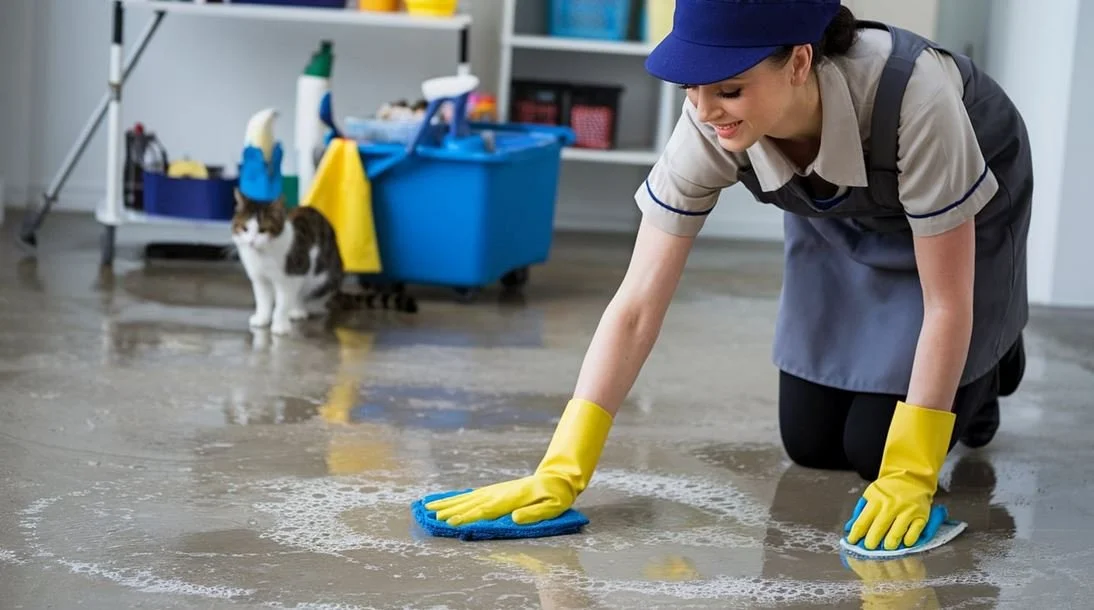
When I first arrive at a site, I always start with dry blotting if the stain is fresh, using absorbent towels and firm pressure rather than scrubbing it in. Scrubbing too early only pushes the urine deeper, and I’ve seen that mistake turn a small problem into a full-floor odor issue. After blotting, I rinse the area lightly with warm water to lift surface residue without flooding the slab.
One tool I rely on often is an enzymatic cleaner, because it actually breaks down uric acid rather than just masking it. I’ve had good results with commercial-grade products applied in multiple passes over several hours. In some cases, I recommend a service like how to get cat urine out of concrete to homeowners who want a more thorough treatment because professional-grade extraction equipment can reach deeper than manual cleaning.
I usually let the enzyme solution sit for at least 10 to 12 hours before reassessing the smell. During a job last spring, a customer thought the odor was gone after one application, but I had them repeat the process twice more before it fully disappeared. Patience matters here more than pressure or scrubbing strength.
Deep treatment methods that actually reach the slab
Once urine has soaked into concrete for a long time, surface cleaners alone are no longer sufficient, and deeper methods are necessary. I often switch to a hydrogen peroxide solution or a specialized poultice that pulls contamination back out of the pores. This step is slower, but I’ve seen it save floors that looked completely beyond repair.
In some jobs, I mix a paste using absorbent clay and oxidizing agents, then spread it over the affected area like a thick mask. It sits there for a full day, sometimes longer, drawing out trapped uric compounds as it dries. I remember a basement in an older farmhouse where we repeated this process three times before the odor finally stopped returning during humid weather.
Heat and humidity also help activate hidden odor pockets, which is why I sometimes run dehumidifiers during treatment. The process isn’t quick, and anyone expecting instant results usually gets frustrated early on. One short truth I tell clients is simple: it takes time.
Not every slab reacts the same way, and that’s something experience teaches you fast. I’ve had identical treatments work perfectly in one house and only partially in another just a few streets away. The difference often comes down to how the concrete was mixed and cured decades ago.
Sealing the concrete so the smell does not return
After cleaning, sealing the surface prevents the problem from recurring due to humidity changes. I always wait until the slab is fully dry, which can take two to five days depending on airflow. Rushing this part traps moisture underneath and can make odors worse over time.
I usually reach for acrylic or epoxy-based sealers, depending on whether the space will be finished or left raw concrete. In basements where families spend time, I lean toward epoxy because it creates a stronger barrier against both moisture and odor migration. I’ve sealed floors in homes where pets had repeated accidents, and the smell stayed gone for years afterward.
Proper sealing also changes how future cleaning behaves, since urine can no longer penetrate as deeply. That makes any accidental repeat incidents easier to manage with basic cleaning rather than full remediation. I’ve had homeowners tell me they wish they had sealed the floor right after moving in, especially in older houses with unknown pet history.
One thing I always caution is that sealing does not replace cleaning; it locks in whatever is already there. If any contamination remains under the surface, it can still be trapped and reactivated later. That’s why I never skip the deep treatment phase before applying any coating.
Working with concrete and pet odor problems has taught me that patience and method matter more than products alone. I’ve seen people spend weeks chasing smells with household cleaners when a structured approach would have solved it in a couple of careful sessions. Once the slab is properly treated and sealed, the improvement in air quality is immediate and noticeable, even in closed rooms.