
Mice and cats have a natural predator-prey relationship. When a mouse senses danger, it reacts quickly and hides. Many people wonder how long a mouse will stay hidden when a cat is around. The answer depends on several factors, including fear level, environment, and food availability.
Why Mice Hide from Cats
Mice rely on survival instincts. A cat’s scent, sound, or even presence can trigger fear almost instantly. When a mouse detects danger, it looks for a safe hiding spot within seconds. This behavior helps it avoid being caught.
These small animals have excellent hearing and smell. Even a quiet cat moving nearby can be enough to scare them. Once they hide, they tend to stay still. Movement can give away their location.
Mice often choose tight spaces. Walls, cabinets, and small gaps provide safety. These spots are hard for cats to reach. This makes hiding more effective.
How Long a Mouse Will Stay Hidden
A mouse can stay hidden for several hours or even days. The exact time depends on how threatened it feels. If the cat remains active in the area, the mouse may not come out at all. Fear keeps it in place.
If you want to understand how long a mouse will hide from a cat, many pest control resources explain that mice may remain hidden until they feel completely safe and detect no signs of a predator nearby. This waiting period can stretch longer if the environment stays noisy or active.
Food and water needs also play a role. A mouse can survive about 2 to 4 days without food, but it prefers to eat more often. Hunger may force it to move, even if a threat is nearby. This is when cats are more likely to catch it.
Nighttime changes things. Mice are more active at night and may take the risk to search for food when the house is quiet. This behavior often happens after several hours of hiding.
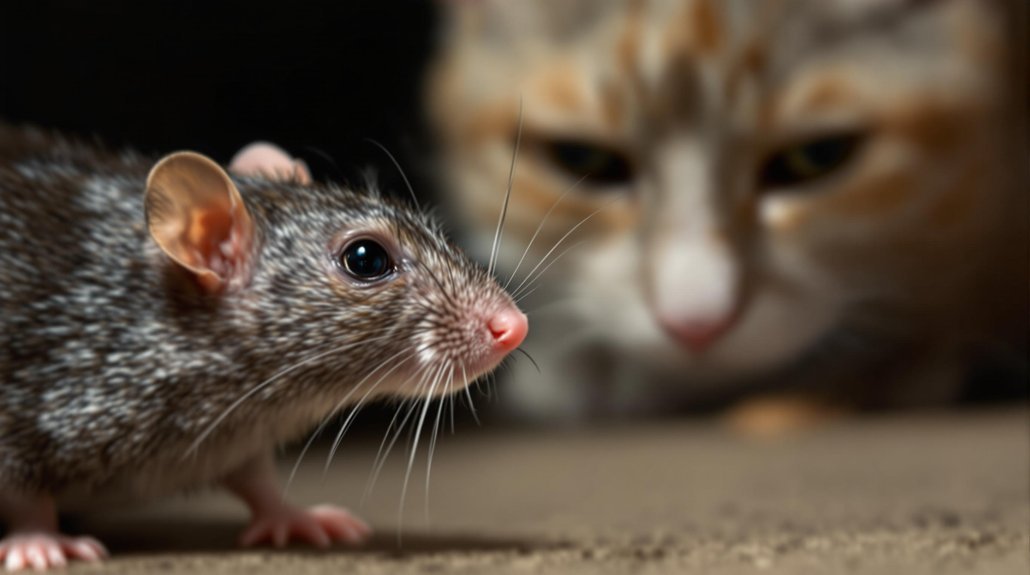
Where Mice Usually Hide Indoors
Mice are experts at finding hidden spaces. They can squeeze through openings as small as 1 centimeter. This makes homes full of potential hiding spots. Even small cracks can become entry points.
Common hiding places include kitchen cabinets, wall voids, and behind appliances. These areas are warm and close to food sources. A mouse may stay in one spot for many hours. Safety is the priority.
Here are a few typical places where mice hide:
– Inside walls or ceilings where cats cannot reach
– Behind refrigerators or stoves, where it is warm
– Inside storage boxes or cluttered areas
– Under furniture like sofas or beds
– Near food sources such as pantries
These locations make it difficult for cats to catch them. Even a skilled hunter may struggle to reach these areas. Mice depend on this advantage.
Do Cats Always Catch Mice
Cats are natural hunters, but they do not always succeed. Some cats have strong hunting instincts, while others show little interest. Domestic cats may lack the experience needed to catch fast-moving prey. It varies from cat to cat.
A mouse that stays hidden has a better chance of survival. Cats rely on movement to detect prey. If the mouse stays still, it may go unnoticed. Patience works in the mouse’s favor.
Some cats play with mice instead of catching them quickly. This behavior can give the mouse a chance to escape. It depends on the cat’s personality and experience. Not every hunt ends the same way.
Environment matters too. A cluttered home provides more hiding spots, making it harder for cats to track mice. Open spaces increase the chances of capture. Space affects the outcome.
How to Reduce Mouse Hiding Spots
Reducing hiding spots can make a big difference. Start by sealing small cracks and gaps around your home. Even tiny openings can let mice in. Blocking access is key.
Keep your space clean and organized. Remove clutter where mice can hide. Food should be stored in sealed containers. This reduces attraction.
Regular cleaning helps. Sweep floors and wipe surfaces to remove crumbs. Trash should be disposed of properly. Small steps can limit mouse activity.
Combining a cat’s presence with a clean environment is more effective than relying on either alone. Mice are less likely to stay where food is limited and danger feels constant. This reduces their comfort level.
Mice can stay hidden for hours or even days when a cat is nearby, depending on how safe they feel and how readily available food is. Their survival instincts are strong, but reducing hiding places and maintaining a clean home can limit their chances and encourage them to leave.