
I work as a mobile pet groomer and home pet-care cleaner in Faisalabad, and I’ve dealt with more cat messes than I can count. Cat vomit is one of those things that always catches owners off guard, especially when it lands on carpet or fabric. Over the years, I’ve cleaned everything from fresh puddles to stains that were left overnight because no one noticed them in time. The method changes depending on timing, surface, and what the cat actually ate.
First response matters more than tools.
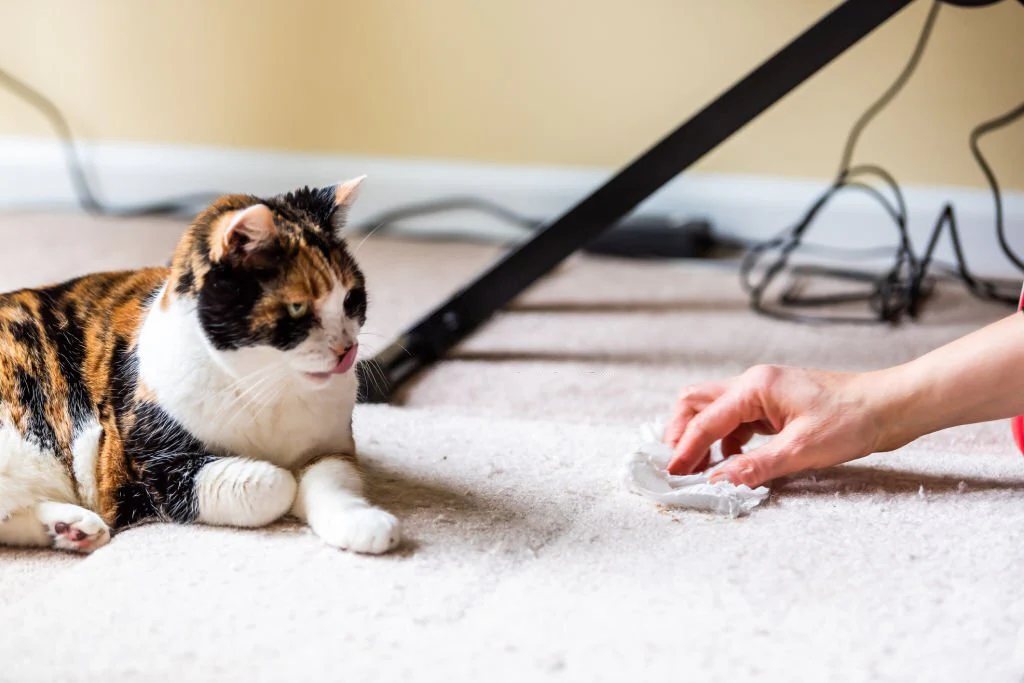
The moment I walk into a home and see fresh cat vomit, I always act fast because delay makes the job harder. Fresh mess is mostly liquid and partially digested food, so it spreads quickly into fibers if left alone. I usually keep disposable gloves and paper towels in my kit because speed matters more than perfection at this stage. One quick blot can save a carpet from permanent staining.
I avoid rubbing at first because it pushes the material deeper into the surface. Instead, I gently lift solids first, then blot from the outside toward the center. That simple habit reduces stain size significantly and prevents that sour smell from spreading into the room. I learned early on that aggressive scrubbing almost always makes things worse.
After the bulk is removed, I use lukewarm water with a mild dish soap solution. The goal is not to soak the area but to lightly break down the residue left behind. A soft cloth works better than anything harsh or abrasive in this stage. Small circles, slow pressure, and patience usually get the surface back to normal faster than rushing.
Cleaning the stain properly without damaging surfaces
Once the immediate mess is handled, I move on to deeper cleaning, especially if the vomit has started to dry or stain. This is where most people struggle: either they use too much water or the wrong cleaning product. I’ve seen carpets get worse from over-cleaning than from the original accident itself. Controlled cleaning is the key.
In many homes I visit, owners ask me for trusted cleaning support, and I sometimes recommend a reliable professional cat mess cleanup service when the stain has already set into delicate fabric or expensive rugs. I usually explain that calling for help early can actually save money compared to replacing damaged upholstery. I’ve seen situations where a small sofa cushion could have been saved if addressed early on. Waiting too long turns a simple cleanup into restoration work.
For most surfaces, I use an enzyme-based cleaner because it breaks down organic material rather than just masking the smell. I let it sit for around 10 to 15 minutes, depending on how deep the stain looks. Then I blot again with a dry towel until most of the moisture is gone. It always surprises people how much residue comes out even after the surface looks clean.
I avoid using strong bleach or ammonia-based products because cats can later react badly to those smells. There was a case last spring where a client used a heavy chemical spray, and the cat avoided that entire room for days. It’s better to use gentle but effective solutions than to risk creating a new behavioral issue. Clean should also mean safe.
Carpets, sofas, and the smell problem
Carpets hold onto odors longer than most surfaces, and that is where most complaints come from after a cat vomit incident. Even when the stain is gone, the smell can linger deep inside the fibers. I usually treat these areas twice, once immediately and again a few hours later after drying. That second pass makes a noticeable difference in odor control.
Sofas are even trickier because the padding absorbs liquid quickly. I press a dry towel firmly into the cushion to draw out moisture before applying any cleaner. Airflow also matters, so I often suggest placing a fan nearby to speed up drying. If cushions stay damp for too long, they can develop a musty smell that is harder to remove than the original vomit odor.
Hard floors like tile or wood are easier to clean, but they still need proper wiping because residue can leave a sticky film. I use a damp mop with a mild cleaner, then dry the area immediately to avoid streaks. Quick drying prevents slipping hazards and keeps the finish intact. Simple steps work best here.
Small messes on rugs can sometimes be lifted with baking soda after initial cleaning. I sprinkle it lightly, let it sit for a few hours, then vacuum it out. This helps neutralize leftover smells without introducing strong fragrances. It’s not a cure-all, but it works well in routine cases.
Why cats vomit and how I reduce repeat incidents
Cleaning is only half the story because repeated vomiting usually means something in the cat’s routine needs attention. In my experience, hairballs are one of the most common reasons, especially in long-haired cats. Regular brushing reduces the amount of loose fur they swallow during grooming. That alone can cut incidents in half in many of the homes I visit.
Diet also plays a major role, and sudden changes in diet often trigger stomach upset. I usually suggest gradual transitions over several days instead of switching food overnight. Some cats simply eat too fast, and in those cases, slow-feeder bowls make a noticeable difference. I’ve seen cats reduce vomiting just by changing how they eat, not what they eat.
Stress is another factor that people underestimate. New environments, loud noise, or even a new pet in the house can upset a cat’s stomach. I always ask owners about recent changes when I’m called for repeated cleanup cases. Sometimes the solution is behavioral rather than medical, though persistent vomiting should always be checked by a vet.
Keeping a small emergency cleaning kit at home helps reduce panic in the event of an accident. I recommend paper towels, mild dish soap, gloves, and an enzyme cleaner as the basic set. Quick response usually determines how easy the cleanup will be. Once people get used to handling it calmly, the process becomes much less stressful overall.
I’ve learned over time that cat vomit cleanup is not just about removing a stain. It’s about protecting fabric, controlling odor, and understanding why it happened in the first place. The cleaner the response, the easier everything becomes for both the owner and the cat living in that space.