
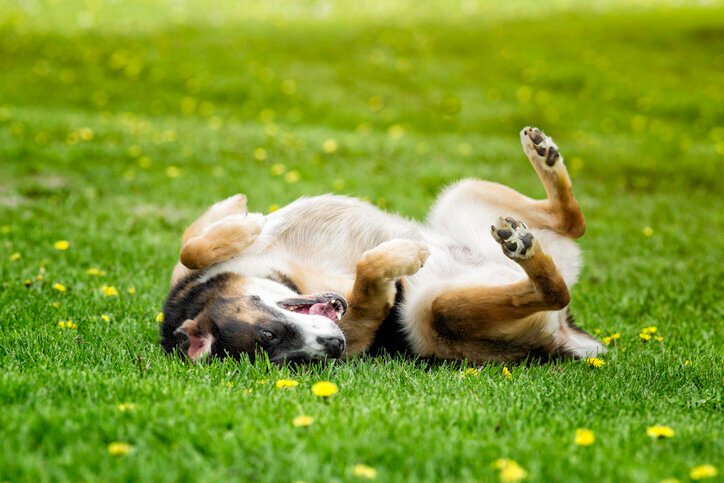
I run a small dog boarding and daycare setup outside a rural town in eastern Pennsylvania, and I spend most mornings hosing mud off Labradors before the owners arrive. Over the years, I have watched dogs throw themselves into grass patches with total commitment, usually right after a bath or during the cleanest part of the day.
Some twist onto their backs and wiggle for ten straight seconds. Others grind one shoulder into the ground, as if trying to scrub something off.
Most Dogs Are Following Their Nose
The biggest reason I see dogs rolling in grass is scent. Dogs experience the world through smell first, and rolling helps them interact with whatever odor they find interesting. I have seen one beagle spend nearly two minutes rubbing himself into a patch where a rabbit had rested earlier that morning. To him, that smell mattered more than staying clean.
Some dogs do it because they want to carry a scent home. Others seem to do the opposite, trying to cover up their own smell with something from outside. There is still debate about whether dogs inherited that behavior from wild ancestors, but I can say from experience that hounds and hunting breeds tend to do it more often than some smaller companion breeds.
Wet grass changes the behavior, too. Early morning dew seems to make scents stronger, especially in spring when the ground starts warming up again. I notice more rolling after rainstorms, and some dogs become obsessed with freshly cut lawns. The smell hangs low to the ground. Dogs notice that instantly.
Not every roll means something strange is happening. Sometimes, dogs are just excited. A young golden retriever I watched last summer would sprint three laps around the yard, collapse into the grass, and wriggle around like he had won the lottery. He was healthy. He just loved being outside.
Sometimes, They Are Scratching an Irritation
Grass rolling can also come from physical discomfort. I have had dogs with mild allergies rub their sides and faces into the yard after walking through weeds or dry patches near the fence line. The motion looks playful at first, but repeated rubbing in the same spots usually tells me something else is going on. Red skin around the ears or belly often follows.
I keep an eye on dogs that suddenly start rolling more than usual because fleas, skin irritation, and trapped moisture can trigger it. One local groomer I trust often shares helpful coat care advice through resources that explain why dogs roll in the grass, and how scent and skin issues overlap more than people think. Many owners assume the behavior is purely funny or random until they notice scratching later that evening.
Long-haired dogs can struggle more during humid weather. Thick coats trap heat close to the skin, and cool grass gives relief fast. I boarded an older Bernese Mountain Dog a while back, who would lower himself into the shaded grass every afternoon around 2 p.m. He stayed there quietly for several minutes each time. The ground was cooler than the concrete patio by at least ten degrees.
There are also dogs that seem to enjoy the texture itself. Short grass, soft clover, and loose dirt all create different reactions. I once watched a terrier ignore an entire fenced yard just to roll repeatedly in one patch of tall fescue behind the shed. Dogs are weird sometimes.
Rolling Can Be a Social Behavior Too
Dogs copy energy from other dogs more than people realize. In group play sessions at my place, one dog rolling in the grass can suddenly trigger three others to do the same thing. It spreads quickly. Puppies especially treat it like a social event.
I notice this behavior most during cooler months when the dogs stay active longer outside. Around November, the yard turns into organized chaos during the late afternoon play window. Several dogs will chase each other, tumble into the grass, then bounce back up covered in leaves. Nobody wants to be left out.
Some rolling starts after praise or excitement. A border collie I cared for during the winter holidays always rolled immediately after catching a ball. Every single throw. After about twenty retrieves, his black coat looked green from grass stains and smelled like damp earth.
Body language matters here. Relaxed tails, loose movement, and playful sneezing usually point toward harmless fun. Stiff movement or constant scratching tells a different story. I learned that distinction the hard way after assuming one bulldog was playing, only to discover later that he had a rash under his harness strap.
When I Actually Worry About It
Most grass rolling is harmless, but there are situations where I pay close attention. Suddenly, obsessive rolling, combined with whining, paw chewing, or head shaking, can signal allergies or parasites. A dog that rolls hard enough to scrape skin raw needs a closer look. That behavior usually escalates instead of fading on its own.
Some lawns are risky, too. Fresh fertilizer, weed treatments, and pesticide sprays can irritate paws and skin within hours. I stopped allowing dogs into one side yard years ago after a neighbor sprayed chemicals along the property line. Two dogs came back sneezing and rubbing their faces against the ground afterward.
Foxtails worry me more than mud ever will. Those dry seed heads can lodge in ears, paws, and noses after a dog rolls around in overgrown areas. I once spent nearly 40 minutes helping an owner check a spaniel’s coat after a field walk because the dog had picked up several around the neck and chest.
There is a smell you never forget. Dogs sometimes roll in dead worms, bird droppings, or worse, because strong odors attract them. I have bathed dogs at 7 a.m. and again at 5 p.m. on the same day because they found something disgusting behind the compost pile. Owners usually laugh first and regret it later.
What I Usually Tell Dog Owners
If the dog seems healthy, relaxed, and playful, I usually tell owners not to panic over grass rolling. Most of the time, it is normal dog behavior. Bathing too often can even dry out the skin and create more irritation, especially with strong shampoos. I learned that after overdoing it with one shepherd mix years ago.
I do suggest paying attention to patterns. If a dog rolls after every walk near one specific area, there may be a scent source there. If the behavior suddenly appears along with scratching or redness, I would check for allergies or pests before assuming it is harmless.
Dogs experience outdoor spaces differently than we do. A patch of grass that looks ordinary to us can carry dozens of animal scents, moisture changes, and textures that make perfect sense to them. I still laugh when I see a freshly groomed dog flip upside down in the yard five minutes after pickup. Some habits never change.