
I run a mobile grooming van across small neighborhoods in central Florida, and I’ve handled hundreds of cats that came to me after a DIY bath went wrong. Most owners ask the same question after the fact: whether normal human shampoo was the reason their cat started scratching nonstop or looking greasy. I’ve seen both mild irritation and full-on skin flare-ups from something as simple as the wrong bottle on the shelf. This topic comes up at least a few times every week during house calls. So I’ll break down what I’ve learned from real grooming work, not theory.
Why does normal shampoo not sit right on cat skin
Cat skin isn’t built like human skin, and I notice this most when I’m cleaning up after home baths. Human shampoos often strip away too much oil, and cats rely on that oil layer for both skin comfort and coat protection. I’ve had customers bring in cats with dull fur just two days after a “quick bath at home.” The coat usually feels rough, and the cat becomes unusually sensitive to touch.
Most human shampoos are also more acidic than what a cat’s skin naturally tolerates. I remember one tabby I worked on during a house call where the owner had used a popular anti-dandruff shampoo meant for people. The cat kept hiding under furniture and would hiss whenever anyone came close, which is not typical behavior for that temperament. That reaction alone told me something in the bath had thrown off its skin balance.
I learned this early. Cats react fast. Even mild irritation shows quickly.
What I use instead when grooming cats
In my mobile grooming setup, I stick to feline-specific shampoos because they’re designed for a cat’s skin pH and coat structure. A customer last spring booked a session after trying multiple household shampoos and still seeing flakes and irritation, which prompted me to explain the difference more carefully. I usually recommend checking proper grooming guidance through pet grooming resources when owners are unsure about product safety. These products don’t just clean; they help maintain the natural oil balance that cats need for comfort. It makes a noticeable difference within one wash cycle.
In my van, I keep three main shampoo types for cats: hypoallergenic, conditioning, and flea-control formulas when needed. Each one serves a specific coat condition, and I choose based on what I see during the initial brush-out. I’ve worked on cats from long-haired Persians to short-haired domestic shorthairs, and none of them respond well to one-size-fits-all cleaning products. A tailored approach avoids stress for both the cat and the groomer.
One thing I always remind owners is that cats groom themselves constantly, so whatever you apply is partially ingested during licking. That alone makes human shampoo a risky choice, even if it seems gentle on human skin. I’ve seen cats develop mild stomach upset after licking residues from improper shampoos. It is not common, but it happens often enough to warrant serious consideration.
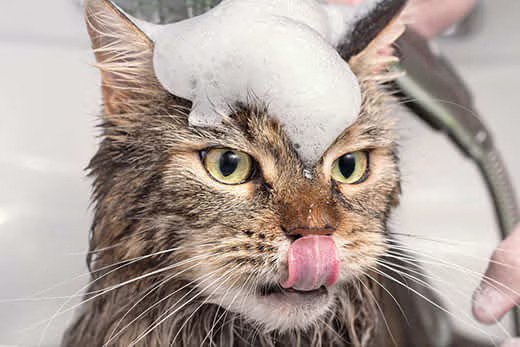
What actually happens if you have already used human shampoo
When someone tells me they’ve already used normal shampoo on their cat, I don’t panic, but I do start checking for signs of irritation. The most common issues I see are dry patches, increased shedding, and over-grooming behavior. A cat that keeps licking the same spot usually signals discomfort rather than habit. That behavior can start within 24 to 48 hours after bathing.
Rinsing becomes the first priority in these cases, and I often guide owners to do a very gentle warm-water rinse before any follow-up grooming. I had a customer with a rescue cat that developed patchy fur after repeated use of a human baby shampoo, which surprised them because it is often marketed as gentle. Even mild formulas can disrupt feline skin when used regularly. I’ve seen it enough times to treat it as a pattern, not an exception.
Not every cat reacts the same way, though. Some barely show symptoms after a single incorrect wash, while others become visibly uncomfortable almost immediately. The difference usually comes down to coat thickness, skin sensitivity, and overall health. I keep notes on repeat clients, and sensitive cats tend to react consistently across different grooming sessions.
How I explain it to pet owners on the spot
During mobile visits, I often explain that cat grooming products are not about marketing labels but about chemistry and behavior. A cat’s grooming habits are already intense, and anything that disrupts that balance creates stress responses quickly. I’ve worked on more than forty cats in a single month during busy seasons, and patterns become obvious after a while. The wrong shampoo almost always shows its effects within a short window.
I usually tell owners to think of shampoo as a temporary replacement for part of the skin’s natural protection. If that replacement is too harsh, the coat loses its smooth texture, and the cat compensates by over-cleaning itself. I’ve seen cats spend hours licking areas they normally ignore after a bath gone wrong. That’s usually the moment people realize something isn’t right.
One senior cat I handled last year had been bathed with human shampoo multiple times before I was called in. The fur had become brittle, and the skin showed signs of dryness around the neck and back. After switching to a proper feline formula and spacing baths correctly, the coat gradually improved over several weeks. It wasn’t instant, but the difference was clear by the third grooming session.
Experience has taught me that prevention is always easier than correction when it comes to cat grooming. Once the skin barrier is disrupted, recovery takes patience and consistency rather than quick fixes.
From what I’ve seen in the field, using normal shampoo on cats is rarely worth the risk, even if the product feels mild on human hands. A cat’s skin tells a different story once you look closely enough.