
I run a mobile pet grooming van that travels through small towns and suburbs in Florida, and over the years, I’ve handled a few thousand cats, each of whom reacted differently to touch. One question I hear more often than you’d expect from cat owners is whether cats are actually ticklish or if we’re just misreading their reactions. I’ve seen cats twitch, kick, purr, and even lightly swat when touched in certain spots, which makes people curious about what’s really going on under that fur. From my experience, the answer sits somewhere between instinct, sensitivity, and behavior rather than a simple yes or no.
Touch Sensitivity in Cats
Cats don’t experience ticklishness the same way humans do, at least not in the playful, laughter-triggering sense. During grooming sessions, I notice that certain areas, such as the belly, lower back, and paws, are far more sensitive than others. When I brush or trim around those zones, some cats respond with quick muscle twitches or sudden head turns, which are often misinterpreted as ticklish. In reality, those reactions are closer to protective reflexes than amusement.
The nervous system in cats is finely tuned, especially in areas where their fur is thinner or their skin is more exposed. I’ve had cats that seem completely relaxed while being brushed on their shoulders, but instantly react when I move toward their inner thighs. This difference is not about mood but about nerve concentration and instinctive defense mechanisms. Over time, I learned that what owners call “ticklish spots” are usually just high-sensitivity zones that trigger quick reactions.
What I See During Grooming Sessions
During my mobile grooming stops, I often meet cats that behave differently once they are placed on the grooming table. One customer last spring had a young tabby that would roll over whenever I tried to clean its belly, almost as if it wanted a belly rub, but the moment I touched it, the cat would gently kick with its hind legs. Those mixed signals are common, and they often confuse new cat owners who assume the cat is enjoying a ticklish sensation.
In my work, I’ve also noticed that cats raised in calmer environments tend to tolerate touch better than those with less handling history. One afternoon, I was working in a quiet residential area and had a grooming appointment, during which the cat responded calmly to almost everything except paw handling. That’s also where I usually recommend resources like local cat grooming assistance because structured handling can make a big difference in reducing stress reactions. The more predictable the touch becomes for the cat, the fewer sharp reflex responses I see during grooming.
What people often label as ticklish behavior is usually a combination of surprise and sensitivity. I’ve had cats that twitch their back muscles when I lightly brush along their spine, but once they realize the pattern, the reaction fades. That tells me the response is not playful ticklishness but an automatic response that decreases with familiarity and trust. A calm environment and slow introduction to touch usually change everything over time.
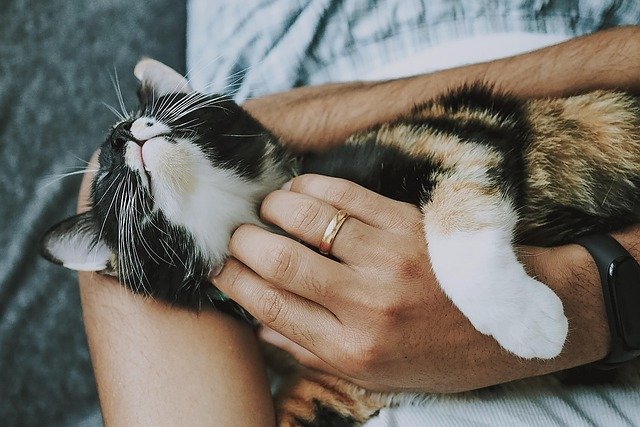
Signs of Real Sensitivity vs Playful Reaction
There is a difference between a cat enjoying interaction and a cat reacting defensively. I always pay attention to tail movement first because it gives away more than the face most of the time. A slow, relaxed tail usually means comfort, while a flicking or thumping tail suggests irritation or overstimulation. These signals help me adjust how I handle each animal during grooming sessions.
Some cats will appear playful when touched in certain areas, but that behavior can shift quickly. I once had a long-haired cat that would purr loudly when brushed on the sides but immediately nip at the air when I touched near the belly. That switch is a reminder that comfort and sensitivity can coexist. It is not uncommon for the same cat to enjoy brushing in one area and reject it in another without any change in mood.
One of the simplest rules I follow is to never assume a cat is enjoying repeated stimulation just because it doesn’t move away. Cats often tolerate discomfort longer than dogs before reacting. That is why I always work in short, careful passes instead of continuous contact. It keeps stress low and prevents misreading sensitive reactions as ticklish enjoyment.
Why People Think Cats Are Ticklish
The idea that cats are ticklish usually comes from how they respond to a light touch. When a finger or brush moves across their fur in a fast or unexpected way, they often jerk or twist. That reaction resembles human laughter reflexes, which is why people connect the two. But what I’ve learned from years of handling cats is that timing and surprise matter more than pleasure.
Cats are naturally alert animals, even when they appear relaxed. Their skin is packed with nerve endings designed to detect movement, pressure, and potential threats. So when something lightly brushes against them, their bodies often react before their minds process what is happening. That split-second reaction is what gets mistaken for being ticklish, especially by people who don’t handle cats regularly.
I’ve also noticed that owners who spend a lot of time gently playing with their cats often reinforce certain reactions without realizing it. If a cat twitches and the owner laughs or repeats the action, the cat may begin to associate that touch with attention. Over time, that can look like a “ticklish game,” but it is really just learned behavior mixed with natural sensitivity.
After years of grooming cats in all kinds of homes, from quiet apartments to busy family houses, I’ve come to see that cats are not ticklish in the human sense. They are sensitive, reactive, and highly aware of touch, and those traits can easily be mistaken for something more playful than they actually are. Once you understand that difference, their behavior becomes a lot easier to read, and handling them becomes smoother and more predictable.