
Lessons From 12 Years as an Auto Detailer
I’ve been detailing cars professionally for over a decade, and if there’s one problem that never really goes away, it’s dog hair.
I’ve worked on family SUVs with Labradors that shed like it’s their job, compact sedans used for daily dog park runs, and even near-new cars where the owner swore the dog “was only in there once.” Dog hair has a way of working itself deep into carpets and seat fabric that sand or crumbs never do.
Early in my career, I underestimated how stubborn it could be. I remember a customer who brought in a hatchback after a long road trip with two German Shepherds. A strong vacuum would handle it. An hour later, the vacuum bin was full, my arms were tired, and the seats still looked furry. That was the day I learned dog hair doesn’t come out by suction alone. It needs friction, static, and patience.
Why Dog Hair Clings So Hard
Dog hair is light, flexible, and often slightly see-through. It twists around carpet fibers and seat upholstery, especially in cars with felt-like flooring. Add static electricity from dry interiors, and the hair practically bonds to the surface. Leather seats are easier, but the seams and stitching still trap hair in ways people don’t expect.
Short-haired dogs are worse than long-haired ones. I’ve seen bulldog and boxer hair embedded so deeply that customers assumed the carpet was permanently stained. It wasn’t. It just needed the right approach.
Start With Dry Methods, Not Water
One of the most common mistakes I see is people reaching for water or interior cleaner too soon. Moisture makes dog hair heavier and more challenging to move. Before anything else, the interior needs to be dehydrated.
In my shop, I always start with friction tools. A rubber pet hair brush or rubber broom works better than almost anything else. The rubber grabs the hair and pulls it into clumps you can actually see and remove. On a minivan I detailed last spring, the owner had tried three different vacuums at home with no success. Five minutes with a rubber brush, and the carpet finally started to look like carpet again.
If you don’t have a dedicated rubber brush, a clean rubber squeegee can work surprisingly well on floor mats and seat backs. It’s not elegant, but it gets results.
Use the Vacuum the Right Way
Vacuuming still matters, but timing and technique make the difference. I vacuum after loosening the hair, not before. Once the hair is clumped, the vacuum can actually lift it rather than skate over it.
I’ve found that narrow crevice tools help around seat rails and between cushions, but broad heads are better for flat areas once the hair is loosened. Quick passes don’t help much. Slow, overlapping strokes give the suction time to pull the hair out.
A customer once brought me a car that had been “professionally vacuumed” elsewhere. The surface looked clean, but once I ran a rubber brush over it, hair started appearing, as if it had been hiding. That told me the vacuum alone never really reached the problem.
Static Is Your Friend If You Use It Properly
Static electricity is usually the enemy, but you can use it to your advantage. Lightly misting the area with a diluted fabric softener solution can reduce static and help hair release from fibers. I learned this trick from another detailer years ago and didn’t believe it until I tried it on a cloth back seat that seemed impossible to clean.
The key is light misting, not soaking. Too much liquid turns the hair into a mess that sticks again once it dries. I’ve seen people overdo this and end up with a car that smells strongly of cleaner and still has hair embedded underneath.
Seat Fabric Versus Carpet
Seats usually take longer than floor carpets. The tighter weave traps hair more aggressively. On cloth seats, I work in small sections, brushing in multiple directions. Hair rarely comes out evenly; it releases gradually.
Carpeted trunks are often the worst, especially for people who transport dogs in the back. I detailed an SUV recently where the owner used a cargo liner but ignored the side panels. The liner was spotless, but the vertical carpeting looked like it had grown fur. Vertical surfaces need brushing downward to let gravity help, something most people overlook.
What I Advise Against
Lint rollers seem like a good idea, but they’re impractical for large areas. I’ve seen customers go through several rolls and still not finish one seat. Tape has the same issue and can leave adhesive residue if you’re not careful.
Household vacuums that don’t provide vigorous agitation usually disappoint people. I’ve had clients tell me they spent hours trying to clean dog hair, only to give up and book a detailing appointment out of frustration. The tool matters as much as the effort.
Preventing the Next Round of Hair
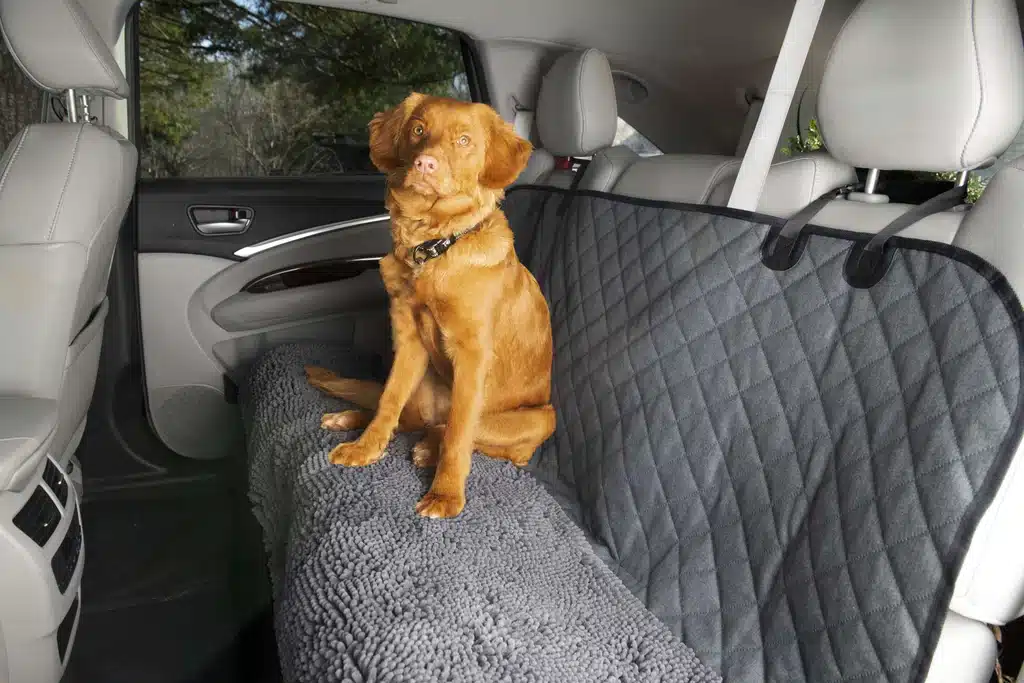
After spending real time removing dog hair, most people ask how to stop it from coming back so quickly. Seat covers help more than anything else. Even a basic, washable cover saves hours of cleaning later.
Regular brushing of your dog before car rides also makes a noticeable difference. I can usually tell when an owner does this. Those cars still have hair, but it’s lighter and sits closer to the surface instead of being woven in.
Dog hair in cars isn’t a sign of neglect. It’s just part of sharing your life with a pet. But with the right approach and a bit of persistence, it doesn’t have to feel permanent. Over the years, I’ve learned that success isn’t about one miracle tool. It’s about understanding how the hair behaves and working with that, not against it.