
As a licensed veterinarian practicing in Texas, I’ve spent over a decade observing queens through every stage of motherhood. One of the questions I hear most often from cat owners is whether their cat’s behavior after giving birth is normal—or if something might be wrong.
Over the years, I’ve noticed that while every cat has her quirks, there are consistent patterns that indicate healthy postnatal behavior.
Immediate Post-Birth Reactions
Right after giving birth, most cats exhibit strong maternal instincts. In my experience, they become highly protective of their kittens, often moving them to a quiet, secluded spot. I remember a client last spring whose Siamese queen instinctively relocated her kittens from a crowded laundry room to a cardboard box in a quiet closet.
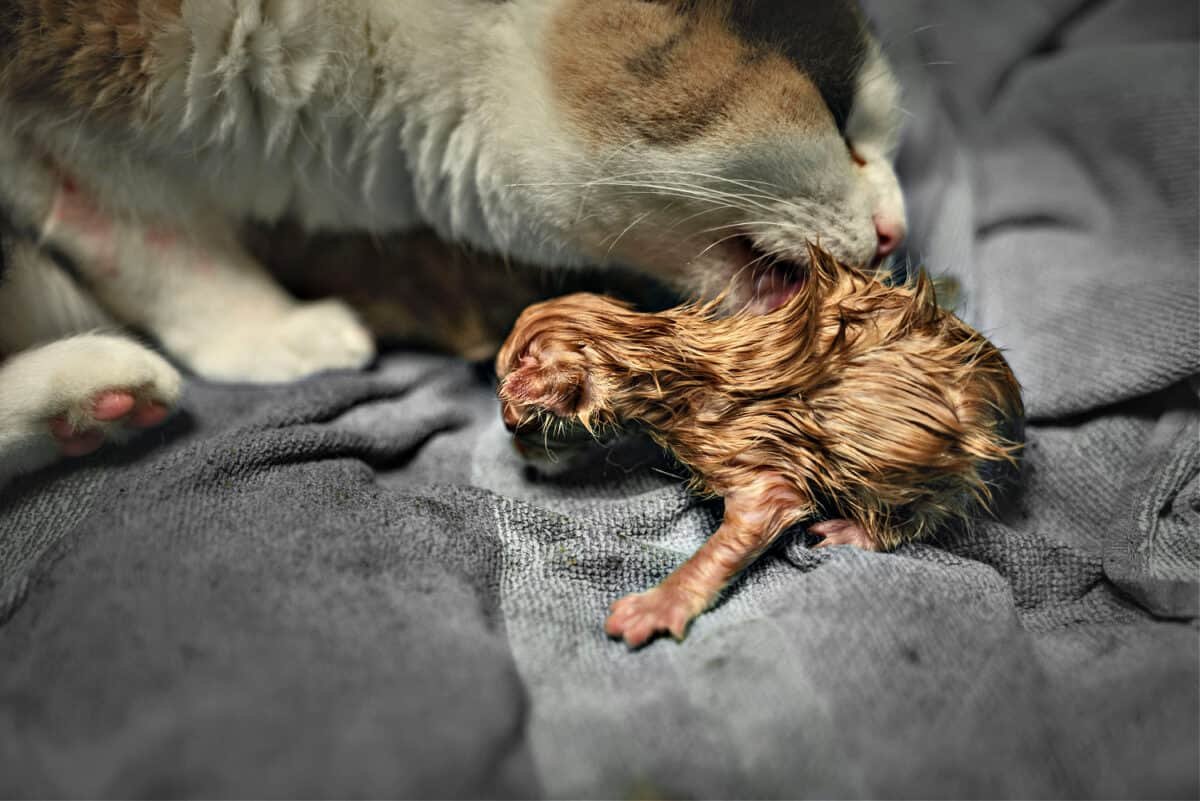
She would spend hours nursing, licking, and gently repositioning each kitten. This behavior is normal and reflects both instinct and a desire to keep the litter clean and safe.
During the first 24 to 48 hours, it’s common for the mother to appear restless or even slightly agitated. I once encountered a Maine Coon queen who repeatedly shifted her kittens from one nest to another during the night. While alarming to her owners, this is typical: she was ensuring a comfortable, secure environment for her litter. Owners should avoid interfering unless the kittens are clearly in danger.
Feeding and Grooming
Nursing behavior is intense during the first few weeks. I often advise owners to provide high-calorie, nutrient-rich food because a nursing queen can eat nearly double her usual intake.
One memorable case involved a domestic shorthair that went from eating small meals twice a day to consuming multiple large meals throughout the day. She remained focused on her kittens, and her appetite reflected the energy demands of milk production.
Grooming is another key behavior. A mother cat will lick her kittens frequently, not just for hygiene but also to stimulate circulation and digestion. I’ve seen owners panic when their kittens are wet from constant grooming, but this is a natural process. Problems arise only when the queen neglects her kittens entirely, which can indicate illness, extreme stress, or complications after delivery.
Protective Instincts and Social Behavior
After giving birth, many cats become more territorial. They may hiss, swat, or hide from other pets or strangers approaching the nest. I once had a client whose queen would only allow her partner, the family dog, near the kittens under close supervision. This heightened protective behavior usually lasts until the kittens begin exploring and becoming more independent, typically around 3 to 4 weeks of age.
Interestingly, some cats also exhibit brief periods of detachment. I recall a domestic longhair who would leave her kittens for short intervals to eat or use the litter box. While owners often worry, short absences are normal as long as the kittens are safe and warm. I always remind clients that a balance between vigilance and occasional breaks is typical maternal behavior.
Signs to Watch For
While most behavior is normal, there are a few red flags. Reluctance to nurse, failure to groom kittens, persistent aggression beyond protecting the litter, or signs of pain and lethargy can indicate postpartum complications like mastitis or infection. Early intervention can prevent serious issues. I once treated a queen who became unusually lethargic and refused to nurse; timely veterinary care resolved the infection, and the kittens thrived.
In my practice, I emphasize observation over interference. Understanding normal postnatal behavior helps owners distinguish instinctive behaviors from concerning symptoms. By providing a calm, safe environment, high-quality nutrition, and minimal stress, most queens thrive with their kittens, and owners can witness this remarkable maternal period with confidence.
Over the years, I’ve found that patient observation, combined with knowing what behaviors are expected, is the best way to support a mother cat. Each cat has her own personality, but the patterns of care, protection, and occasional independence remain consistent. For anyone caring for a new litter, patience and attentiveness are far more valuable than constant intervention.