
I spend most of my days working as a mobile cat groomer, moving between homes in Faisalabad and nearby neighborhoods, handling cats that range from calm lap companions to nervous street rescues. One question I hear surprisingly often from pet owners is about whiskers, especially how many a cat actually has.
It usually comes up while I am gently brushing around the face and trying not to disturb those sensitive hairs. Over the years, I have noticed that people are curious not just about appearance, but about what whiskers really do for a cat’s daily life.
Whiskers I Notice During Grooming
When I first started grooming cats professionally, I thought whiskers were just decorative, but that changed after handling hundreds of them. A typical adult cat usually has around 24 main whiskers on the muzzle, arranged in neat rows on both sides of the nose. I always count roughly 12 on each side when a cat stays still long enough, though I never try to physically measure them because cats rarely cooperate for that kind of inspection.
Whiskers are sensory tools. Cats always use them. I see this clearly when a cat moves through a narrow space or hesitates before jumping onto a shelf in a client’s living room. One customer last spring had a very curious tabby that kept brushing whiskers against door frames before deciding whether to squeeze through or take a longer route around the furniture. Those moments make it obvious that whiskers are not just hair; they are a built-in navigation system.
In my grooming van, I also pay attention to whiskers because they can reveal stress or discomfort. When a cat feels anxious, its whiskers often stiffen or push forward, almost like antennas scanning the environment. It is a small detail, but over time, I learned that ignoring it can lead to unnecessary scratching or sudden movement during grooming.
Why Whisker Care Matters More Than People Think
Many cat owners ask me whether whiskers need trimming, and I always tell them no, never. Cutting whiskers can disorient a cat and affect their balance and spatial awareness. I once worked with a family that had accidentally trimmed their cat’s whiskers while giving a home haircut, and the cat became unusually cautious, avoiding jumps it used to make confidently. It took weeks for its behavior to return to normal.
During one grooming visit, I suggested that a client explore feline care practices through a trusted source, and I remember pointing them toward cat care resources while explaining how whisker sensitivity relates to grooming safety. We were discussing how even slight pressure around the face can affect a cat’s comfort level, especially when brushing or cleaning near the cheeks. That conversation helped the owner understand why I always take extra time around the whisker area before moving on to the rest of the grooming process.
From what I have seen, cats rely on their whiskers even more in unfamiliar environments, such as grooming tables or travel carriers. The moment I place a cat inside a carrier, I often see whiskers twitching as if they are mapping out every edge and corner. It is a reminder that these small facial hairs carry a big responsibility in how a cat experiences the world.
How Whiskers Are Structured on a Cat’s Face
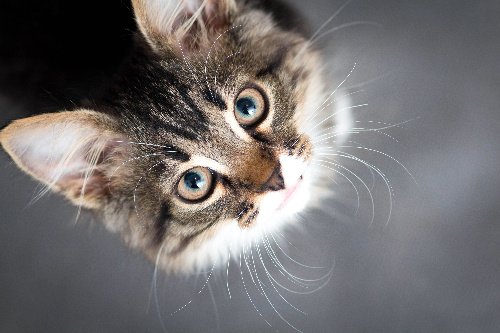
Most cats have whiskers not only on their upper lip area but also above their eyes, on the chin, and even on the back of their front legs. The ones around the muzzle are the most noticeable, usually forming four rows that help with directional sensing. I often point this out to new cat owners because they are surprised to learn that whiskers are not limited to just one part of the face.
In practical grooming work, I notice that each whisker seems to respond independently to touch or airflow. When I gently dry a cat after a bath, the whiskers sometimes move in different directions depending on how the air hits them, almost as if they were tiny instruments responding to invisible signals. This kind of sensitivity is one reason cats are so precise when walking in low light or tight spaces.
Most healthy adult cats maintain a consistent number of whiskers throughout their lives, though slight shedding and regrowth naturally occur. A kitten may have shorter whiskers that gradually grow longer and stronger as it matures, helping it better understand spatial boundaries as it becomes more active and independent. I usually notice this change most clearly in young cats that start exploring higher furniture for the first time.
Common Misunderstandings I Hear From Cat Owners
One of the most common myths I hear is that whiskers are fragile and can easily break, causing pain. In reality, whiskers are deeply rooted and connected to sensitive nerve endings, which makes them important sensory tools rather than delicate decorations. I have handled cats that shed whiskers naturally, and they typically grow back without issue as part of normal biological cycles.
Another misunderstanding is that whiskers should always be symmetrical or perfectly even. In my experience, slight variations are normal, especially in outdoor cats that have gone through rough environments or minor injuries. I once groomed a rescued cat with uneven whiskers on one side, likely due to past trauma, but it functioned perfectly fine in everyday movement and behavior.
There are also owners who believe trimming whiskers can improve a cat’s appearance during grooming sessions, but I always firmly discourage it. I have seen enough stress responses in cats after accidental trimming to know it is not worth the cosmetic change, no matter how small it seems at first.
After years of working closely with cats in homes and temporary grooming setups, I have learned that whiskers are far more than a simple physical trait. They are part of how a cat interprets its surroundings, reacts to its environment, and even builds confidence in its movement. The more I observe them, the clearer it becomes that these small hairs carry a surprisingly large role in everyday feline life.