
I run a small boarding kennel on the outskirts of town, and I’ve spent years feeding dogs with all kinds of diets, from premium kibble to homemade meals. Cooked rice comes up more often than you might think, especially when a dog has an upset stomach or refuses to eat their usual food. I’ve seen owners swear by it, while others avoid it completely. My experience sits somewhere in the middle, shaped by what I’ve watched work in real situations.
Why Rice Shows Up in So Many Dog Diets
Cooked rice is simple, cheap, and easy on a dog’s digestive system, which is why I keep a bag of plain white rice in my kennel pantry year-round. A bland meal of rice and boiled chicken has helped more than a few dogs recover from stomach issues during their stay. I remember one older Labrador last winter who wouldn’t touch his regular kibble, but he ate rice without hesitation for three straight days. That kind of response is hard to ignore.
Rice is low in fat and easy to digest, especially white rice. Dogs with diarrhea or mild digestive trouble often handle it better than richer foods. Brown rice has more fiber, but I rarely use it in sensitive cases because it can be a bit harder on the stomach. In practice, white rice tends to settle things faster.
There is also the practical side of things. Feeding a kennel full of dogs means you learn to value ingredients that are reliable and consistent. Rice cooks quickly, stores well, and blends easily with other foods. That flexibility matters when you are managing different dogs with different needs under one roof.
When Rice Helps and When It Doesn’t
I’ve seen rice work well in short-term situations, but it is not something I rely on as a full-time diet. Dogs need protein, fats, and a range of nutrients that rice alone simply cannot provide. One owner I worked with last spring had been feeding mostly rice for weeks because their dog seemed to like it, and the dog came in underweight and low on energy. That was a clear case where good intentions caused a problem.
If you are trying to understand balanced feeding, I often point people toward resources like “Can Dogs Eat Rice Safely,” which breaks down how rice fits into a dog’s overall diet without overselling it. That kind of guidance helps avoid the mistake of turning a temporary fix into a long-term habit. Rice should support a diet, not replace it.
There are also dogs that do not respond well to rice at all. A few in my care have shown signs of food sensitivity, including itching or loose stools that did not improve with a rice-based meal. Those cases are less common, but they remind me that no single food works for every dog. Watching the dog matters more than following a rule.
How I Actually Feed Rice at the Kennel
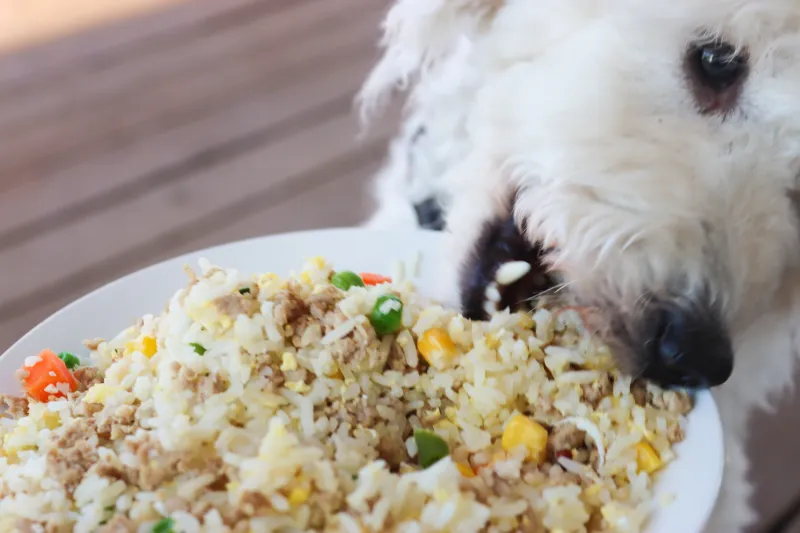
When I use rice, I keep it plain. No salt. No oil. Just boiled white rice, sometimes mixed with shredded chicken or a small portion of lean beef. The ratio I stick to is roughly two parts rice to one part protein for short-term feeding, especially during recovery from stomach issues.
Portion size depends on the dog, but I usually start small and adjust as needed. A medium-sized dog might get 1 cup of cooked rice mixed with 1/2 cup of protein, split across 2 meals. I watch how they respond within 24 hours. If their stool firms up and their appetite returns, I slowly reintroduce their regular food.
Timing matters more than people think. Feeding rice for one or two days can help settle a problem, but stretching it out for a week without balancing nutrients can lead to deficiencies. I learned that the hard way early in my career, with a rescue dog that needed more than a bland diet to fully recover.
Common Mistakes I See Dog Owners Make
One mistake I see often is seasoning the rice. People cook it the same way they would for themselves, adding spices or butter, which can upset a dog’s stomach. Dogs do not need flavor the way we do. Plain is best, even if it looks boring to us.
Another issue is relying too heavily on rice because it is cheap. I understand the temptation, especially for owners managing costs, but dogs thrive on balance. Feeding mostly rice over time can lead to low protein intake and poor coat condition. I have seen dogs with dull fur and low energy after weeks of rice-heavy meals.
Some owners also skip the transition back to regular food. They keep feeding rice longer than needed because the dog seems to enjoy it. Enjoyment is not the same as nutritional value. Dogs will happily eat things that are not ideal for them long term.
So, Is Cooked Rice Good for Dogs?
From where I stand, cooked rice is useful, but it has a clear role. It is a tool for short-term support, not a foundation for daily feeding. In the right situation, it can help a dog recover, regain appetite, and stabilize digestion. Used improperly, it can leave a dog lacking what they need to stay healthy.
I still keep that bag of rice ready at all times. It has earned its place in my routine through years of practical use. But I treat it with respect for its limits, and I encourage dog owners to do the same.
Most dogs will do fine with a small amount of rice now and then. Just do not let it take over the bowl.