
I work as a mobile cat groomer in the Midwest, driving between rural homes and small towns where winters can turn rough fast. Over the years, I’ve been asked more than a few times whether cats can safely live outdoors once the temperature drops below freezing.
I’ve seen cats that handled cold weather better than expected, and I’ve also seen situations where things went wrong quickly. My view comes from what I’ve actually encountered on visits, not theory.
How outdoor cats cope with cold weather
In colder months, I notice outdoor cats change their behavior long before humans fully feel the shift in temperature. They start seeking tighter hiding spots, often under sheds, porches, or stacked wood where the wind doesn’t reach directly. I remember a customer last winter who had a semi-feral cat that disappeared for nearly two days during a cold snap, only to reappear thinner and clearly shaken. That moment stuck with me because it showed how quickly the weather can overwhelm even a cat that seemed used to outdoor life.
Cats do have natural insulation in their fur, and some adapt better than others depending on coat thickness and body condition. Short-haired cats struggle more in freezing weather, while thicker-coated ones may tolerate cold longer but still face risks once temperatures stay low for extended periods. I’ve seen barn cats in farm areas survive temperatures that dropped below 20 degrees Fahrenheit, but they weren’t thriving; they were just getting by. There’s a difference between surviving and being comfortable that people often miss.
Wind chill plays a bigger role than most owners realize. A calm 30-degree night feels completely different from a windy 30-degree night, and I’ve seen cats misjudge that shift. Short sentence here. Cold bites harder. I once worked with a farm family whose outdoor cat always stayed near the machinery for shelter, but during a windy storm, it still developed mild frostbite on the ears.
What I see during winter grooming visits
During my mobile grooming visits, I often inspect outdoor or semi-outdoor cats brought in for winter coat maintenance. One case stands out from a rural property where a group of barn cats shared a heated shelter, but one younger cat kept choosing to stay outside even during the snow. I’ve seen how coat condition, body fat, and even stress levels affect how well they handle exposure. In some cases, grooming itself becomes part of winter survival because mats trap moisture and reduce insulation.
I’ve also worked with clients who underestimated how quickly cold stress can build up in cats that spend time both indoors and outdoors. One customer last fall reached out after noticing their cat spending long stretches curled tightly in corners near the door. That led them to adjust their shelter setup after we talked through options, and during that process, I referenced a local animal care resource that helps pet owners prepare outdoor shelters and winter routines.
The outdoor cat winter care support guide I suggested helped them understand how insulation and placement can make a real difference in how a cat handles cold nights. They later told me the cat stopped showing stress behaviors once the shelter was upgraded.
In grooming sessions, I also check for early signs of cold-related issues, such as dry skin, minor frostbite, or coat damage from wet fur freezing. Cats that roam outdoors often come in with uneven coats, with certain areas thinned from rubbing against rough shelter surfaces. I remember one older cat that had spent years outdoors and needed careful brushing because its undercoat had started clumping from damp conditions. These small signs often tell a bigger story about how the cat is coping outside.
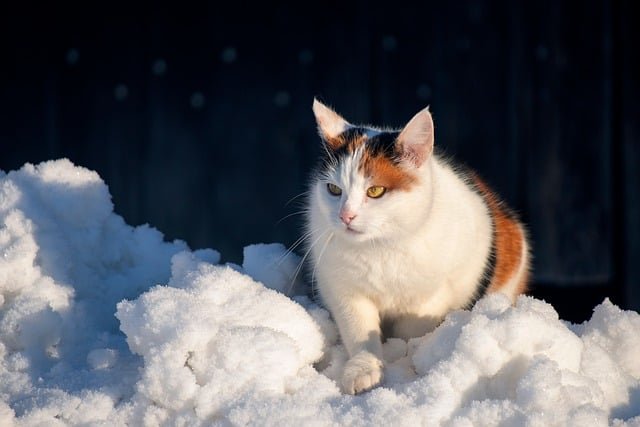
Risks that don’t show up right away
One thing I’ve learned is that the danger of outdoor winter living doesn’t always show up immediately. A cat might look fine after a cold night, but repeated exposure slowly depletes its energy reserves. I’ve seen cats gradually lose weight over a season simply because they were burning more calories staying warm than they could replace through food intake. That kind of gradual decline is easy to miss until it becomes obvious.
Frostbite is another risk that people often expect to be dramatic, but in reality, it can start subtly. Ears, tails, and paw tips are usually the first areas affected, and early signs can be easy to overlook unless someone is paying close attention. Short sentence here. Damage can be quiet. I’ve had cases where owners only noticed changes after the cat’s ears looked slightly stiff or discolored weeks after a cold spell.
Dehydration also becomes a hidden problem in winter because water sources freeze or become unappealing to cats. I’ve seen outdoor cats drink less simply because their bowls were partially iced over, even when food was available. That combination of cold, reduced hydration, and increased energy use creates a cycle that slowly weakens them if not managed carefully.
What I tell owners based on real experience
When I talk with owners, I don’t give a simple yes-or-no answer because I’ve seen too many different outcomes. Some cats can handle short outdoor periods in winter fairly well, especially if they have access to insulated shelters and a consistent feeding routine. Others struggle even with small temperature drops, especially older cats or those with health conditions. I usually explain that environment matters just as much as the cat itself.
I also emphasize that shelter quality makes a bigger difference than people expect. A dry, insulated, wind-blocked space can change everything, even more than thick fur alone. One farm I visited had a simple wooden shelter lined with straw, and their cats used it constantly during freezing nights, coming out healthier than cats I’ve seen in poorly insulated garages. That comparison has stayed with me because it showed how simple adjustments can shift outcomes.
From my perspective, outdoor winter living always carries trade-offs. Some cats can adapt for a while, but the margin for error gets smaller as temperatures drop and storms become more frequent. I’ve seen both sides enough times to know that success depends on constant attention, not assumption. And that attention has to continue all season, not just during the first cold week.