
Lilac plants are popular in gardens because of their soft purple flowers and pleasant fragrance. Many cat owners enjoy having them at home, but worry about whether these plants are safe for pets. Cats are naturally curious and may chew on leaves or flowers. Understanding the risks helps keep them safe.
What Makes Lilac Plants Unique
Lilac plants belong to the Syringa family and are widely grown in temperate regions. They bloom in spring and produce clusters of small flowers that attract bees and butterflies. Their strong scent is one of the reasons people plant them in gardens. The fragrance can be noticeable from a distance.
There are more than 20 different lilac species. Some grow as large shrubs, while others become small trees over time. They are commonly found in parks and home gardens. Their beauty makes them a favorite ornamental plant.
Although lilacs are not highly toxic, cat owners should be aware that any plant, even non-toxic ones, can cause mild stomach upset if chewed. Recognizing that risk, owners should observe their pets after exposure.
Flowers attract curiosity. Cats explore everything.
To address these concerns, consider this important question: Are lilacs safe for cats?
Many pet owners search for reliable information about plant safety, and resources like Is Lilac Safe for Cats ” provide helpful guidance on understanding the potential risks and symptoms if a cat comes into contact with this plant. This kind of information is useful when deciding what to keep in your home or garden. Knowing the facts helps prevent unnecessary panic.
Lilacs are generally considered non-toxic to cats according to veterinary references. However, this does not mean they are completely harmless. If a cat eats a large amount of leaves or flowers, mild digestive issues may occur. Vomiting or drooling can sometimes happen.
The bigger concern is not poisoning but irritation. Some cats may react differently depending on their sensitivity. A few may experience stomach discomfort, while others show no symptoms at all. Individual reactions vary widely.
Caution is essential—monitor your cat closely and act quickly if symptoms appear.
Even though lilacs are not considered highly dangerous, pet owners should avoid letting their cats chew on them regularly. Preventing repeated exposure reduces the chance of discomfort. Safe environments are always better for pets. Small precautions make a big difference.
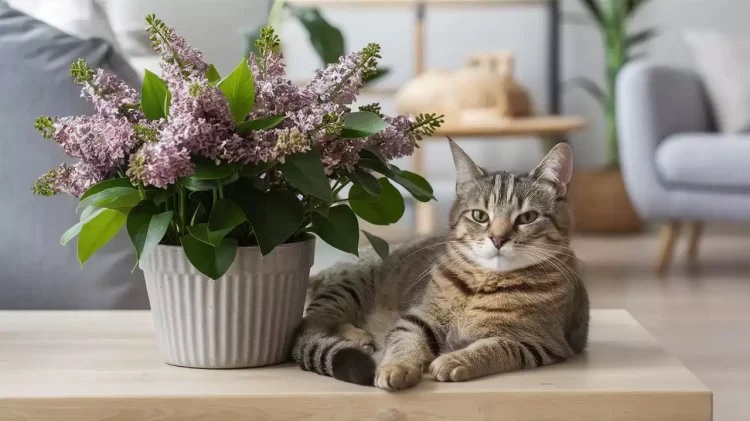
Possible Symptoms if a Cat Eats Lilac
If a cat eats part of a lilac plant, symptoms are usually mild. The most common reaction is an upset stomach. This may include vomiting or soft stool. These symptoms often resolve on their own within a short time.
Some cats may also show signs of drooling or loss of appetite. This happens when the plant irritates the mouth or digestive tract. In rare cases, mild lethargy may appear. Most symptoms are temporary.
Serious poisoning from lilacs is uncommon. However, it is always wise to monitor your cat closely after any plant ingestion. Early observation helps identify problems quickly. Quick action prevents complications.
Here are common signs to watch for:
– Vomiting after chewing leaves
– Drooling or mouth irritation
– Mild diarrhea
– Reduced appetite
– Temporary tiredness
Although most symptoms are mild, watch your cat closely and contact a vet if signs continue. Prompt action is the safest choice.
How to Keep Cats Safe Around Lilac Plants
Preventing contact is the best way to protect cats. If you grow lilacs in your garden, try to limit your cat’s access to those areas. Simple barriers, such as fencing or plant placement, can reduce interaction. Physical separation works well.
Indoor lilac arrangements should also be placed carefully. Keep bouquets on high surfaces or in rooms where cats cannot enter. Cats often jump onto tables or shelves, so placement matters. Prevention reduces risk.
Training can help in some cases. Gently discouraging cats from chewing plants with safe deterrents, such as citrus scents, may reduce their interest in chewing plants. Consistency is important when changing behavior. Repetition improves results.
Providing safe alternatives is also useful. Cat grass or safe indoor plants can satisfy their curiosity. When cats have their own options, they are less likely to explore harmful ones. Redirection is effective.
Adopt proactive habits to safeguard your pets—prioritize their safety every day.
When to Contact a Veterinarian
In most cases, lilac exposure does not require emergency treatment. However, if your cat shows ongoing vomiting, weakness, or refuses to eat, it is best to seek veterinary advice. These signs may indicate a stronger reaction or another health issue. Early support is always safer.
If you are unsure how much of the plant your cat consumed, it is better to call a vet. Even small amounts can affect sensitive cats differently. Professional guidance helps avoid unnecessary worry. Peace of mind is valuable.
Veterinarians may recommend home monitoring or supportive care. In rare cases, medication may be needed to ease symptoms. Each situation is different. Treatment depends on severity.
Respond at the first sign of trouble—contact your vet without delay to protect your cat.
Lilacs are generally safe for cats, but the most important safety steps are to supervise them and prevent them from chewing on them. Take simple precautions to enjoy your garden and keep your pets comfortable.