
As a veterinarian in Texas for over a decade, I’ve treated many cats with matted fur, hot spots, and overheating issues. While some owners think shaving is cosmetic, it often improves comfort and health. I’ve helped many clients groom their cats safely at home—preparation, patience, and proper tools make all the difference.
Understanding When Shaving is Needed
Not every cat needs a full shave. In my practice, I recommend shaving only for cats with severe mats, a dense undercoat, or dermatitis requiring topical treatment. For example, last spring, a client brought in a long-haired Maine Coon with mats along its back. Brushing was painful and risky for his skin. A careful shave resolved the problem without stress.
I’ve found that thick-coated cats can overheat in summer. One customer’s Persian developed heat rashes as her dense fur trapped heat and moisture. Shaving around the neck and belly immediately relieved her discomfort.
Choosing the Right Equipment
When shaving a cat at home, professional-grade clippers matter. I advise clients to buy a quiet, low-speed pet clipper. Human hair clippers are often too noisy and can frighten cats, making the process dangerous. I once had a client try a standard clipper; the cat panicked, scratched, and needed sedation. That experience reinforced how critical the right tools are.
Blunt or dull blades are a common mistake. Sharp blades tug less, minimizing discomfort. Always check blade temperature—overheated blades can burn skin. I keep a spray bottle of cool water handy to cool blades as needed.
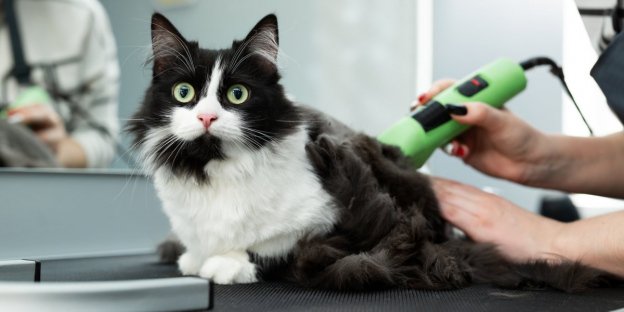
Preparing Your Cat for the Shave
Preparation is key. Before shaving, brush out tangles and loose hair. Keep sessions short and calm to reduce resistance. Speak softly, offer treats, and let your cat approach the clippers turned off so they associate the equipment with safety.
Positioning is critical. Holding your cat like a dog often leads to scratches. Let your cat sit on a non-slip surface and gently hold them at the shoulders. If your cat is nervous, a helper can prevent sudden movements.
Step-by-Step Shaving at Home
Once your cat is calm, start with small areas. Begin with the belly or sides, which are less sensitive. Move the clippers with the hair growth at a slow, steady pace. Stop often to check for redness or irritation.
Don’t shave over matted hair forcefully. A client once tried to remove a large mat on a Himalayan without trimming first; the blade snagged, causing a small nick. Always trim dense mats with scissors before clipping.
Shave sensitive areas like the face, paws, and tail last or avoid them. Many cats react to clippers in these spots. I recommend using scissors for delicate areas to prevent accidents.
Aftercare and Monitoring
After shaving, check the skin for cuts, irritation, or rashes. Apply a cat-safe soothing conditioner or spray to prevent dryness. I advise clients to watch their cat for 24 hours for stress or infection. One cat developed minor belly redness that cleared with a gentle aloe spray.
Regular maintenance is essential. Even shaved cats need brushing once or twice a week to prevent mats and keep the coat healthy. Shaving complements routine grooming; it doesn’t replace it.
My Professional Advice
Shaving a cat at home is safe with proper precautions, tools, and respect for the cat’s temperament. For anxious or aggressive cats, professional grooming is often safer. I’ve assisted clients in these cases, and the results are less stressful for the cat and the owner.
Shaving is about your cat’s health and comfort. With patience, preparation, and care, you can groom your cat at home without stress or injury.