
I’ve been grooming dogs professionally for over a decade, and I’ll say this upfront: trimming a Pomeranian is not like trimming most other breeds. Their double coat behaves differently, and one wrong decision with clippers can affect how that coat grows back—sometimes permanently.
I learned this the hard way early in my career. A client brought in a fluffy orange Pom and asked for a “short summer cut.” I gave in, used clippers too aggressively, and months later, the coat grew back patchy and uneven. That dog taught me more than any training session ever could.
Since then, I’ve developed a very controlled approach to trimming Pomeranians—one that keeps their natural look intact. The key takeaway is to avoid drastic cuts that could affect coat regrowth.
Understanding the Coat Before You Touch It
A Pomeranian’s coat isn’t just long hair. It’s a dense double coat with a soft undercoat and a longer outer coat that gives that signature puffed appearance.
In my experience, you should avoid shaving them down unless there’s a medical reason. I’ve seen cases where the coat never fully recovered after a close shave. Owners come back months later, wondering why their dog looks thin or uneven—it’s usually because the guard hairs didn’t regrow properly.
So instead of thinking in terms of “cutting hair off,” I approach it as shaping and tidying.
Start With a Proper Prep
Before I trim anything, I always prep the coat properly. This step makes or breaks the final result.
I bathe the dog using a gentle shampoo, dry it completely (usually with a high-velocity dryer), and then brush it out thoroughly. A slicker brush and a metal comb are my go-to tools here.
A cream-colored Pom came in matted. I spent almost an hour detangling before trimming, since proper prep is crucial for an even finish.
A clean, fully fluffed coat shows you exactly where to trim. Key takeaway: thorough preparation ensures an even and natural-looking trim.
Where I Actually Trim (and Where I Don’t)
With Pomeranians, less is more. I focus on specific areas rather than the whole body.
- Feet and Paws
I trim around the paws to create a neat, rounded “cat foot” look. This prevents dirt buildup and gives the dog a polished appearance.
- Sanitary Area
This is strictly for hygiene. I keep it clean and short, but not shaved down to the skin.
- Rear and Pants Area
I lightly shape the back end to look tidy without losing fullness.
- Chest and Mane
I rarely cut much here. Maybe just a slight shaping to maintain symmetry.
- Tail
The tail is one of their best features. I almost never shorten it—just remove stray ends if needed.
The biggest mistake I see beginners make is trying to “even out” the entire body. That’s how you lose the natural Pom silhouette. The takeaway: focus trims on specific problem areas, not the whole coat.
The Tools I Trust
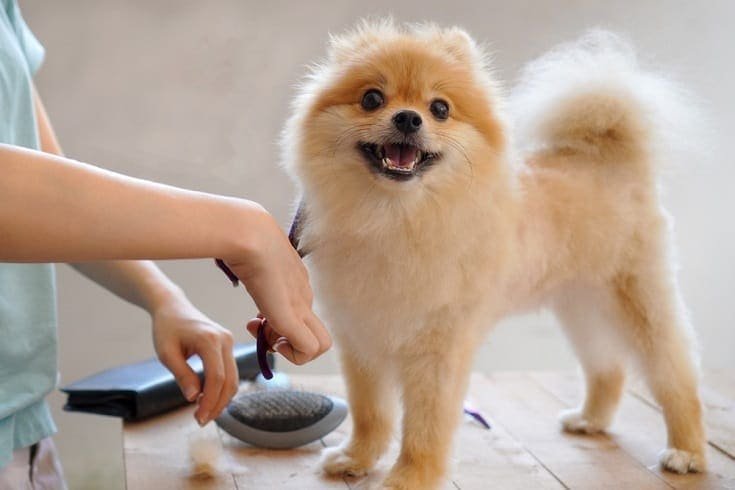
I rely mostly on straight scissors and thinning shears, not clippers. Thinning shears are especially useful because they blend the coat instead of leaving harsh lines.
Clippers are only used for sanitary trims or very minor touch-ups. If you’re using clippers across the body, you’re already going too far.
The Technique That Keeps It Natural
I trim in small sections and step back frequently. That pause matters more than people think.
There was a time, a few years ago, when I was grooming a particularly fidgety Pom. I rushed through the sides to keep him calm, and the coat ended up slightly uneven. Nothing dramatic, but noticeable if you knew what to look for. Since then, I always slow down—even if the dog is impatient.
I use a light, upward scissoring motion, lifting the coat and trimming just the tips. This keeps the fluffy texture intact instead of flattening it.
Common Mistakes I See All the Time
Over the years, a few patterns stand out:
- Cutting too much too quickly
- Using clippers on the full coat
- Trimming a dirty or matted coat
- Trying to reshape the dog instead of enhancing its natural look
A client trimmed their Pom at home with kitchen scissors. It resulted in uneven chunks and required two sessions to fix.
My Honest Advice for Owners
If you’re new to grooming, start small. Focus on paws and hygiene areas first. Leave full-body shaping to someone with experience until you’re confident.
And if you ever feel tempted to shave your Pomeranian because it looks “too fluffy,” pause. That fluff is exactly what you’re trying to preserve.
In my experience, the best-looking Pomeranians aren’t the shortest trimmed ones—they’re the ones where you can’t tell they’ve been trimmed at all.