
A Veterinarian’s Practical Perspective
I’m a small-animal veterinarian who has spent more than a decade treating itchy, smelly, miserable dogs brought in by worried families. Yeast infections are among the most common problems I see with ears, paws, and skin folds. They’re uncomfortable for dogs and frustrating for owners because they tend to come back if you only treat the surface problem.
I’ll share what I’ve actually seen work at home, where owners get into trouble, and when I insist that a dog be seen in-clinic. I’ll also use examples from my own cases rather than theory, because yeast infections behave very differently in real life than they do in textbook examples.
What a yeast infection usually looks like in real life
Yeast infections in dogs aren’t subtle.
They were often called in for dogs with:
- a strong, sweet or “corn chip” odor
- greasy or flaky skin
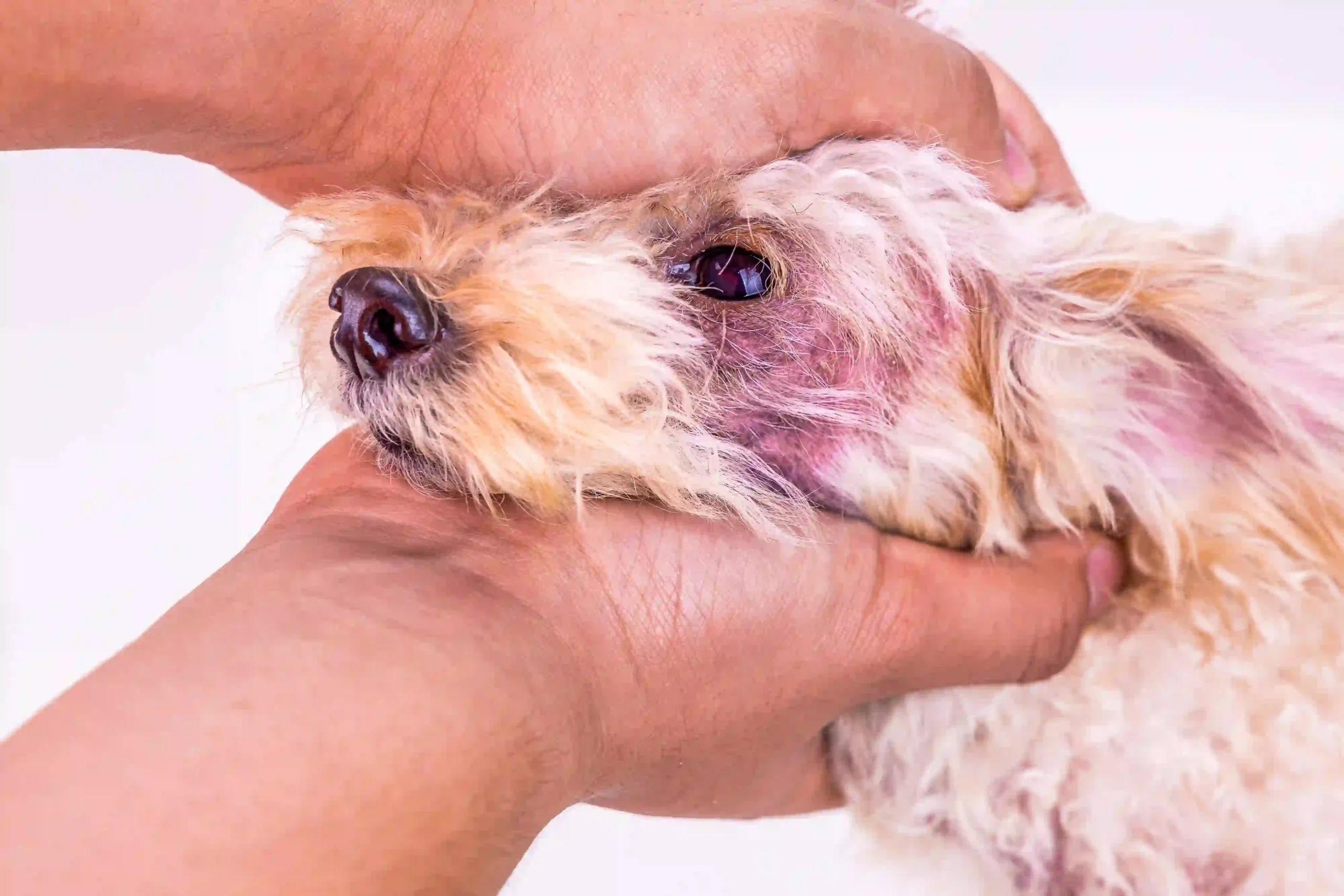
- red, thickened skin folds
- Constant chewing of paws
- dark discharge and head shaking with ear infections
One Labrador I saw last summer arrived with paws stained rusty brown from saliva. The owner thought it was “allergies” and had tried changing foods repeatedly. The underlying issue was a yeast overgrowth triggered by moisture and constant licking. That pattern — moisture, itch, yeast, more licking, worse yeast — is prevalent.
Before talking about remedies, one thing needs to be said clearly: if the skin is bleeding, cracked, extremely painful, or your dog seems unwell, home care is not the place to start. Yeast often appears alongside bacteria, and those dogs typically need prescription treatment.
The first home remedy I actually recommend: proper cleaning and drying
Most owners want a magic ingredient. In my experience, the tedious work — cleaning and drying — fixes more yeast problems than anything else done at home.
Yeast loves trapped moisture. Between toes, in floppy ears, under armpits, under the tail of bulldogs and pugs — these act like little greenhouses.
At home, what consistently helps:
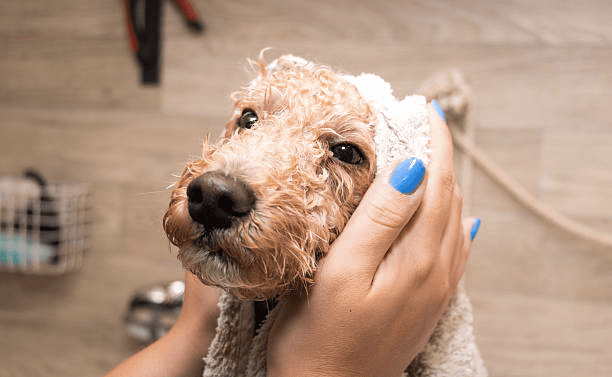
- Rinse affected areas with plain water after walks in wet grass
- gently drying with a clean towel
- using a fan or cool hairdryer setting for dogs with thick folds or hairy paws
One bulldog I’ve treated for years flares every humid season. The owner now keeps a small fan next to the dog’s bed and dries his skin folds daily. That one habit cut his yeast episodes in half, even without changing his diet or shampoo.
That isn’t glamorous, but it’s the cornerstone.
Diluted apple cider vinegar — when it helps and when it causes trouble
Owners constantly ask about apple cider vinegar. Used correctly, it can help mild yeast overgrowth on intact skin. Misused, it stings badly and makes the dog fight you the next time.
What I’ve seen work at home: heavily diluted vinegar applied to pink skin that is not raw. The solution people use successfully is weak enough that you cannot smell strong vinegar from across the room.
Where I’ve seen it go wrong:
- applied to broken or ulcerated skin (dogs yelp or run)
- poured straight into the ears
- used on dogs with very sensitive skin, causing more redness
One client once applied undiluted vinegar into her spaniel’s ears because she had read about “natural cures online.” The dog arrived at me shaking and crying; we had to treat both the yeast infection and the chemical irritation. Since then, I always say: vinegar should never sting. If it does, rinse and stop.
So yes, diluted vinegar can help with mild surface yeast. It is not a cure for deeper ear infections, chronic cases, or skin that’s already damaged.
Medicated baths at home — the method matters more than the product.
Many dogs with yeast infections benefit from medicated baths, but owners often rush the process.
Shampoos containing antifungal ingredients can genuinely help, but only if left on the skin long enough. I’ve watched owners lather, rinse immediately, and then wonder why nothing changed.
What consistently works better in my patients:
- bathing two to three times weekly during flare-ups
- thoroughly soaking the paws and skin folds
- massaging shampoo into the skin for several minutes before rinsing
- Rinsing extremely well afterward and then drying fully
A German Shepherd I follow for chronic yeast dermatitis improved dramatically, not because we changed shampoo brands, but because the owner started timing the contact time with a kitchen timer. Technique beats product.
Diet questions I actually hear — and what I’ve seen
Yeast infections make people immediately think “food allergy.” Sometimes food plays a role, but in my actual caseload, moisture, underlying allergies, and poor skin barrier are more common triggers than “sugar in the diet.”
Have I seen dogs worsen on heavily processed treats? Yes. Have I seen dramatic overnight cures from diet alone? Rarely.
The practical advice I give clients:
- Avoid constant treats with fillers if yeast is a recurring issue
- Choose a consistent, good-quality diet instead of switching every few weeks
- Work with your vet if you suspect a true food allergy — guessing usually prolongs the problem
One owner had changed foods six times in a year, trying to “fix yeast.” The real issue was untreated seasonal allergies, which led to constant paw licking. Once we addressed the itch, the yeast resolved.
Food matters, but it isn’t magic on its own.
Common home-treatment mistakes I see again and again
Patterns repeat in my practice. The most frequent mistakes are:
- using essential oils directly on skin — I’ve treated chemical burns from this more than once
- stopping care as soon as the smell improves, leading to fast relapse
- only treating the ears while ignoring paws and skin folds
- Assuming every itch is yeast without testing
More than once, a “yeast” case turned out to be mites or a bacterial infection instead. That’s why persistent, painful, or spreading problems really do need professional diagnosis.
When home remedies are reasonable — and when they aren’t
Home care can be reasonable if:
- The dog is otherwise bright and eating normally
- The skin is irritated but not wounded
- The odor and itch are mild to moderate
- You’re seeing gradual improvement over several days
Home care is not enough if:
- Your dog is shaking its head constantly or crying when its ears are touched
- There is black, thick discharge from the ears
- skin is bleeding, cracked, or oozing
- fever, lethargy, or loss of appetite are present
- The problem keeps coming back despite your efforts
Those cases often involve deeper infection, resistant yeast, or an underlying endocrine problem such as thyroid disease — things I diagnose regularly in practice.
My bottom-line professional opinion
Yeast infections in dogs respond well to thoughtful, consistent care. At home, the most effective remedies I’ve actually seen work are simple: cleaning, drying, medicated bathing done correctly, and sensible use of diluted solutions on intact skin.
I’m not a fan of harsh “natural cure” recipes that make dogs scream or of throwing essential oils at delicate skin. I’ve treated the consequences too many times.
If your dog seems only mildly uncomfortable and you’re seeing steady improvement with good hygiene and gentle topical care, home remedies can be part of the solution. If your dog is in real discomfort, has ear involvement, or keeps relapsing, that’s a signal to get a proper diagnosis rather than chasing home fixes.
That balance — knowing what you can safely manage at home and where professional care matters — is what keeps dogs comfortable and prevents minor yeast problems from turning into long-term skin disease.