
From a Small-Animal Veterinarian’s Perspective
I’ve treated more cases of cherry eye than I can easily count over the years as a small-animal veterinarian. The first time I saw it as a student, I remember thinking the owner must be terrified — a bright pink bulge suddenly appearing in the corner of a puppy’s eye is hard to ignore. Even now, I still see the same worried expression from owners, especially when it pops up overnight.
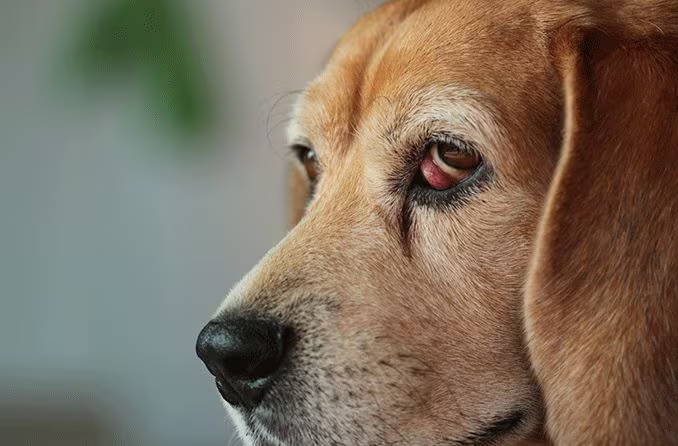
Cherry eye is the prolapse of the gland of the third eyelid. In simple terms, a tear gland that should have been tucked out of sight slips out and becomes visible. Breeds like Bulldogs, Beagles, Cocker Spaniels, and many toy breeds are repeat visitors to my exam room for this problem.
Let me be direct before talking about home care: cherry eye isn’t just a cosmetic issue. That gland produces a large portion of your dog’s tears. Leaving it untreated can lead to dry eye, infections, and lifelong discomfort. Most cases eventually need veterinary treatment, often surgery to replace the gland rather than removing it. Home remedies can help with comfort and mild swelling, but they don’t “fix” the underlying prolapse.
That said, there are things you can do at home while arranging proper treatment — and a few things I’ve learned to discourage strongly.
How do I explain what you can realistically do at home?
Owners usually ask me the same question: “Can I fix this at home myself?”
Sometimes swelling makes the gland look worse than it is. Reducing irritation can make your dog much more comfortable and, occasionally, allow a mild prolapse to slip back partially on its own. More often, it keeps the eye protected while you schedule an appointment.
Here’s what I’ve seen help.
Keep the eye lubricated — not just “moist.”
Artificial tear lubricants, not “redness relief” drops, are your friend. I’ve had several cases where a dog came in because the gland looked much angrier than it had at the start, simply because it had dried out and become irritated.
I recommend preservative-free artificial tear gel rather than thin watery drops. The gel actually coats the eye surface instead of disappearing in seconds. I use it on patients in the clinic all the time during exams to keep that exposed tissue from cracking and ulcerating.
What I strongly advise against are:
- human eye drops marketed to “get the red out.”
- Any drops with whitening or anti-itch ingredients, steroid drops without veterinary advice
Those can make things significantly worse, particularly if there’s already corneal damage.
Warm compresses are used gently — not pressed into the eye.
One of the simplest things owners can do is apply a warm, clean cloth over the closed eyelid for 30 seconds at a time. I say “gentle” so often that I probably sound like a broken record. You’re not trying to push the gland back in with pressure. The goal is to relax the surrounding tissues and improve tear flow.
I had a Boxer last year who hated anyone touching his face, but he tolerated a warm compress while curled up on the couch. His owner told me the swelling always looked less angry afterward. It didn’t cure the cherry eye — we still repaired it surgically — but he was much more comfortable beforehand.
The biggest mistake I’ve seen is people pressing hard, rubbing, or trying to “pop” it back in. I’ve treated ulcers caused by exactly that. If you wouldn’t do it to your own eye, don’t do it to your dog’s.
Reducing pawing and scratching
A dog rubbing its face on the sofa can undo any progress you make.
In my experience, the most damage isn’t from the prolapse itself but from the dog scratching at it. I’ve sent more than one patient home with a protective cone simply because the owner said, “He keeps trying to rub it.” It doesn’t look pretty, but it protects the eye from self-trauma.
Soft cones or inflatable collars work well for dogs who panic with rigid ones. I tell people: a few days of inconvenience is better than a scarred cornea.
Can you “massage” cherry eye back into place?
This is one of the most common questions I get.
Very occasionally, a gentle upward massage through the closed eyelid can help a freshly prolapsed gland slide back into position temporarily. I show owners how to do it in the clinic because technique matters. Even then, it often comes back.
One owner with a young Cocker Spaniel reduced the gland a few times at home after I demonstrated the motion. She was careful, calm, and stopped immediately whenever the dog resisted. Eventually, the prolapse became permanent, as is typical. But those temporary reductions kept the eye more comfortable until we surgically corrected it.
What I don’t recommend is trying this for the first time based only on an online description. If your dog jerks suddenly or you slip, the eye surface is vulnerable. If you haven’t been shown the technique in person, focus instead on lubrication and protection.
Things people try that I strongly recommend avoiding
I’ve seen a lot attempted before the dog reaches my exam table:
- herbal compresses
- essential oils anywhere near the eye
- Saltwater rinses were mixed at home
- “guaranteed” cherry-eye cure drops bought online
Most of these do nothing, and some burn the eye badly. One case that stuck with me was a small mixed-breed dog whose owner had applied an undiluted essential oil recommended by a friend. The cherry eye was the least of our worries that day; we were treating chemical irritation on top of it.
If something stings when you put it in your own eye, do not put it in your dog’s.
What home remedies can’t do?
I’m very clear with clients on this: home remedies do not permanently cure cherry eye.
They can:
- reduce swelling
- prevent drying
- make your dog more comfortable
- help protect the cornea
- Buy time until your appointment
They cannot:
- restore the ligament holding the gland in place
- “strengthen” the tissue back to normal
- Replace surgery in most dogs
The gland prolapses because the supportive tissue failed. Lubricants and warm compresses don’t rebuild those structures.
When home care is no longer enough
There are a few situations where I tell owners not to wait:
- The surface of the prolapsed gland looks dark, purple, or ulcerated
- thick yellow or green discharge appears
- Your dog keeps its eyes shut or seems in pain.
- vision changes, bumping into things, or obvious squinting
- Both eyes suddenly appear affected
These aren’t “watch and see” moments. I’ve had bulldog puppies arrive with severely dried glands that were much harder to save than they would have been a week earlier.
Prompt treatment protects tear production long-term. Removing the gland entirely used to be common; I rarely recommend that now because of the high risk of chronic dry eye afterward.
My honest recommendation after years of treating this
Use home remedies for comfort and protection, not as a substitute for veterinary care.
Lubrication, gentle warm compresses, and preventing your dog from rubbing the eye are truly helpful. I encourage them daily in my own patients. But I also know, from years in practice, that most cherry eyes eventually require a surgical replacement procedure if you want a long-term fix.
Owners sometimes tell me they feel guilty for not “fixing it themselves.” You didn’t cause the prolapse, and you can’t tighten the tissues at home. Your role is to keep the eye comfortable and seek proper treatment — and that already makes you a good advocate for your dog.
That’s the perspective I’ve gained from years of seeing worried owners bring in dogs with the same red bulge. Support at home matters, but so does knowing where its limits are.