
I run a small in-home cat sitting service, and giving medication is part of my daily routine. Over the years, I have handled cats that hiss, hide, or freeze when they see a syringe. I have learned that technique matters more than strength, and timing matters more than speed. A calm approach usually works better than force.
Reading the Cat Before You Even Pick Up the Syringe
I always start by watching the cat for a minute or two before doing anything. Body language tells me a lot, especially ear position and tail movement. If the tail is flicking hard, I slow down and wait for a calmer moment. Cats notice hesitation, but they also sense pressure, so I try to stay steady without rushing.
A cat that trusts you will still resist if the setup feels wrong. I once cared for a shy rescue who hid under the sofa every time I walked in with supplies. I changed my approach by bringing the syringe in my pocket instead of my hand. That small change immediately reduced the stress.
Pick your timing carefully. Right after a nap or before a meal works best for many cats. Avoid moments when they are already alert or overstimulated. It saves you trouble later.
Getting the Syringe Ready the Right Way
I prepare the medication before I go near the cat. The syringe should be filled with the exact dose, with no air bubbles if possible, and ready to use within a few seconds. A delay at this stage often leads to a restless cat and a missed dose.
One site I came across while helping a new client understand dosing methods had clear visuals, and I pointed them toward cat medication syringe tips because they explained positioning better than most written instructions. That kind of reference can help if you are unsure about hand placement or angle. I still rely more on practice than diagrams, but good visuals help beginners.
I also keep a small towel nearby. Some cats need it, others do not. The key is to have everything within arm’s reach so you do not fumble mid-process.
Positioning the Cat Without Causing Panic
I prefer to work on a flat surface, such as a table or a sturdy couch. Placing the cat between my arm and body helps create a gentle barrier without pinning them down. If the cat is smaller, I sometimes wrap them loosely in a towel, leaving only the head exposed.
Do not rush this part. A rushed grip leads to struggling. I once had a larger male cat who twisted out of every hold until I adjusted my angle and supported his chest more securely. After that, he stayed still long enough for a clean dose.
Keep your movements smooth. Sudden motions trigger resistance. Cats react fast, so slow is better.
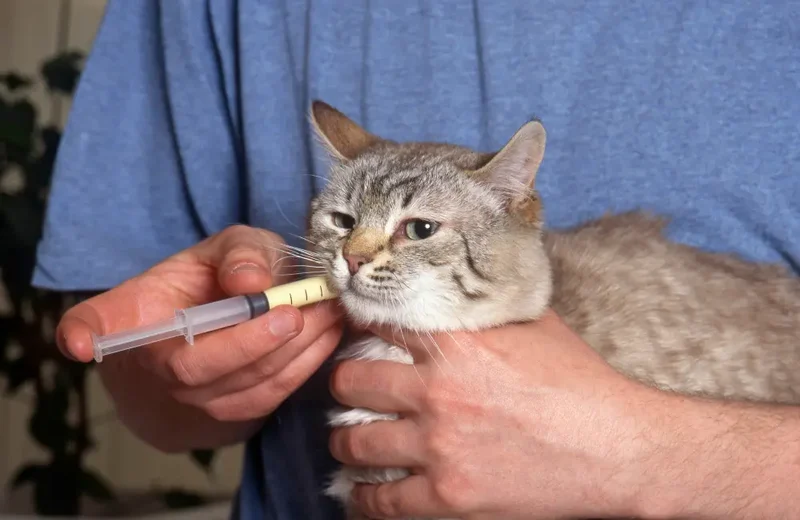
How I Actually Give the Medicine
I never aim straight down the throat. Instead, I insert the syringe gently into the side of the mouth, just behind the canine teeth. That small gap is the easiest entry point and causes less resistance. It works most of the time.
Once the tip is in place, I slowly press the plunger. Too fast, and the cat will spit it out or choke. I usually take about three seconds for a small dose, sometimes longer if the cat is sensitive. Patience matters here.
After the dose, I keep the cat’s head level for a moment. Some cats need a gentle chin stroke to encourage swallowing. I avoid tipping the head back too far because that can make them panic.
What I Do When Things Go Wrong
Sometimes it does not go smoothly. That is normal. A cat may spit out half the dose or jerk away at the last second.
In those cases, I pause and reset rather than force another attempt right away. Giving them a minute to calm down often leads to a better second try. I learned this the hard way after pushing too quickly with a nervous kitten who ended up more stressed than necessary.
If a cat repeatedly refuses, I talk to the owner about alternatives. Some medications can be mixed with food, though not all. Others come in various forms, such as flavored liquids or gels. Flexibility helps.
Building Trust for the Next Dose
Consistency builds trust over time. I try to follow the same routine each day so the cat knows what to expect. Even resistant cats settle down after a few days if the process stays predictable.
I also reward calm behavior whenever possible. A small treat or gentle petting right after the dose can change the cat’s attitude over time. One older cat I cared for went from hiding under a bed to sitting near me during medication time within a week.
End on a calm note. Always.
Giving medicine with a syringe is never completely effortless, but it becomes manageable with the right approach. I have seen fearful cats become cooperative with just small adjustments in handling and timing. If you stay patient and consistent, the process gets easier for both of you.