
I run a small mobile pet grooming van, and over the years, I’ve seen dogs chew on just about everything you can imagine. Leaves, shoes, bits of furniture, and yes, houseplants. One question I hear often from clients is about spider plants and whether they pose a real risk. I’ve dealt with a handful of dogs who got into them, and the answer isn’t as alarming as people think, though I don’t ignore it either.
What Happens When Dogs Chew on Spider Plants
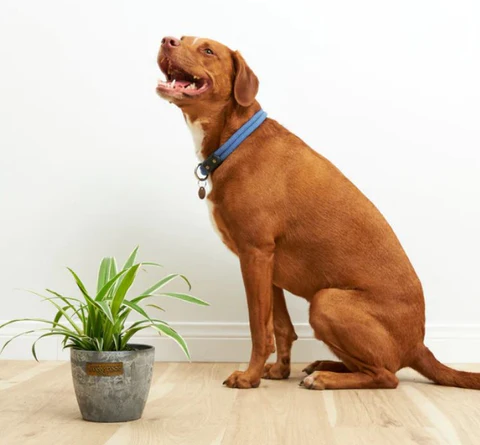
From my experience, spider plants are not considered truly toxic to dogs, but they can still cause problems. I have had dogs come into my van after chewing on those long, thin leaves, and the most common issue is an upset stomach. A bit of vomiting, sometimes loose stool, and a dog that looks slightly uncomfortable for a few hours. It usually passes on its own, but it is never pleasant to watch.
There is a reason dogs seem drawn to them. Spider plants have a mild hallucinogenic effect on some animals, similar in a very distant way to catnip. That might sound strange, but I have seen dogs go back to the same plant more than once, even after getting sick the first time. They do not learn quickly in this case.
In most cases I have seen, resolution occurs within 24 hours. That said, if a dog eats a large amount, the symptoms can get worse. A small nibble is different from tearing half the plant apart, and I have seen both scenarios play out in real homes.
Why Some Dogs Keep Going Back to Them
There is something about the texture and smell that seems to attract certain dogs more than others. I once groomed a young Labrador that had stripped three spider plants in a week, even after the owner moved them higher each time. The dog was not hungry. It was curious and maybe a bit bored.
I often tell clients that behavior plays a bigger role than the plant itself. If a dog is left alone for long hours or lacks stimulation, it will find something to chew. In a few cases, I have suggested people look into structured routines or even talk to professionals through resources like online pet care advice if they are unsure how to redirect that behavior safely.
Not every dog reacts the same way. I have seen some ignore spider plants completely, even when placed at nose level. Others treat them like a snack bar. Breed, age, and energy level all seem to play a role, though I have not seen a clear pattern that holds up every time.
Signs That It’s More Than a Mild Issue
Most of the time, the symptoms are mild and short-lived. Still, there are moments when I advise clients to call a vet right away. If a dog keeps vomiting for more than a day or seems unusually lethargic, that is not something to brush off. I have seen one case where dehydration became a concern because the dog could not keep water down.
Watch for these signs that go beyond a simple stomach upset:
Repeated vomiting over several hours, refusal to eat even favorite foods, visible discomfort when touched around the abdomen, and unusual drooling that does not stop. These are not typical for a small nibble. They suggest the dog either ate too much or is reacting differently than expected.
I remember a small mixed-breed dog that came in looking completely drained after chewing on multiple plants overnight. It needed a vet visit and some fluids, but it recovered fine. That case stuck with me because it showed how quickly something minor can escalate.
How I Advise Clients to Handle Spider Plants at Home
I do not tell people to throw out their spider plants immediately. They are common, easy to care for, and part of many homes. What I suggest instead is simple management. Keep them out of reach if your dog has shown interest, and observe behavior closely for the first few weeks.
In homes with puppies, I lean more toward caution. Puppies chew everything. That phase can last several months, sometimes closer to a year, depending on the dog. During that time, even non-toxic plants can become a problem because of how much they consume rather than what they consume.
Another practical step is offering alternatives. Chew toys, especially ones rotated every few days, can reduce boredom. I have noticed a noticeable difference between dogs with access to varied textures and shapes and those with just one or two old toys lying around.
Placement matters more than people think. A plant on a low coffee table is an invitation. Move it higher, use hanging baskets, or place it in a room the dog does not access. Small adjustments can prevent repeat incidents.
I also remind people to clean up fallen leaves quickly. Even if the main plant is out of reach, those dangling pieces often drop. Dogs notice. They always do.
Over time, most dogs lose interest if they cannot reach the plant. It becomes part of the background instead of a target. That is usually the best outcome, rather than trying to train a dog to ignore something that is always within easy reach.