
As a mobile pet care provider, I often field questions about cats and human foods, especially rice. Despite what’s online, the safety of rice for cats isn’t a straightforward yes-or-no; real-world experience shows it’s more nuanced.
Why Rice Shows Up in Cat Food Conversations
While many see rice as a filler in cat foods and thus assume it is useless or harmful, rice is neither toxic nor essential to cats. My experience shows it is typically included as a carbohydrate binder, not a harmful additive.
Cats are obligate carnivores, so their bodies are built around protein and fat, not grains. That said, rice itself does not contain anything inherently dangerous for them. I once had a client with a rescue cat that would sneak bites of plain cooked rice left on the kitchen counter, and the cat never showed any negative reaction to occasional exposure over several months.
The confusion usually comes from mixing nutrition concerns with food intolerance fears. Rice does not provide cats with the same nutritional value as meat does, but that does not automatically make it harmful. I have had conversations with at least twenty cat owners who assumed rice was toxic, and almost all of them were surprised when I explained it is generally considered safe in small amounts.
When Rice Can Actually Be Useful or Problematic
Rice is used in short-term diets for cats with mild stomach upset. I have seen vets suggest bland meals that sometimes include a small portion of cooked rice mixed with lean protein, such as boiled chicken. One clinic I worked alongside for a few weeks mentioned using this approach for roughly ten to fifteen cats recovering from temporary digestive issues.
During one home visit last winter, a customer asked me about feeding her cat a rice-heavy homemade diet while she waited for a vet appointment. I suggested caution and mentioned a local resource, and she followed up later, saying she used Is Rice Bad for Cats ” to better understand safe temporary feeding options before adjusting the meal plan. That conversation stuck with me because it showed how quickly people try to improvise diets when their pets are uncomfortable. It also reminded me how easy it is to overuse human food when balance matters.
Problems usually arise when rice becomes a large part of the diet rather than a small addition. Cats cannot thrive on carbohydrates alone, and long-term feeding of rice-based meals can lead to nutritional gaps. I have seen a few cases where owners tried homemade diets without guidance, and the cats gradually lost weight or developed dull coats.
Plain cooked rice is generally easier for cats to handle than seasoned or oily versions. I once saw a cat react badly after eating rice mixed with spices from a shared human meal, and the issue was clearly not the rice itself, but everything added to it. That difference matters more than most people realize.
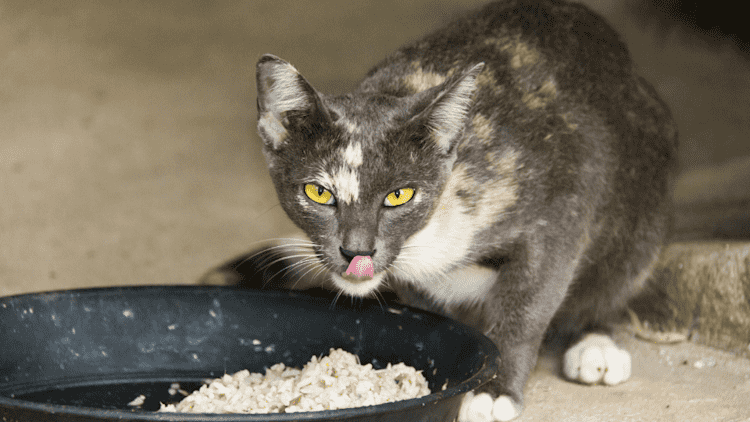
How Cats Actually React to Eating Rice
Most cats that sneak a small amount of plain rice show no reaction. During grooming visits, I’ve seen curiosity, but afterward it’s usually just mild disinterest. Takeaway: Mild or no reaction is the norm for most cats.
Some cats have sensitive digestion and may get loose stools from rice. I knew an older cat who always avoided rice but got mildly upset if it accidentally ate meals with rice, a pattern we both noticed regularly.
Rice allergies in cats are debated and appear to be rare. In my experience, most reactions labeled as “rice intolerance” are actually sensitivity to other ingredients in the same meal. Still, I treat every case individually because cats do not always behave as expected.
Quantity plays a big role. A teaspoon mixed into food is very different from half a bowl of plain rice. I have never seen a healthy adult cat react strongly to a tiny amount, but larger portions can disrupt digestion simply because they are not part of their natural diet.
What I Tell Cat Owners About Feeding Rice
My approach is simple. Rice is not harmful in small amounts, but I do not recommend it as a regular part of a cat’s diet. I have seen too many owners rely on human food as a shortcut, and that usually creates more confusion than benefit over time.
During routine visits, I often remind people that cats need protein-rich meals to stay healthy in the long term. Rice can sit on the side of that equation, but it should never replace the main structure of their diet. I once helped a household transition a cat back to a proper diet after months of mixed homemade feeding, and the improvement in energy was noticeable within a few weeks.
Some owners still choose to add small amounts of rice occasionally, especially for digestive support during recovery periods. That is fine in moderation if it is part of a plan guided by a vet. I always suggest watching the cat’s behavior closely rather than assuming any single food will work the same for every animal.
I have handled enough cats over the years to see a clear pattern. Rice is not the problem; imbalance is. When it stays occasional and simple, most cats tolerate it without issue. When it becomes a substitute for proper nutrition, that is where trouble slowly builds, in ways owners may not notice right away.