
After years as a professional dog trainer, I know the real key to harness success: it’s not just about the harness—it’s about how your approach shapes your dog’s experience.
Some dogs step right in. Others act as if you’ve just presented them with a medieval torture device.
I’ve worked with both extremes—and everything in between. Next, I’ll walk you through how I actually approach harnessing in real situations, not just the neat version you see on packaging.
Start With the Right Setup
Before I even touch the harness, I look at the dog.
Is the dog excited? Nervous? Distracted? That determines everything.
I once worked with a Labrador whose owner claimed he “hated” the harness, but he was just overly excited, turning it into a game.
So first, I create a calm moment. I’ll often wait a few seconds, let the dog settle, or ask for a simple “sit” if they know it. Not strict obedience—just enough pause to reset their energy.
Only then do I bring the harness forward.
Step-by-Step: How I Actually Put It On
There are different harness styles, but the process stays mostly the same. I’ll explain it in a way that works for most front-clip and back-clip designs.
1. Identify the Top and Front
This sounds basic, but I’ve seen owners accidentally flip harnesses inside out more times than I can count.
I run my hand along the harness and find:
- The chest piece (usually wider or padded)
- The straps that go around the body
- The clip (usually sits on the dog’s back)
If I hesitate here, the dog picks up on it. So I make sure I’m confident before I even approach.
2. Position the Harness in Front of the Dog
I don’t chase the dog around with it—that’s a mistake I see often.
Instead, I bring the harness low and in front of their chest.
With step-in harnesses, I place them on the ground and guide the dog over them. With overhead harnesses, I hold it open and let the dog sniff it first.
I once worked with a rescue dog who would bolt at the sight of the harness. Instead of forcing it, I spent a few sessions just letting him investigate it on the floor. By the third session, he was voluntarily putting his nose through.
That small patience saved weeks of struggle.
3. Guide the Head or Legs Through
Now comes the actual “putting it on” part.
- For overhead harnesses: I gently guide the dog’s head through the opening.
- For step-in harnesses: I help place each front paw into the correct loop.
I don’t push or force. If the dog resists, I pause.
In my experience, hesitation here usually means confusion, not stubbornness. Slowing down fixes more problems than strength ever will.
4. Bring the Straps Around the Body
Once the front is in place, I pull the straps around the dog’s sides.
This is where many dogs get sensitive—especially around their ribs or belly.
A senior mixed breed flinched when touched by the strap; gentler handling and a softer harness changed his response.
So I always move slowly here, keeping one hand steady on the dog so they feel supported.
5. Clip It Securely
I bring the buckle up and clip it on the dog’s back or side, depending on the design.
You’ll usually hear a click—that’s your signal it’s locked.
But I don’t stop there.
I give the harness a light tug to make sure it’s secure. I’ve seen clips that looked fastened but weren’t fully engaged, and that’s how dogs slip out mid-walk.
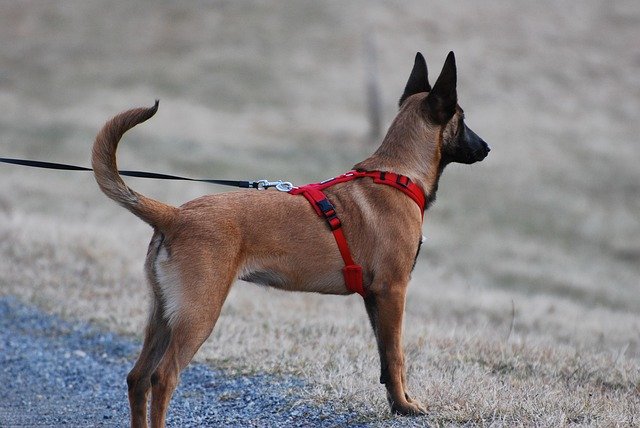
6. Check the Fit
This is the step most people rush, and it’s the one that matters most.
I slide two fingers under the straps:
- Too tight? The dog will feel restricted.
- Too loose? The dog can back out of it.
I’ve had clients come in saying, “He pulls so much on walks,” and half the time the harness was sitting crooked or loose. Once we properly adjusted the fit, the pulling reduced almost immediately.
Fit changes behavior more than people expect.
Common Mistakes I See All the Time
Over the years, a few patterns keep showing up:
Rushing the process
Dogs pick up on urgency. If you’re in a hurry, they become unpredictable.
Putting it on only before stressful walks
If the harness always means chaos outside, the dog starts resisting it indoors.
Forcing the dog through resistance
This creates long-term aversion. I’ve had to retrain dogs who would hide at the sight of a harness because of this.
A Small Habit That Makes a Big Difference
One thing I do almost automatically now: I reward calm cooperation.
Not with a full training session—just a quiet “good” or a small treat when the dog stands still or steps in willingly.
A terrier I worked with used to twist away, but rewarding small moments of stillness led to patient cooperation within a week.
That shift didn’t come from control. It came from clarity.
My Take After Years of Doing This
A harness isn’t just equipment. It’s part of your dog’s daily routine, and routines shape behavior.
If putting on the harness feels like a battle, it’s usually the process—not the dog—that needs changing. How you approach each step shapes your dog’s entire response.
Slow it down. Be consistent. Pay attention to how your dog reacts at each step.
Most dogs don’t need more training. They just need a handler who notices the small signals and adjusts accordingly.
That’s where the real difference happens.