
As a licensed veterinarian practicing in Texas for over 12 years, I’ve encountered many cases of dry eye syndrome in dogs, also known as Keratoconjunctivitis Sicca (KCS). Often, pet owners bring in their dogs concerned about persistent redness or discharge, and many don’t realize how serious this condition can become if left untreated.
What KCS Is
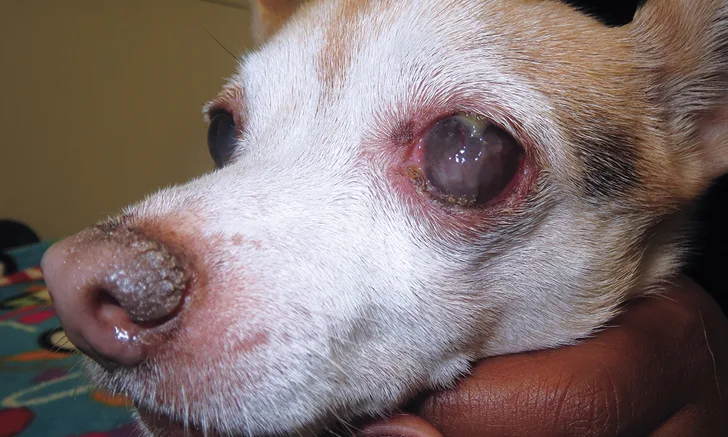
KCS, or dry eye, occurs when a dog’s tear glands fail to produce enough tears to keep the eyes properly lubricated. Tears are more than just moisture—they provide nutrients, flush out debris, and maintain the cornea’s health. Without adequate tears, the eye becomes dry, irritated, and more susceptible to infections. In my experience, small breeds like Shih Tzus, Cocker Spaniels, and Bulldogs are particularly prone, but I’ve treated dogs of all sizes.
I remember a Cocker Spaniel I treated last summer that had constant eye discharge. The owners assumed it was just “allergy season,” but after an examination, I diagnosed moderate KCS. The cornea had begun to scar, which would have affected vision if left untreated.
Symptoms I Look For
Owners often notice signs before I do, especially behaviors like:
- Squinting or excessive blinking
- Thick, yellow-green eye discharge
- Red, inflamed conjunctiva
- Rubbing or pawing at the eyes
A Labrador retriever I examined last winter showed only subtle squinting at first. The owners hadn’t noticed the mild discharge, but a Schirmer tear test revealed severely reduced tear production. Catching it early allowed us to start treatment before permanent damage occurred.
Causes of KCS
KCS can develop for several reasons. In my hands-on experience, the most common causes include:
- Immune-mediated conditions, where the body attacks its tear glands
- Breed predisposition, especially in small breeds.
- Drug reactions, particularly from sulfa-based medications
- Infections or trauma, which can damage tear-producing tissues
One case I recall involved a middle-aged Shih Tzu who developed KCS after a course of long-term antibiotics. Adjusting the medication and starting tear-stimulating drops made a significant improvement over several weeks.
Treatment and Management
Treating KCS requires ongoing care. Artificial tear supplements are the first step, but in moderate to severe cases, I often prescribe cyclosporine or tacrolimus drops to stimulate tear production. Regular monitoring is crucial; some dogs need daily eye care indefinitely.
I’ve also found that keeping the environment humid and gently cleaning the eyes can prevent additional irritation. One family I worked with turned their kitchen into a “humid oasis” for their Golden Retriever during winter, which surprisingly improved comfort and reduced infections.
Surgery is rarely required, but in chronic, severe cases, procedures like parotid duct transposition can be lifesaving. I’ve only performed this once in my career, and it was on a Terrier with almost no tear production. Post-surgery, the dog’s eyes improved significantly, and the family was relieved to see normal activity return.
Key Takeaways
From my perspective, KCS is manageable if caught early, but it demands vigilance. Regular check-ups, careful observation of your dog for subtle signs, and prompt treatment can prevent permanent eye damage. I always tell clients: dry eyes are not just uncomfortable—they can threaten vision.
In my practice, the dogs who receive early attention for KCS respond well to treatment and maintain a high quality of life. It’s a condition that benefits from awareness, careful care, and proactive veterinary involvement.