
I’ve spent the better part of a decade working hands-on with cats as a veterinary technician in a busy small-animal clinic. If there’s one question I hear from cat owners more than almost anything else, it’s this: “Why does my cat bite me when I’m just petting them?”
The short answer is that biting is part of how cats communicate. The longer answer—and the one that actually helps you stop it—comes from understanding the context behind the bite.
I’ve seen bites ranging from gentle “love nips” to defensive bites needing medical care. Most are in-between and rarely random.
The “I’ve Had Enough” Bite
A common situation is what I call the threshold bite: a cat enjoys petting—until suddenly it doesn’t.
I remember a client who brought in a calm, affectionate tabby. During the exam, the cat leaned into my hand, purring. About 30 seconds later, without changing position, she snapped at me. No growling, no obvious warning—at least not to the owner.
But I’d already noticed the subtle signs: the tail had started flicking, the ears turned slightly sideways, and the skin along her back began to ripple. That’s classic overstimulation.
In my experience, many cats have a very specific tolerance window. Once you cross it, the bite is their way of saying, “Stop now.”
Owners often make the mistake of thinking that more affection equals a happier cat. With cats, that’s not always true.
Play Aggression That Got Out of Hand
Another common reason is play behavior, especially in younger cats or those raised without proper outlets for play.
A few months ago, I worked with a family whose cat would ambush their hands whenever they sat on the couch. It wasn’t aggression in the true sense—it was hunting behavior misdirected at humans.
They had used their hands as toys from the kitten stage.
Cats are wired to stalk, chase, and bite. If you accidentally teach them that your fingers are prey, they’ll keep practicing that skill.
Once I asked a few questions, the behavior was predictable: biting occurred in the evening, when the cat had extra energy and no structured play.
Once we introduced wand toys and stopped hand-play entirely, the biting dropped off within a couple of weeks.
The “Love Bite” That Isn’t Always Love
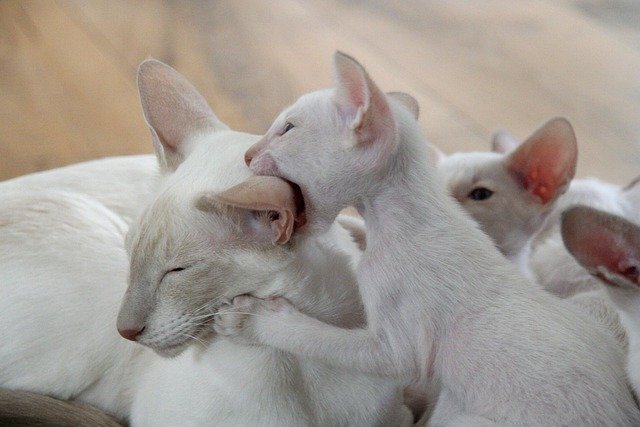
Some bites are softer, almost gentle. People often call them “love bites,” and sometimes that’s accurate—but not always.
I’ve had cats that would groom their owners’ hands, then give a quick nip. That behavior mimics how cats interact with each other. In a multi-cat household, it’s often part of social bonding.
But here’s where experience matters: those bites can escalate if the cat becomes overstimulated mid-grooming.
I’ve seen owners ignore those small nips, assuming they’re harmless, only to get a much harder bite seconds later. The initial nip was the warning.
Fear, Pain, and Defensive Biting
Not all bites are behavioral quirks. Some are warning signs of something deeper.
One case that stuck with me involved an older cat who suddenly started biting whenever his owner picked him up. This was a cat who had been docile for years.
During the exam, I noticed he reacted strongly when I touched his lower back. Turns out he had arthritis that had been quietly worsening. The biting wasn’t an attitude—it was pain.
Cats are experts at hiding discomfort. When they react, it’s often a surprise.
If a cat’s biting behavior changes suddenly, especially in situations they previously tolerated, I always advise ruling out medical causes first.
Mixed Signals: When Owners Miss the Warnings
More often than not, the problem isn’t the bite—it’s that owners miss the warnings.
Cats rarely go from calm to biting without any signals. The issue is that those signals are subtle and easy to ignore if you’re not used to reading them.
Things I’ve personally learned to watch for:
- A tail that starts flicking sharply instead of swaying gently
- Ears rotating sideways or flattening slightly.
- Sudden pupil dilation
- Skin twitching along the back.
- A shift from leaning in to pulling away
I’ve had clients insist their cat “bit out of nowhere,” but when we walk through the moment step by step, the signs were there.
What Actually Works (From Real Cases)
Over the years, I’ve found that managing biting isn’t about punishment—it’s about changing patterns.
I don’t recommend scolding or physical correction. In my experience, that either scares the cat or escalates the behavior.
What consistently works is adjusting how you interact:
If the issue is overstimulation, shorten your petting sessions. Stop while the cat is still relaxed, not after they start showing irritation.
If it’s play aggression, redirect that energy into structured play. A tired cat is far less likely to attack your hands.
If the biting seems out of character, especially in an older cat, I strongly lean toward a medical evaluation. I’ve seen too many cases where pain was the underlying cause.
And if you’re dealing with those gentle nips, treat them as early warnings rather than harmless quirks. Pull your hand away calmly before they escalate.
The Pattern Behind the Behavior
After years of handling cats in clinics, exam rooms, and client homes, one thing has become clear to me: biting is rarely random.
It’s communication. Sometimes it’s subtle, sometimes it’s blunt, but it always has a reason behind it.
The challenge isn’t stopping the bite in the moment—it’s learning what led up to it.
The main takeaways: watch for early signals, tailor your interactions to your cat’s needs, and always consider context. Understanding your cat’s communication is the best way to prevent unwanted biting.