
As a licensed veterinarian practicing in Texas for over a decade, I’ve had countless clients whisper to me, “My cat has started hissing at me. Is she becoming aggressive?”
Most of the time, the answer is no. Hissing isn’t aggression. It’s communication.
In my experience, hissing is one of the clearest signals a cat gives when something feels wrong. The problem is that humans often misunderstand what that signal means — and sometimes make it worse by reacting the wrong way.
Let me explain what I’ve learned from examining thousands of cats, including a few memorable cases that changed how I advise owners.

Hissing Is a Warning, Not an Attack
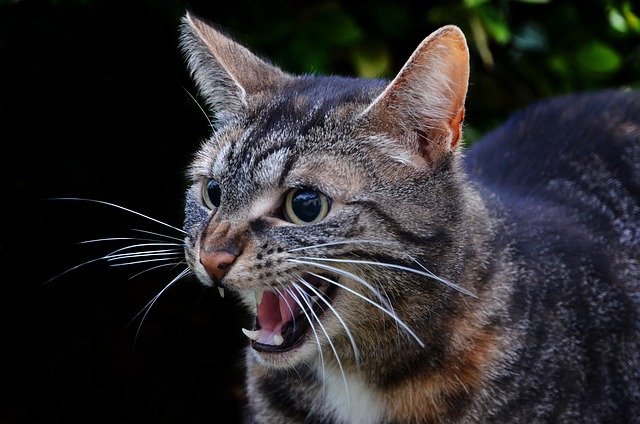
A hiss is a distance-increasing behavior. It’s your cat saying, “Stop. Back up. I’m uncomfortable.”
It’s defensive, not offensive.
Physiologically, a hiss is paired with other stress signals: flattened ears, dilated pupils, crouched posture, maybe a twitching tail. In the exam room, I see this pattern almost daily. A calm cat doesn’t suddenly leap to biting. There’s almost always a hiss first — a polite warning before escalation.
One of the biggest mistakes I see is owners punishing a cat for hissing. They scold, spray water, or clap loudly. From the cat’s perspective, that confirms the threat.
If you silence the warning, you don’t eliminate the fear. You just remove the early signal — and that’s how people get scratched.
The Newly Adopted Cat Who Hissed at Everyone
Last spring, a couple brought in their newly adopted rescue cat, who hissed constantly at people and even her food bowl.
They were convinced she had a “mean personality.”
During the exam, I noticed something subtle: she didn’t swat or lunge. She only hissed when hands approached her head quickly. When I slowed down, avoided eye contact, and let her sniff my hand first, she relaxed.
After talking through her background, we learned she’d been in a crowded shelter environment for months. Overstimulation and lack of control were likely contributors.
I advised them to:
- Create a single quiet room as her safe space.
- Avoid direct staring.
- Approach from the side rather than above.
- Let her initiate contact.
Within a few weeks, the hissing decreased dramatically.
That case reinforced something I see often: hissing is frequently rooted in insecurity, not hostility.
Pain Is a Common, Overlooked Cause
If a cat suddenly starts hissing when touched — especially in areas they previously tolerated — I immediately think about pain.
A few years ago, an older cat began hissing when his owner picked him up. She thought he was just cranky with age. During my exam, I found early arthritis in his hips.
Cats are masters at hiding discomfort. Hissing during handling is sometimes the first outward sign.
After starting joint support and pain management, his behavior changed. He didn’t become a lap cat overnight, but the defensive hissing during lifting stopped.
Whenever I see abrupt, out-of-character behavior, I recommend ruling out medical issues first. Dental disease, urinary pain, skin infections, and arthritis are frequent culprits.
Behavior is often biological.
Redirected Aggression: The Window Incident
Once, a gentle indoor cat suddenly attacked its owner after staring out the window.
What happened?
An outdoor stray cat had walked across the yard. The indoor cat became aroused and territorial but couldn’t reach the intruder. When the owner tried to pick him up, he redirected that pent-up stress toward her — hissing, growling, and scratching.
That’s called redirected aggression, and it’s more common than people think.
In these situations, I advise owners not to touch the cat until he fully settles. Dim the lights. Remove visual access to the trigger if possible. Give space.
Trying to comfort a highly aroused cat often escalates things.
Hissing Between Household Cats
Multi-cat homes add another layer.
I often see hissing after one cat returns from the veterinary clinic. The other cat smells unfamiliar scents — disinfectant, other animals, stress pheromones — and reacts defensively.
Owners panic, assuming their cats now “hate each other.”
In reality, it’s usually temporary scent confusion.
I suggest:
- Keeping the returning cat separated briefly.
- Swapping bedding to re-blend scents.
- Supervising slow reintroductions.
In most cases, normal dynamics resume within days.
However, persistent hissing between cats warrants closer evaluation. Resource competition — food bowls, litter boxes, resting areas — is a frequent trigger. I typically recommend one litter box per cat plus one extra, and feeding stations in separate locations.
Small environmental adjustments can significantly reduce tension.
When Hissing Is Appropriate
Sometimes, hissing is healthy.
If a child grabs a cat roughly and the cat hisses without escalating further, that’s appropriate boundary-setting. I would much rather see a hiss than a silent bite.
In homes with dogs, I also see cats use hissing to maintain space. A well-socialized dog learns quickly to respect that signal.
Trying to eliminate hissing entirely isn’t realistic or desirable. The goal is to reduce unnecessary stress, not suppress communication.
Common Owner Mistakes I See
Over the years, I’ve noticed patterns in how well-meaning people unintentionally worsen hissing behavior:
They approach too quickly.
They reach over the cat’s head instead of under the chin.
They maintain intense eye contact.
They punish the warning signal.
They force interactions before trust is built.
Cats are control-oriented animals. Giving them choice — choice to approach, choice to retreat — dramatically reduces defensive behavior.
Body Language Matters More Than the Sound
The hiss gets attention, but the rest of the body tells the full story.
A cat with a low crouch, puffed fur, and rigid posture is in high defensive mode. That’s not the time to intervene physically.
A cat that hisses once but keeps its body relaxed may simply be startled.
Learning to read the whole picture prevents misunderstandings.
I often demonstrate this in exam rooms. When I slow my movements and angle my body to the side instead of facing a fearful cat head-on, the difference is immediate. Small adjustments matter.
When to Seek Professional Help
Occasionally, hissing tied to obvious stress is normal.
But I advise owners to seek veterinary evaluation if:
- The hissing is sudden and unexplained.
- It’s paired with hiding, appetite changes, or litter box issues.
- It escalates to frequent aggression.
- It targets specific household members consistently.
Sometimes the solution is environmental. Sometimes it’s medical. Occasionally, I refer cases to a veterinary behavior specialist for structured modification plans.
In my professional opinion, ignoring persistent behavior changes is rarely wise. Cats don’t vocalize distress randomly.
What I Tell My Clients
Hissing isn’t a character flaw. It’s information.
When a cat hisses, I encourage owners to ask:
What changed?
What is my cat protecting?
Is there discomfort?
Is there fear?
Is there a trigger I’m missing?
The answer is almost always there if you look closely.
Over thousands of appointments, I’ve learned that the quietest cats can still be stressed, and the loudest hissers are often just asking for space.
In summary, when your cat hisses, view it as valuable information about their needs or discomfort. By recognizing this as a warning sign, actively seeking the cause, and making targeted adjustments, you can often resolve the issue. Most cats improve quickly once their signals are understood and respected.