
I’ve been sewing pet gear for over a decade—mostly custom pieces for small dog owners who want something more practical than what they find online. Sling carriers come up a lot, especially from people with aging dogs, post-surgery pups, or clingy little companions who just want to be held all day.
The first sling I made was for my own dog after a minor leg injury. I thought it would be simple, but the fabric stretched, and my dog tried to climb out. That early failure taught me more than any pattern ever could.
What follows isn’t a textbook method—it’s the process I use today, honed by real-world experience and feedback. Let’s start with the foundations: selecting the right fabric.
Choosing Fabric That Won’t Let You Down
If you get this part wrong, nothing else matters.
I’ve seen people use thin cotton or stretchy jersey because it’s easy to sew. The problem is that once you put a 5–8 kg dog in there, the fabric starts to sag. The sling sinks lower than expected, and your shoulder takes the brunt of the impact.
I always recommend a sturdy, non-stretch fabric like canvas, denim, or a thick cotton twill. Upholstery fabric can work too, but only if it’s still breathable.
A customer last spring brought me a sling she’d made from an old bedsheet. It looked fine on the table, but once her dog was inside, the whole thing twisted and pulled to the side. We remade it using medium-weight canvas, and the difference was immediate—stable, supportive, and much more comfortable for both of them.
If you’re unsure, hold the fabric and imagine it carrying weight for an hour straight. If it feels like it might stretch, it will.
Getting the Size Right (This Is Where Most People Mess Up)
You’re not just sewing a pouch—you’re creating something that sits across your body and supports a moving animal.
The length of the sling matters more than people think. Too short, and your dog sits awkwardly high against your chest. Too long, and it hangs near your hips, bouncing with every step.
Measure from one shoulder to the opposite hip for sling length. Add allowance for seams and some sag under weight.
Width matters too. For small dogs, I usually go with about 50–60 cm of fabric width before folding. This creates a deep enough pocket so the dog feels secure rather than perched on the edge.
One client’s terrier kept jumping out. The issue wasn’t behavior, but that the sling was too shallow. Once we deepened the pocket, the dog settled.
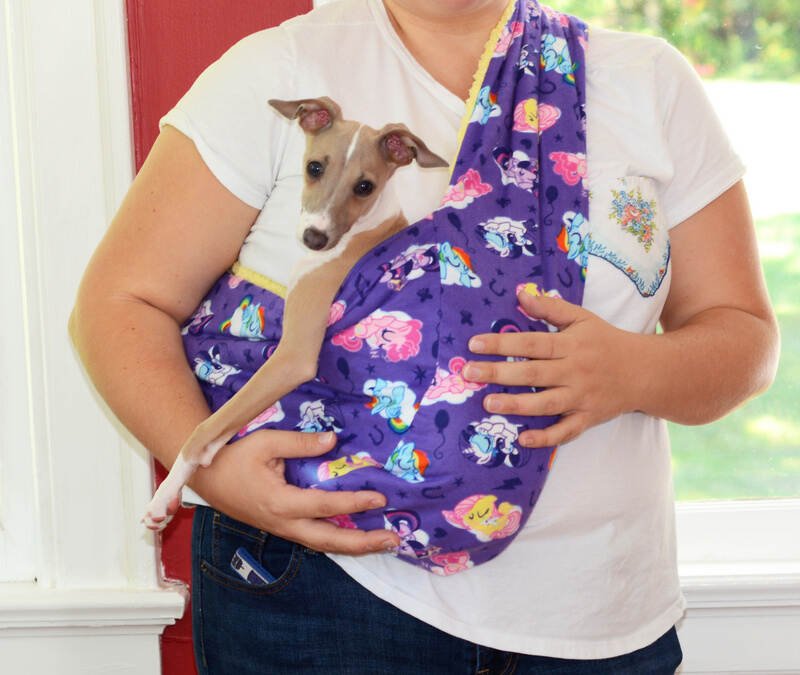
Cutting and Folding the Sling
Here’s the simplest structure I’ve found to work reliably:
Fold a rectangular piece of fabric lengthwise, right sides together. Sew the long and one short edge to create a tube.
Before sewing, I always pin the fabric and try it over my shoulder. It’s a small step, but it saves frustration later. You’ll instantly feel if the length is off.
Stitch the long edge with a strong, straight stitch. Then reinforce it—either with a second line of stitching or a zigzag finish. This seam carries most of the weight, so don’t treat it lightly.
Turn the tube right side out—meaning the finished, outer surface is now on the outside—and you’ll start to see the sling shape forming.
Creating the Pocket (The Real Heart of the Sling)
This is where your dog actually sits, and it needs to feel natural—not like a sack.
Flatten the tube so the seam—the line where you just sewed—runs along one edge. Then fold one side upward to form a curved pocket, which is the main area where the dog will sit. You’re essentially shaping the fabric like a hammock.
I don’t rely on exact measurements here. Instead, I shape it by hand and visually test the depth. After doing this for years, I can tell just by looking whether a dog will sit comfortably or feel cramped.
Once you’re happy with the shape, stitch across the bottom curve to secure the pocket. Reinforce this seam well—it handles the full weight of your dog.
Adding Safety Features (Don’t Skip This)
This is one area where I’m firm: always include a safety strap.
Attach a sturdy safety strap with a clip to the inside of the sling. Connect it to the dog’s collar or harness.
Years ago, someone contacted me after their dog leapt out of a sling. The dog wasn’t hurt, but it was a close call. Since then, I have always made a sling with a safety attachment.
You can also add a small padding layer to the shoulder section. Even a folded strip of fleece sewn into the strap area makes a noticeable difference over time.
Common Mistakes I Keep Seeing
After helping so many people fix their DIY slings, a few patterns stand out.
The first is underestimating weight distribution. Even a small dog can feel heavy after 20 minutes if the sling isn’t balanced properly.
Another is ignoring seam strength. I’ve repaired slings where the stitching literally tore apart under pressure. Use a strong thread, and don’t rush those seams.
And then there’s the tendency to overcomplicate things—adding zippers, buttons, or unnecessary layers. In my experience, simpler designs last longer and are easier to use.
Testing It Before You Trust It
Once your sling is sewn, don’t head out for a long walk right away.
Test the sling at home. Move and sit with your dog inside. Adjust based on any fit or comfort issues.
When I first made a working sling, I wore it around the house for an hour before taking it outside. That test run revealed a pressure point that I fixed before it became a bigger issue.
Final Thoughts From Experience
A well-made sling carrier should feel almost effortless to wear. Your dog should settle in naturally, and you shouldn’t feel like you’re constantly adjusting it.
Over the years, I’ve come to see these carriers less as accessories and more as tools—especially for older dogs or those recovering from injury. Done right, they give both the dog and the owner a sense of ease that store-bought versions don’t always deliver.
If your first attempt isn’t perfect, that’s normal. Mine wasn’t. The difference comes from noticing what feels off and adjusting.