
Why Cats Are Curious About Peanut Butter
As a licensed veterinarian practicing in Texas, I’ve noticed that cats can be surprisingly intrigued by peanut butter. Being obligate carnivores, their bodies are built primarily to digest meat, yet many cats show interest in this sticky, fatty treat. The allure isn’t about sweetness—cats actually lack taste receptors for sugar—but rather about texture and novelty.
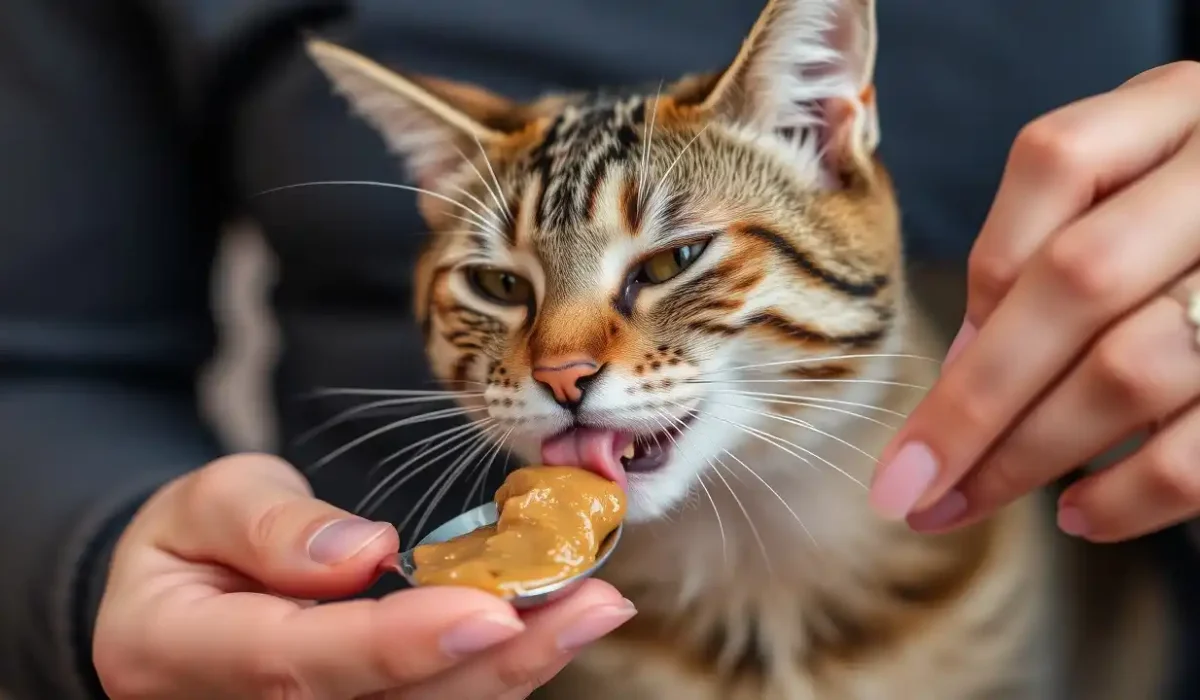
I first noticed this with a patient named Whiskers, a ten-year-old domestic shorthair. His owner offered him a tiny dab of peanut butter on a spoon, expecting him to sniff it and walk away. Instead, Whiskers dove in, licking and pawing at the spoon like it was a gourmet treat. Moments like these make me realize that cats’ interest in peanut butter is more sensory than nutritional.
Not Every Cat Likes It
In my experience, not all cats are fans. I’ve worked with several kittens who recoiled at the smell, turning their noses up despite encouragement. Since cats don’t perceive sweetness, sugary peanut butter holds little appeal. What draws them in is usually the fat content and sticky texture, which some cats find fun to lick and play with.
I’ve also observed behavioral differences based on personality. Some shy cats approach cautiously, using it as a novel object to explore. More curious or food-motivated cats often react enthusiastically, showing excitement similar to when they encounter new protein-based treats.
Potential Health Risks
Peanut butter is generally safe in very small amounts, but there are risks if offered too liberally. One spring, a customer brought in her cat after a weekend experiment with a peanut butter-filled toy. The cat experienced mild vomiting and soft stools. Though the episode resolved quickly, it reminded me that peanut butter is rich and can be difficult for cats to digest.
Another serious concern is xylitol, an artificial sweetener found in some peanut butter brands. While cats are less frequently exposed than dogs, even a small amount could be harmful. For safety, always check ingredients and stick to plain, unsalted peanut butter without harmful additives.
Using Peanut Butter Safely
I’ve found that peanut butter can serve as a useful tool in moderation. Some owners use it to fill enrichment toys, encourage shy cats to interact, or distract cats during grooming sessions. A pea-sized portion is more than enough to provide interest without overloading their system.
Overuse, however, can cause digestive upset or contribute to obesity. I advise pet owners to monitor reactions carefully and never rely on peanut butter as a regular treat. Its primary role should be as an occasional novelty or enrichment aid rather than a dietary staple.
My Professional Take
Some cats enjoy peanut butter, mostly because of its texture and fat content rather than its taste. In my practice, I’ve seen enough cats react positively to justify offering a tiny taste occasionally, but the risks should guide careful moderation. By observing your cat’s reaction, choosing safe varieties, and limiting portions, you can make peanut butter a harmless indulgence rather than a health hazard.
When used responsibly, it can even provide a moment of enrichment or play. But as with all treats outside their natural diet, moderation and supervision are essential. A little dab can be entertaining and engaging—but too much can quickly turn a harmless curiosity into a digestive or behavioral problem.