
Why Proper Dog Care Is Important:
Proper dog care is important because it keeps your dog healthy, happy, and safe. When a dog receives the right food, exercise, and medical care, it can live a longer and more comfortable life. Good care also helps prevent common illnesses and behavior problems. Dogs that feel loved and secure develop better behavior and stronger trust in their owners. Responsible dog care creates a lifelong bond between you and your pet.
Dogs depend on humans for their well-being. Good care helps your dog:
- Live a longer and healthier life
- Stay mentally happy and active
- Build a strong bond with you
- Avoid illnesses and behavior problems
Neglecting a dog’s needs can lead to health issues, stress, and aggression. Responsible dog care ensures a loving and safe relationship.
Understanding Your Dog’s Basic Needs:
Just like humans, dogs have basic needs that must be met every day.
The Five Basic Needs of a Dog
- Nutritious food
- Clean drinking water
- Safe shelter
- Healthcare
- Love and attention
Meeting these needs consistently is the foundation of good dog care.
Feeding Your Dog Properly: 🥣
Choose the Right Dog Food
A healthy diet is essential for your dog’s growth and energy. A balanced diet plays a major role in your dog’s overall health. Always choose high-quality dog food based on your dog’s age, size, and activity level. Choose food based on:
- Age (puppy, adult, senior)
- Size and breed
- Activity level
- Health conditions
Types of dog food:
- Dry food (kibble)
- Wet food (canned)
- Homemade food (only vet-approved)
Feeding Schedule
- Puppies:3–4 times a day
- Adult dogs:2 times a day
- Senior dogs:2 smaller meals
Avoid feeding human food like chocolate, onions, grapes, or spicy foods, as these can be toxic.
Fresh Water Is a Must
Always provide clean, fresh water. Change it at least once daily.
Providing a Safe and Comfortable Shelter: 🏠
Your dog needs a safe place to rest and feel secure. Dogs need a clean and quiet place to rest. Whether indoors or outdoors, the shelter should protect them from heat, cold, and rain.
Indoor Dogs
- Soft dog bed
- Clean and quiet sleeping area
- Proper ventilation
Outdoor Dogs
- Weather-proof dog house
- Protection from heat, rain, and cold
- Clean bedding
Dogs should never be chained for long periods. They need freedom and interaction.
Regular Veterinary Care: 🩺
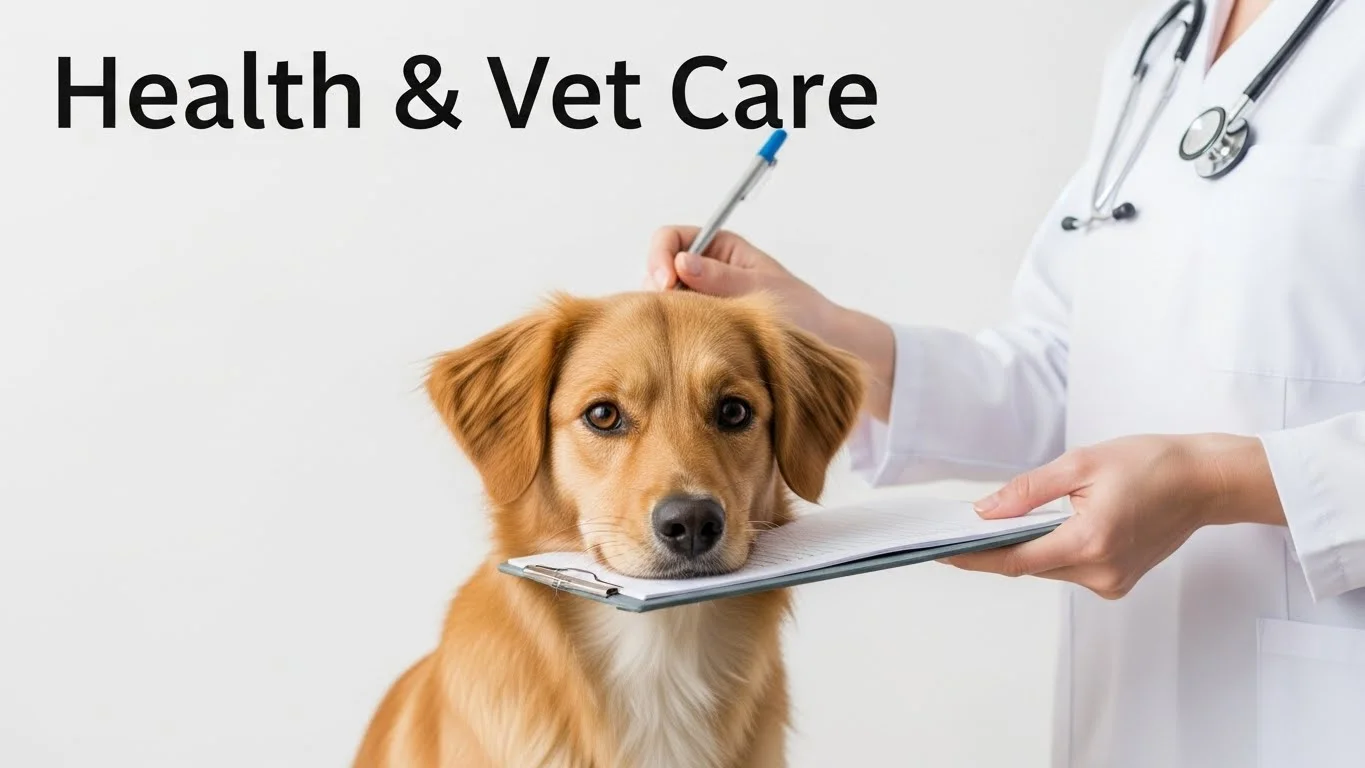
Healthcare is a vital part of dog care. Regular vet visits help detect health problems early. Vaccinations, deworming, and flea control are essential parts of dog healthcare. Routine checkups help detect illnesses early before they become serious. Vaccinations protect dogs from common and dangerous diseases. Vets also provide guidance on nutrition, dental care, and parasite control. Consistent veterinary visits ensure a longer, happier life for dogs.
Vaccinations
Vaccines protect your dog from dangerous diseases like:
- Rabies
- Distemper
- Parvovirus
Follow the vaccination schedule recommended by your vet.
Deworming and Flea Control
- Deworm puppies every few weeks
- Use flea and tick prevention monthly
Regular Checkups
Visit the vet at least once a year for a health check, even if your dog looks healthy.
Grooming and Hygiene: ✂️
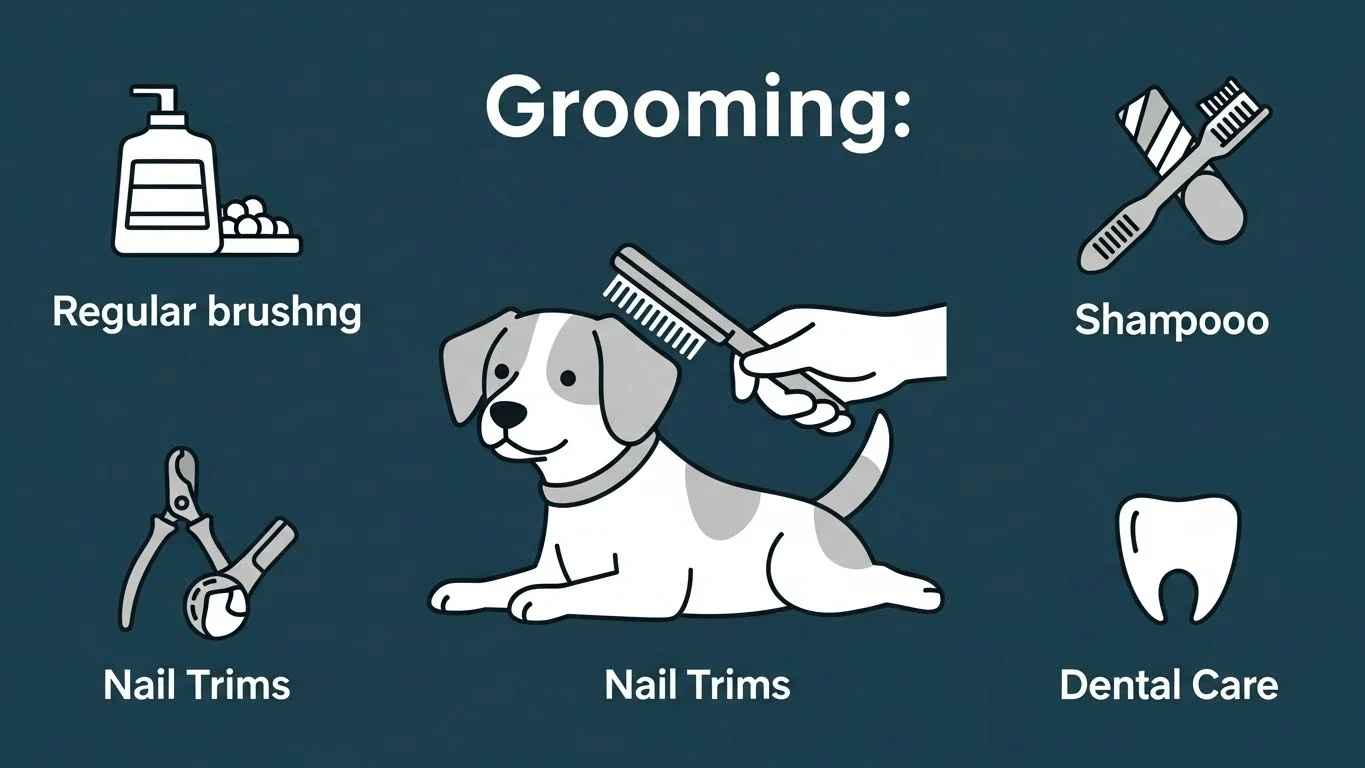
Grooming keeps your dog clean and comfortable. Grooming keeps your dog clean, comfortable, and free from skin problems. Regular brushing, bathing, nail trimming, and dental care are important. Grooming and hygiene are important for keeping dogs clean and healthy . Regular brushing helps remove dirt, loose fur, and prevents matting. Bathing keeps the coat fresh and reduces skin problems. Trimming nails and cleaning ears prevent discomfort and infections. Proper grooming also helps owners notice health issues early.
Brushing
- Short-haired dogs: once a week
- Long-haired dogs: daily brushing
Brushing removes loose hair and prevents tangles.
Bathing
- Bathe your dog every 4–6 weeks
- Use only dog shampoo
Too much bathing can dry out their skin.
Nail Trimming
Trim nails once or twice a month. Long nails can cause pain and walking problems.
Dental Care
- Brush your dog’s teeth 2–3 times a week
- Use dog-friendly toothpaste
Exercise and Physical Activity: 🏃♂️
Dogs need daily exercise to stay healthy and happy. Daily exercise keeps dogs physically fit and mentally happy. Walks, playtime, and outdoor activities prevent obesity and boredom. Exercise and physical activity are vital for a dog’s physical and mental health. Daily walks, runs, and play sessions help maintain a healthy weight. Regular activity reduces stress and prevents behavioral problems. Exercise also improves muscle strength and overall endurance. An active dog is usually happier, calmer, and more well-behaved.
Benefits of Exercise
- Maintains healthy weight
- Improves behavior
- Reduces anxiety and boredom
How Much Exercise Is Needed?
- Small breeds:30 minutes/day
- Medium breeds:45–60 minutes/day
- Large breeds:1–2 hours/day
Activities include walking, running, playing fetch, and swimming.
Training and Socialization: 🎓
Training helps your dog behave well and stay safe. Training teaches dogs good behavior and helps them stay safe. Socialization with people and other dogs builds confidence and reduces fear. Training and socialization are essential for raising a well-behaved dog. Basic training helps dogs understand commands and develop good habits. Socialization allows dogs to feel comfortable around people, animals, and new environments. Early and positive experiences reduce fear and aggression. Consistent training builds confidence and strengthens the bond between dogs and their owners.
Basic Commands Every Dog Should Know
- Sit
- Stay
- Come
- No
Use positive reinforcement like treats and praise.
Socialization
Expose your dog to:
- Other dogs
- People
- New environments
This helps prevent fear and aggression later in life.
Mental Stimulation and Playtime: 🧠
Dogs need mental exercise just as much as physical activity. Mental stimulation and playtime are very important for a dog’s happiness and health. Interactive toys, training games, and puzzle feeders keep dogs mentally active. Playtime helps reduce boredom and prevents destructive behavior. It also strengthens the bond between dogs and their owners. Regular mental activities keep dogs calm, confident, and well-balanced.
Ways to Keep Your Dog Mentally Active
- Puzzle toys
- Hide-and-seek games
- Training sessions
- Interactive toys
Mental stimulation prevents destructive behavior like chewing or excessive barking.
Showing Love and Emotional Care: ❤️
Dogs are emotional animals and need affection. Dogs are emotional animals that need love and attention. Spending quality time, speaking kindly, and being patient strengthens your bond. Showing love and emotional care strengthens relationships and builds trust. Small acts of kindness, such as listening and offering support, make others feel valued. Expressing feelings honestly helps create deeper emotional connections. Being patient and understanding during difficult times shows true care. Consistent love and empathy bring comfort, happiness, and emotional security.
How to Show Love to Your Dog
- Spend quality time together
- Talk to your dog kindly
- Pet and cuddle (when they are comfortable)
- Be patient and gentle
Never shout or use physical punishment. This can damage trust and cause fear.
Understanding Dog Behavior:
Understanding your dog’s body language helps you respond correctly. Understanding dog behavior helps build a strong and trusting relationship with your pet. Dogs communicate through body language, sounds, and actions rather than words. Observing signs like tail wagging, ear position, and barking can reveal their emotions. Positive reinforcement encourages good behavior and reduces fear or aggression. Spending time and being patient helps dogs feel safe and understood.
Common Dog Behaviors
- Wagging tail:Happiness or excitement
- Growling:Fear or warning
- Whining:Anxiety or need for attention
Observe patterns and consult a trainer or vet if behavior changes suddenly.
Traveling and Safety Tips: 🚗
Traveling can be an exciting experience, but safety should always be a priority. Always keep your important documents, money, and valuables secure while on the move. Research your destination in advance to understand local laws, culture, and potential risks. Stay alert in crowded places and avoid sharing personal details with strangers. Having emergency contacts and travel insurance can help you handle unexpected situations confidently.
- Use a leash during walks
- Keep ID tags on your dog
- Microchip your dog if possible
- Use a dog seatbelt or carrier during travel
Safety is an important part of responsible dog ownership.
Common Mistakes to Avoid
- Overfeeding
- Skipping vet visits
- Lack of exercise
- Ignoring training
- Leaving dogs alone too long
Avoiding these mistakes ensures your dog’s well-being.
Conclusion:
Final Thoughts: Being a Responsible Dog Owner:
Caring for a dog is a lifelong commitment. Dogs give unconditional love, and in return, they need care, patience, and responsibility. By providing proper food, healthcare, training, exercise, and affection, you can ensure your dog lives a happy and healthy life. Caring for a dog is a lifelong responsibility. With proper food, healthcare, training, exercise, and love, your dog will become a happy and loyal family member.
A well-cared-for dog is not just a pet—it becomes a loving family member.
References 📚
- American Veterinary Medical Association (AVMA) – Pet Care Guidelines
- American Kennel Club (AKC) – Dog Health and Training Resources
- World Small Animal Veterinary Association (WSAVA) – Dog Nutrition Guidelines
- ASPCA – Dog Care and Safety Tips
- RSPCA – Responsible Dog Ownership Guide