
From a Licensed Veterinarian’s Perspective
I’m a licensed veterinarian who has spent most of my career working with dogs that travel regularly—show dogs, ranch dogs, anxious rescues, and the occasional new puppy who thinks the back seat is a spinning spaceship. Car anxiety isn’t rare. I see it weekly in my clinic, and I’ve dealt with it in my own truck many times.
Some dogs shake. Some drool. Some bark nonstop. A few will try to crawl into the driver’s lap. The good news is that most dogs can learn to relax in the car with the right approach, and medication is only rarely the first answer.
First, understand why your dog is panicking.
Car fear usually doesn’t appear out of nowhere. In my experience, it typically traces back to one of three roots:
- motion sickness
- negative association (car always meant “going to the vet” or “being dropped off”)
- lack of gradual exposure as a puppy
One of the first cases I handled early in my career was a young border collie who screamed the entire way to my clinic. The owner assumed the dog “hated cars.” It turned out the dog had always been put directly into an hours-long highway ride as a puppy and had never taken short, pleasant trips. Once we changed the pattern, the panic dropped dramatically.
I share that because “why” affects “how” you fix it. A nauseous dog needs different help than a fearful one.
Start before you ever turn the engine on.
People often try to solve car anxiety on the highway. That’s already too late.
I’ve had the best results by working in tiny stages:
Let your dog explore the parked car with the doors open. Don’t force, drag, or shut them in. Toss a treat onto the back seat. Praise them for simply putting front paws inside. Some dogs do nothing more than on the first day—and that’s perfectly fine.
Once they’re comfortable being in the car, sit with them for a minute and do nothing. No engine yet. Just calm presence. Many dogs shake less once they realize nothing bad is happening.
Only after this becomes boring should you start the engine. I’ve had dogs who were totally fine until the engine sound; then the trembling began. In those cases, we’d sit with the engine running for a minute, then get out. Repetition here matters more than bravado.
Secure your dog — it calms them more than people expect
I strongly recommend restraint in the car—not just for safety, but because it genuinely helps anxious dogs. I’ve watched restless dogs settle the moment they’re gently contained.
In my truck, I use either:
- a crash-tested harness clipped to a seat belt, or
- an appropriately sized crate positioned so the dog can see out but not slide around
One client last spring had a Labrador who paced constantly, panting heavily. The family thought the dog “needed freedom.” What he actually needed was stability. Once we switched him to a snug-fitting harness and put a nonslip mat under his paws, the pacing stopped right away. Many anxious dogs feel out of control when they slide every time the car turns.
Loose dogs also try to reach the driver. I’ve seen more than one near-accident because of that alone.
Associate the car with good destinations.
If your dog’s only trips are to the vet or groomer, anxiety is logical.
I make a point of telling owners to schedule “no-reason” car rides: five minutes to a quiet park, a ride-through trip where the only outcome is treats, or simply a loop around the block followed by playtime at home. I did this myself with a rescue hound who shook so hard her collar rattled. Short rides to a field where she could sniff changed her attitude completely over a few weeks.
Your goal is simple: the car predicts good things, not stress.
Watch for motion sickness — it doesn’t look the same in every dog.
Some dogs aren’t scared. They’re nauseous.
Signs I see often:
- drooling ropes of saliva
- swallowing repeatedly
- yawning, then vomiting
In those cases, training alone won’t fully fix the issue. I commonly suggest:
- avoiding food for several hours before travel
- keeping cool, steady airflow toward the dog
- placing the dog forward-facing, low in the vehicle, with a limited view of fast-moving scenery
Medication is sometimes appropriate. I do prescribe anti-nausea medicines for dogs that truly get carsick, especially those that must travel long distances. But I prefer this after evaluating the dog rather than guessing, because the wrong solution can mask fear rather than treating it.
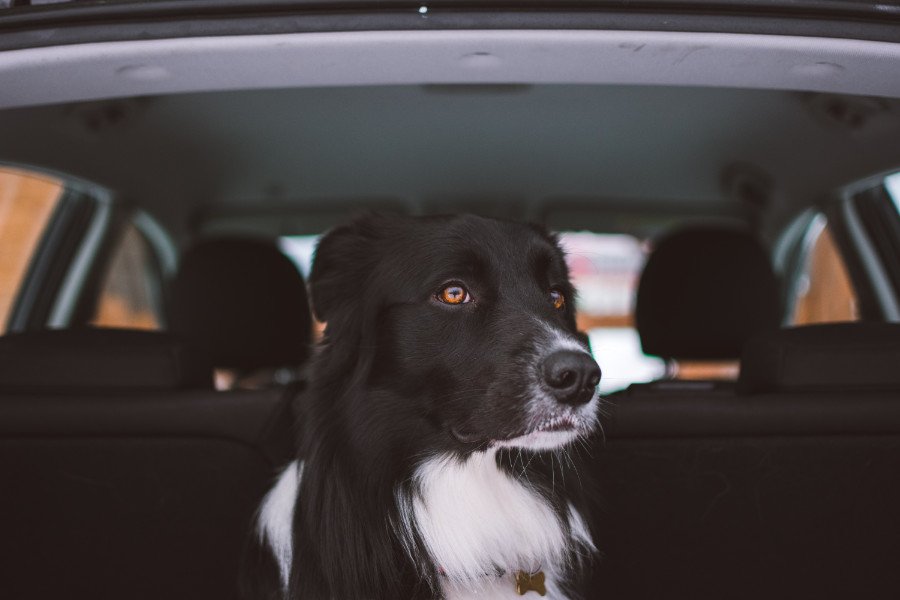
Your own energy matters more than most manuals admit
I’ve watched owners turn a mildly uneasy dog into a shaking one just through tension.
A family once brought me a German shepherd who only panicked on the way to obedience class. The dog wasn’t the nervous one at first—the owner was. She hovered, fussed, and repeated the dog’s name anxiously. The dog read that like a neon sign that danger was ahead.
Dogs are honest readers of our nervous systems. Calm, neutral chatter, windows cracked a little, and a steady driving style often help more than music tracks or gadgets marketed for “pet relaxation.”
Common mistakes I advise against
These are things I’ve seen repeatedly and rarely seen succeed:
Forcing the dog into the vehicle “just to get it over with.” That builds trauma fast.
Letting children climb over or hug an anxious dog in the car. Even sweet dogs can snap while terrified, and I have treated those bite wounds in the clinic.
Rolling the window down far enough for the dog to hang their head out at highway speeds. It looks joyful, but I’ve treated eye injuries and ear infections from it, and anxious dogs don’t usually become calmer this way.
Using sedatives casually without veterinary guidance. Some older medications make the dog too drowsy to resist, while the fear remains just as strong—a terrible combination.
Sometimes, professional help really is the shortest path.
I say this as someone who has seen hundreds of these cases: some dogs don’t “grow out of it,” but they do get better with structured help.
Certified trainers who understand fear, not just obedience, can make a tremendous difference. I work closely with one in my area, and we frequently share clients. In severe cases, we combine behavior modification with anti-anxiety medication tailored to travel. The goal isn’t to knock the dog out—it’s to help them stay calm enough to learn new associations.
Final thought from experience
A dog who panics in the car isn’t trying to be difficult. They’re overwhelmed.
I’ve seen dogs who couldn’t even approach a vehicle eventually sleep through road trips once we slowed the process down, secured them properly, and stopped treating every ride as a crisis whether your dog is a trembling rescue, an overexcited puppy, or an otherwise confident working dog who hates enclosed spaces, patient, gradual work pays off far more reliably than force.
If your dog’s fear is extreme, or if vomiting or collapse accompanies it, I’d want to see that dog as a patient to rule out medical causes. Otherwise, start small, reward calm, keep them secure, and let the car become just another boring part of life rather than a storm to endure.