
As a licensed veterinarian practicing in Texas, I’ve had a surprising number of conversations about homemade cat food. Some clients come in excited, convinced they’ve found a healthier alternative to commercial diets. Others arrive after something has already gone wrong—weight loss, dull coats, or digestive issues that crept up slowly.
I understand the appeal. Preparing your cat’s food seems more natural, more controlled. But my main message is clear: unless owners are deliberate and careful, making homemade food is one of the easiest ways to create nutritional problems.
Where Homemade Diets Go Right—and Wrong
A few years ago, a client brought in a young cat that had been on a homemade chicken-and-rice diet for months. She was proud of it, and to be fair, the cat looked fine at a glance. But bloodwork told a different story—low calcium levels and early signs of imbalance that would have become serious if left unchecked.
That case wasn’t unusual. My main message: cats have unique dietary needs that must be met deliberately. Owners who overlook this risk real harm, because cats aren’t small dogs or humans. Crucial nutrients like taurine, arachidonic acid, and certain vitamins don’t just appear in food—they must be intentionally included.
On the other hand, I’ve also worked with clients who did it right. One couple I advised last spring transitioned their cat to a carefully balanced homemade diet after repeated episodes of food sensitivity. We adjusted the recipe over time, added supplements, and monitored closely. The cat’s coat improved, and the chronic digestive issues settled. That’s the version of homemade feeding that works—but it’s deliberate, not improvised.
A Simple Homemade Recipe I Sometimes Recommend
When owners ask for a starting point, I don’t hand out complicated formulas. I prefer something practical, but I always emphasize that this is a base, not a complete lifelong diet, and that adjustments will be needed.
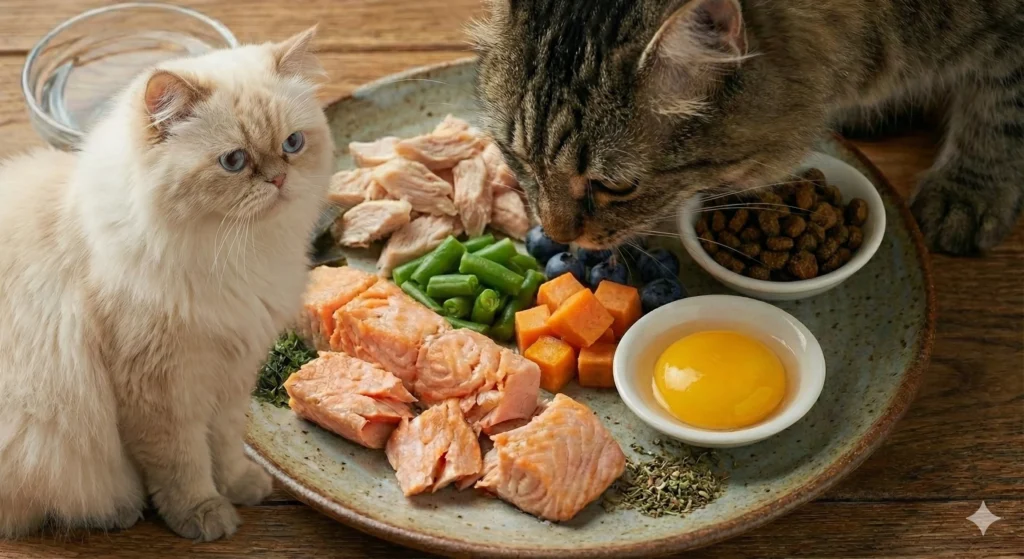
One recipe I’ve used in practice includes cooked chicken thighs (with skin for fat), a small portion of liver, and a bit of cooked pumpkin. The chicken provides protein and fat, the liver provides essential vitamins, and the pumpkin supports digestion.
In my experience, texture matters more than people expect. Some cats refuse food that’s too dry or too chunky. I’ve had owners come back frustrated, only to realize their cat preferred a softer, slightly moist consistency. A quick adjustment—adding a bit of warm water or blending lightly—often solves the issue.
That said, I rarely allow this type of recipe to stand alone without supplementation. Taurine deficiency, in particular, is something I’ve seen cause real harm, including vision and heart problems. Once you’ve seen that firsthand, you stop taking shortcuts.
Common Mistakes I Keep Seeing
Most of the problems I encounter aren’t due to bad intentions—they come from assumptions.
One of the biggest mistakes is relying solely on muscle meat. I’ve had clients proudly tell me they feed “just chicken” or “just beef,” assuming simplicity equals safety. It doesn’t. Cats need organ meats and specific nutrients that plain meat doesn’t provide.
Another issue is copying recipes from the internet without understanding them. I remember a case where a cat developed chronic diarrhea after being fed a raw diet found online. The proportions were off, and there was no supplementation. The owner thought raw automatically meant better. After switching to a balanced approach, the cat stabilized within weeks.
Then there’s inconsistency. Homemade feeding requires routine. Changing ingredients too often, skipping supplements, or eyeballing portions can lead to imbalances over time. I’ve seen subtle deficiencies that only show up months later, which makes them harder to trace back to diet.
My Practical Advice for Owners Considering It
I don’t discourage homemade diets outright, but I don’t treat them casually either. If someone in my clinic wants to go this route, I guide them through it carefully.
From experience, the safest approach includes:
- Building the diet around a reliable protein source like chicken, turkey, or rabbit
- Including organ meats in controlled amounts
- Adding a proper taurine supplement
- Keeping portions consistent rather than guessing each day
I’ve found that owners who succeed with homemade feeding treat it almost like a routine, not an experiment. They prepare batches, store them properly, and stick to a plan.
At the same time, I’m honest about when not to do it. If someone has a busy schedule, struggles with consistency, or isn’t willing to measure ingredients properly, I usually recommend sticking with a high-quality commercial diet. I’ve seen too many preventable issues to pretend otherwise.
A Balanced Perspective from the Exam Room
Homemade cat food can work. I’ve seen it improve certain conditions and give owners peace of mind. But I’ve also treated the consequences of poorly planned diets—some mild, others far more serious.
The difference isn’t the idea itself; it’s the execution.
Cats don’t need variety in the way humans do. They need precision. And from everything I’ve seen in practice, that’s the part people tend to underestimate until they’re sitting across from me, trying to figure out what went wrong.