• Home
  • About Us
  • Headlines
  • Shopping Cart
  • Blogs
    • Dog Care
    • Cat Care
  • Contact us
  • Home
  • About Us
  • Headlines
  • Shopping Cart
  • Blogs
    • Dog Care
    • Cat Care
  • Contact us
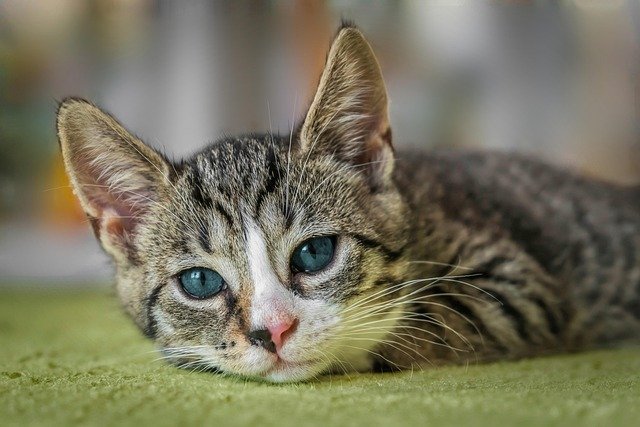
Male Cat Spraying Behavior

Guide to Understanding Male Cat Spraying Behavior

Understanding Why Male Cats Spray As a licensed veterinarian practicing in Texas for over a decade, I’ve seen countless cases of indoor male cats marking their territory. Spraying isn’t uncommon,…[...]
Posted in Cat Care | Tagged Male Cat Spraying Behavior
Treat Anemia in Cats

How to Treat Anemia in Cats Naturally: Insights from a Veterinarian

As a licensed veterinarian practicing in Texas, I’ve seen many cats with anemia. It’s a condition that can leave owners worried, not just because of visible weakness, but because it…[...]

Posted in Cat Care | Tagged Treat Anemia in Cats
3-Month-Old Kitten

Caring for Your 3-Month-Old Kitten: A Complete Guide

Practical Advice from a Veterinarian Who Sees These Kittens Every Week I’m a small-animal veterinarian who has spent years seeing young kittens come through my exam room—some thriving, some struggling…[...]

Posted in Cat Care | Tagged 3-Month-Old Kitten
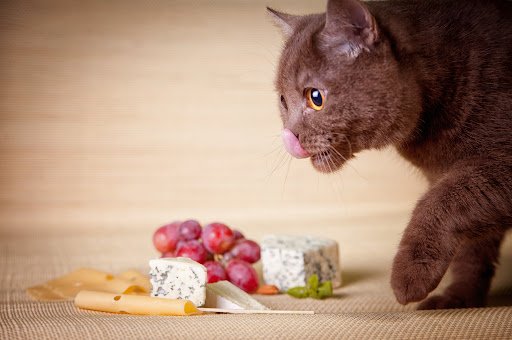
Cats Eat Parmesan Cheese

Can Cats Eat Parmesan Cheese? A Veterinarian’s Honest Take

After more than a decade working as a small-animal veterinarian, I’ve learned something about cats that surprises many owners: they are experts at convincing people to share food that was…[...]

Posted in Cat Care | Tagged Cats Eat Parmesan Cheese
Why Are My Cat’s Eyes Red

Why Are My Cat’s Eyes Red? What I See in the Exam Room

By the time someone notices their cat’s eyes are red, something has usually been irritating that eye for a while. I’m a small-animal veterinarian and have been working in companion…[...]

Posted in Cat Care | Tagged Why Are My Cat’s Eyes Red
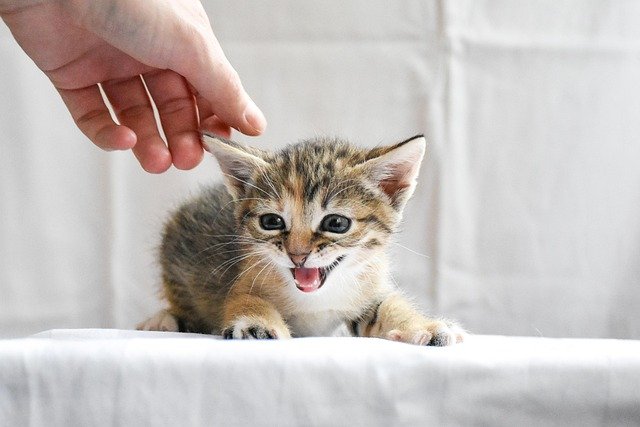
A Veterinarian’s Firsthand Perspective I’m a small-animal veterinarian who has worked primarily in feline practice for several years, and I’ve seen hundreds of households try to figure out how to manage life with new litters. One question that comes up more than people expect is whether male cats actually help care for kittens. The short answer is: sometimes, but not in the same reliable way mother cats do. The longer answer depends on neuter status, personality, and household dynamics. I’ll share what I’ve seen in exam rooms, foster homes, and my own clinic’s back rooms, where the “textbook answer” often collides with real cat behavior. What male cats are naturally inclined to do — and what they aren’t Maternal care is wired into female cats in a way it usually isn’t for males. Queens nurse, groom, guard, and teach by instinct. Tomcats, especially intact ones, are not programmed the same way. Their primary drives are territory, mating, and resource control. In my experience, intact males are far less predictable around kittens. Some ignore them completely. Some are curious but rough. A small number behave aggressively. I’ve advised many families not to intentionally introduce intact males to newborn kittens because unpredictability and risk aren’t worth testing, “Maybe he will be gentle.” Neutered males are a different story. Once hormones are out of the equation, I’ve seen many develop a tolerant, even nurturing demeanor — but this is a personality-based trait, not guaranteed behavior. What I’ve personally seen male cats do for kittens. I’ve watched male cats surprise owners in ways textbooks don’t fully capture. One spring, a long-time client brought in a neutered orange male who had practically adopted a litter the family was fostering. He wasn’t the father. He decided those kittens belonged in his orbit. He slept near the box, groomed them clumsily, and let them crawl over his head while he pretended to be annoyed. He didn’t feed or fully “raise” them, but he provided warmth, social contact, and calm. That kind of babysitting is real support, even if it isn’t maternal care. In another case, at a foster home where I worked closely with a neutered male resident, he patiently tolerated kittens stealing his food and chewing his tail. He didn’t clean them or teach them much, but he modeled confident adult-cat behavior. Those kittens grew into easygoing adults, and I don’t think that was a coincidence. The flip side exists, too. I’ve examined litters where an adult male in the home stressed the mother so badly that she stopped nursing properly. He never touched the kittens, but just his attempts to enter the nest area were enough to cause problems. That situation was resolved only after he was separated. These aren’t theories — these are the types of situations that lead me to be cautious but open-minded about “paternal” behavior in cats. Do male cats recognize their own kittens? I’m often asked whether male cats “know” which kittens are theirs and therefore act protective. Behaviorally, cats don’t rely on paternal recognition the way some species do. I don’t see clear evidence in practice that males reliably identify or bond to “their” offspring. What I do see is: intact toms behaving territorially, which may put kittens at risk Neutered males sometimes act socially supportive regardless of biological relation So decisions about introductions should be based on behavior patterns, not the assumption that “he knows they’re his, so he’ll be gentle.” What I recommend as a veterinarian My professional opinion is straightforward: newborn kittens should not be left unsupervised with adult male cats, especially intact ones. The risk of rough play, stress to the mother, or accidental injury is too high for fragile, blind neonates. As kittens grow and become mobile, neutered males with calm temperaments can be wonderful stabilizing presences. They can help kittens learn social cues, appropriate play, and confidence in shared spaces. That said, introductions must be gradual, controlled, and stopped immediately if the male shows chasing, pinning, or other signs of stress. I’ve seen owners make two common mistakes: assuming a “sweet” male will automatically be gentle with tiny kittens assuming growling from the mother means she’s “being mean,” rather than protecting her litter Both can spiral into preventable injuries or poor nursing. My own approach is conservative early, flexible later. I’d rather keep everyone separated during the first fragile weeks and then build careful interactions as personalities reveal themselves. So do male cats take care of kittens? They don’t “parent” in the same instinctive, full-service way mother cats do. They don’t nurse, rarely teach in the active way queens do, and can be unpredictable if intact. But I’ve seen neutered males act as gentle companions, heat sources, play supervisors, and calm adult role models. That absolutely has value. The key is to respect biology, watch behavior rather than wish for it, and create safety first. If a male cat chooses to help in small, consistent ways, consider it a bonus — not a guaranteed feature of cat family life.

How to Understand Male Cats and Kittens’ Bond

A Veterinarian’s Firsthand Perspective I’m a small-animal veterinarian who has worked primarily in feline practice for several years, and I’ve seen hundreds of households try to figure out how to…[...]

Posted in Cat Care | Tagged Male Cats and Kittens' Bond
Keep Your Dog Safe from Cat Food Risks

How to Keep Your Dog Safe from Cat Food Risks

As a licensed veterinarian practicing in Texas for over 12 years, I’ve seen plenty of curious pets testing boundaries, and one question that comes up more often than you’d think…[...]

Posted in Cat Care | Tagged Keep Your Dog Safe from Cat Food Risks
Feeding Your 15-Pound Cat

A Guide to Feeding Your 15-Pound Cat the Right Amount

As a veterinarian who has spent more than a decade treating companion animals in a busy small-animal clinic, I’m asked about feeding amounts almost daily. One question that comes up…[...]

Posted in Cat Care | Tagged Feeding Your 15-Pound Cat
Why Do Cats Get Fevers

Why Do Cats Get Fevers? A Veterinarian Explains the Real Causes

After more than a decade as a licensed veterinarian in small-animal practice, I’ve examined hundreds of cats brought in with fevers. Many owners assume a fever in a cat works…[...]

Posted in Cat Care | Tagged Why Do Cats Get Fevers
Can Cats Eat Sunflowers

Can Cats Eat Sunflowers? Find Out the Truth!

A Veterinarian’s Practical Take After more than a decade working as a veterinarian, I’ve learned that many pet questions come from surprisingly ordinary moments. A bouquet on the kitchen table.…[...]

Posted in Cat Care | Tagged Can Cats Eat Sunflowers

Posts pagination

Previous 1 … 3 4 5 6 Next

Recent Posts

  • Why Do Dogs Breathe Faster When It’s Hot Outside?
  • What Are the Signs Your Dog Is Going Into Labor?
  • Explaining How Cats Develop Upper Respiratory Infections
  • Foxglove Plants and Their Danger to Cats Explained
  • Are California Poppies Safe for Cats or a Hidden Risk

Recent Comments

No comments to show.

About

PO BOX Collins Street West

+2342 5446 67

Mon – Sun: 8AM – 8PM

Quick Links

Dog Boarding Services

Cat Boarding Services

Spa and Grooming Services

Newsletter