
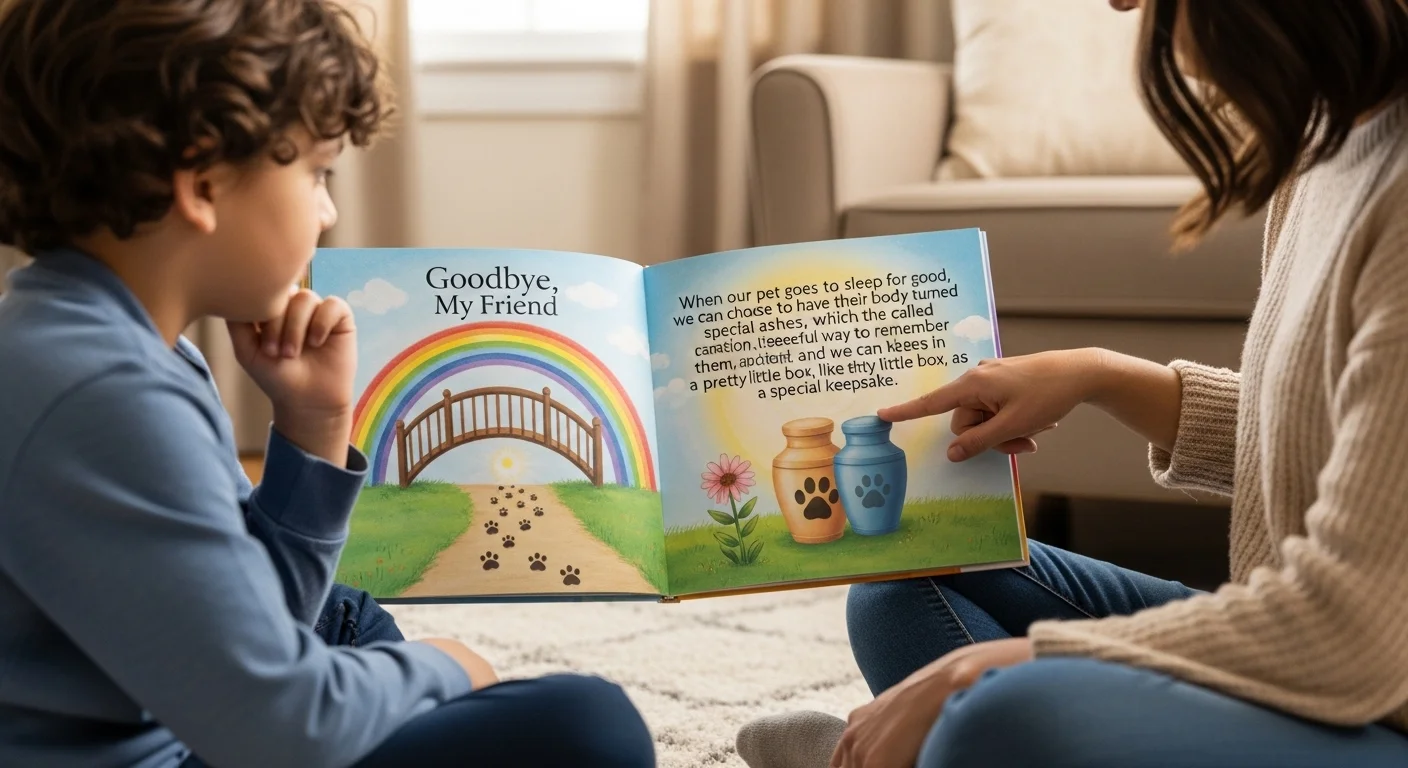
Losing a loved puppy is heartbreaking for any family; however, it may be especially complicated and emotional for a baby. Pets are frequently a baby`s first experience with loss, and the way adults explain this second can form how kids understand loss, grief, and remembrance for years to come. One subject matter many mothers and fathers battle with is the way to provide an explanation for puppy cremation to a baby in a manner that is sincere, age-appropriate, and comforting.
This article provides a comprehensive, compassionate guide to help mothers, fathers, guardians, and caregivers navigate this sensitive verbal exchange. You’ll examine why honesty matters, how to tailor reasons based on age, which words to use (and avoid), how to answer tough questions, and how puppy cremation can be framed as a deferential and loving goodbye.
Why Explaining Pet Cremation to a Child Matters
Children are deeply intuitive. Even whilst adults attempt to shield them from painful truths, kids frequently feel that something serious has happened. Avoiding the subject or offering vague reasons can cause confusion, anxiety, or even mistrust.
Explaining puppy cremation really and lightly allows kids:
- Understand what happened to their puppy.
- Process grief in a wholesome manner
- Feel protected instead of excluded.
- Learn that loss of life is an inherent part of life.
- Develop coping abilities for destiny losses.
When treated with care, this verbal exchange can become a significant lesson in love, memory, and respect.
Understanding a Child`s View of Death
Before explaining puppy cremation, it`s vital to understand how kids understand death at different stages of development. A baby’s age, emotional maturity, and personal stories all affect how they interpret loss.
Toddlers and Preschoolers (Ages 2–5)
Young kids do not absolutely understand the permanence of death. They can also agree that the puppy is dozing or will come back later. Their questions are probably repetitive because they’re trying to stay close to the concept.
At this age:
- Keep reasons easy and concrete.
- Avoid euphemisms like “positioned to sleep.”
- Focus on reassurance and routine.
Young Children (Ages 6–8)
Children in this age range start to understand that death is permanent; however, they’ll still have magical thinking. They may agree with their moves or with the mind brought on by the puppy’s death.
At this age:
- Offer sincere reasons
- Reassure them they’re no longer to blame
- Encourage questions and emotional expression.
Older Children (Ages 9–12)
Older kids generally apprehend loss of life more fully and might ask specific questions about what happens to the body. They may experience grief alongside adults; however, they lack the language to express it.
At this age:
- Be open and actual without overwhelming details.
- Validate their emotions
- Allow area for deeper conversations.
What Is Pet Cremation? A Simple Explanation for Children
Before you could provide an explanation for puppy cremation to a toddler, you would want a toddler-friendly manner to explain it.
An easy clarification may be:
“Cremation is a mild manner of looking after a puppy`s frame once they die. The frame is located in a unique location in which its miles became smooth ashes, and people’s ashes may be stored, buried, or scattered somewhere significant.”
This clarification avoids scary imagery even as it is the last truthful. The secrets to hold the point of interest on care, respect, and love, now no longer on technical processes.
How to Explain Pet Cremation to a Child Step via way of means of Step
Step 1: Start with Death Itself
Before discussing cremation, make certain your toddler is familiar with the fact that the puppy has died.
Use clean language such as:
- “Our dog`s frame stopped working.”
- “She died, this means that she isn`t alive anymore.”
- Avoid terms like:
- “Went to sleep.”
- “Went away”
- “Ran off”
These can cause confusion or fear, specifically around sleep or separation.
Step 2: Explain What Happens After Death
Once your toddler is familiar with the puppy’s death, provide a gentle explanation of what happens next.
You may say:
“After a puppy dies, their frame doesn`t want to paint anymore. Families pick out exclusive approaches to say goodbye and deal with the frame.”
This prepares the kid to learn about cremation without overwhelming them.
Step 3: Introduce Cremation in Gentle Terms
When introducing puppy cremation, hold your tone calm and reassuring.
For example:
“We selected cremation due to the fact that it`s a deferential manner to attend to our puppy`s remains. It turns the frame into ashes, and we are able to hold the ashes in a manner to not forget them.”
If your toddler asks how it works, solve the problem as briefly as possible. There`s no need to enter the photograph or technical details.
Step 4: Explain What Happens to the Ashes
Children regularly find comfort in knowing where their puppy will be.
You can provide an explanation for:
- The ashes can be stored in a unique urn.
- They may be buried in a significant location.
- They may be scattered somewhere that the puppy loved
- Letting your toddler help pick what happens to the ashes can give them a sense of involvement and closure.
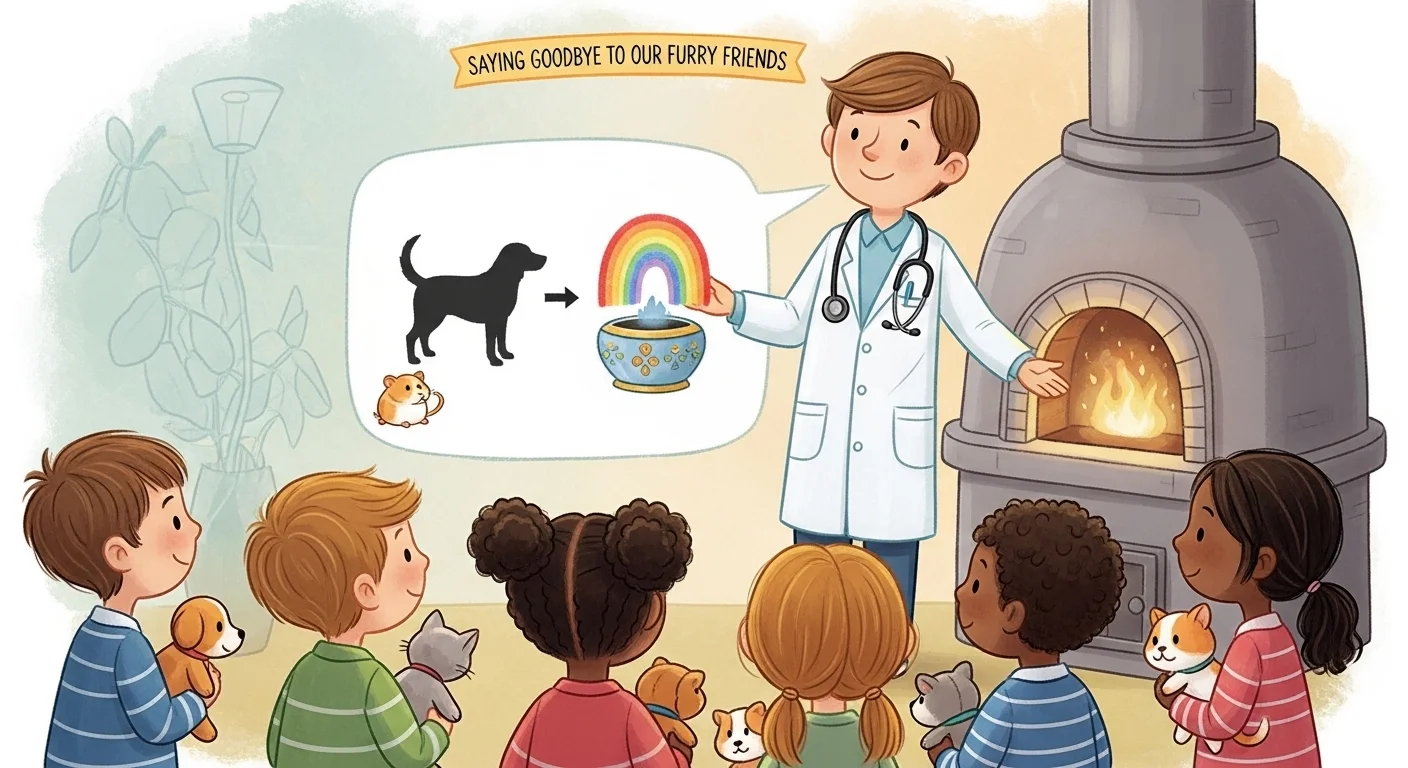
Words to Use and Words to Avoid
The language you use to discuss topics substantially whilst explaining puppy cremation to an infant.
Helpful Words and Phrases
- Died
- The body stopped working.
- Remember
- Love
- Goodbye
- Special place
Words and Phrases to Avoid
- Put to sleep
- Burned
- Gone forever
- Disappeared
These prevented terms can create fear, misunderstandings, or useless distress.
Common Questions Children Ask About Pet Cremation
Children are clearly curious, particularly when going through something unfamiliar. Here are not unusual place questions and mild approaches to respond.
- “Does it harm?”
- A reassuring response:
- “No. When a puppy dies, they don`t experience pain anymore. Cremation doesn`t harm them.”
- “Can they experience it?”
- “No. Their frame isn`t alive anymore, so they can`t experience something.”
- “Will they arrive back?”
- “They won`t come back; however, our love and reminiscences of them live with us.”
- “Why did this happen?”
- This may be the toughest question.
“Sometimes our bodies get very ill or very old, and there`s nothing any of us can do. It`s no longer due to something you did.”
Helping a Child Cope with Grief After Pet Cremation
Explaining puppy cremation is best as part of assisting an infant through loss. Grief doesn`t quit after the conversation; it evolves over time.
Encourage Emotional Expression
Let your infant:
- Cry
- Talk
- Draw pictures
- Write letters to the puppy.
- There is no “right” manner to grieve.
Create a Memorial Together
Memorizing the puppy can help kids with memory loss.
Ideas include:
- Decorating the urn
- Planting a tree or flowers
- Making a picture graph album
- Holding a small goodbye ceremony
- These rituals offer closure and comfort.
Keep the Pet`s Memory Alive
Talk about approximately satisfied memories. Use the puppy`s name. Laugh whilst appropriate. This teaches youngsters that remembering doesn`t have to be sad; it may also be joyful.
Should a Child Be Present for Pet Cremation?
Many dads and moms wonder whether or not children should be involved in the cremation procedure itself.
In most cases:
- Children must no longer witness the bodily cremation.
- Children may be worried about goodbye rituals.
- Children can assist with memorial decisions.
Protecting youngsters from doubtlessly distressing visuals while still allowing them to engage emotionally is typically the healthiest balance.
Cultural and Spiritual Beliefs to Consider
Every own circle of relatives has distinct ideals about dying and the afterlife. When explaining puppy cremation to a toddler, it`s ok to consist of your non-secular or cultural perspective, simply be clear about what a notion is as opposed to a fact.
For example:
“Some humans trust that pets visit heaven.”
“In our own circle of relatives, we trust love remains forever.”
If your toddler questions those ideals, allow for dialogue without imposing certainty.
What If a Child Reacts Strongly or Unexpectedly?
Some youngsters might also appear unaffected at first, only to react weeks or months later. Others might also express anger, guilt, or worry.
This is normal.
Watch for signs and symptoms that your toddler might also want more support:
- Changes in sleep or appetite
- Withdrawal from activities
- Excessive worry about dying
- Persistent sadness
If grief feels overwhelming, don’t forget to talk with a toddler counselor or therapist.
How Explaining Pet Cremation Can Teach Lifelong Lessons
While painful, this experience can educate youngsters about vital values:
- Compassion
- Honesty
- Emotional resilience
- Respect for life
When adults approach the subject with openness and empathy, youngsters research that hard feelings are secure to speak about.
Tips for Parents Before the Conversation
Before explaining puppy cremation to a child:
- Choose a quiet, calm time.
- Be emotionally prepared
- Allow the kid to set the pace manually.
- Accept that you don`t want all of the answers.
- It`s good to say:
- “I don`t know, however, we are able to reflect on it together.”
Final Thoughts: Speaking with Love, Honesty, and Care
Learning the way to give an explanation for puppy cremation to an infant isn’t always about locating the best words; it`s about starting with love, honesty, and compassion. Every infant is different, and each infant’s circle of relatives grieves in its very own way.
By imparting clear explanations, emotional support, and possibilities for remembrance, you assist your infant to understand that even as death ends a life, it does not give up love. The memories, lessons, and bond they shared with their puppy will constantly remain.
If your technique is a verbal exchange with endurance and empathy, you aren’t just helping your infant say goodbye; you’re coaching them to navigate loss with bravery and kindness.